

Why Is a Guard Wire Used in Tan Delta Testing?
Learn why a guard wire is essential in Tan Delta testing. Discover how it bypasses surface leakage, improves accuracy, and when to use it for reliable transformer testing.
In Tan Delta Testing, especially when testing transformers, the use of a guard wire is essential for ensuring the accuracy of the results. This simple tool can significantly improve the quality of the data you obtain during testing. Let’s explore why a guard wire is used, how it bypasses surface leakage, and when you should use it.
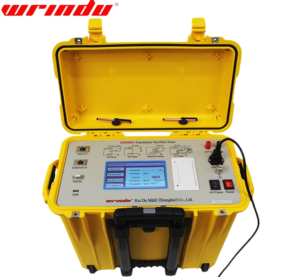
Click the image to know more about Wrindu Tan Delta Tester.
What is Surface Leakage, and How Does a Guard Wire Bypass It?
Surface leakage occurs when unwanted currents flow across the surface of cables, especially at the ends, where contamination like dirt, moisture, or other foreign substances can create a conductive path. This surface leakage can interfere with the Tan Delta Test of Transformer, causing inaccurate readings.
A guard wire is used to bypass this surface leakage by providing a path for the leakage current to flow through, away from the measurement point. This ensures that the test only measures the true insulation characteristics of the transformer, eliminating any unwanted interference caused by surface contamination.
How Does a Guard Wire Improve Accuracy in Tan Delta Testing?
The primary role of the guard wire is to improve the accuracy of your Tan Delta Test. Without a guard wire, the leakage currents from the surface can lead to false Tan Delta readings, making it difficult to assess the true condition of the insulation. By isolating the leakage current from the test measurement, the guard wire ensures that only the insulation’s properties are being measured.
Using a guard wire helps you achieve more reliable test results and reduces the risk of misinterpreting Tan Delta values. This is particularly important when using the Wrindu Tan Delta Tester, as proper application of a guard wire guarantees that your results reflect the actual performance of the transformer’s insulation.
When Should You Use a Guard Wire in Tan Delta Testing?
You should always use a guard wire in Tan Delta Testing when you are testing cables or transformers that have exposed or unclean surfaces. It is particularly useful when:
-
The cables or test subjects have not been properly cleaned or have surface contamination.
-
You are testing high-voltage equipment where surface leakage is more likely to occur.
-
The test environment has high humidity or dust levels, which can lead to increased surface conductivity.
Even if the cables or equipment seem clean, using a guard wire is a good practice to ensure the most accurate results, especially in sensitive tests like Tan Delta Testing.
What Are Some Common Mistakes When Using a Guard Wire?
While using a guard wire is simple, some common mistakes can reduce its effectiveness:
-
Failing to properly connect the guard wire, leading to inaccurate bypassing of leakage currents.
-
Using a guard wire only on some cables and not others, leading to inconsistent results.
-
Not following manufacturer guidelines for using a guard wire with specific testing equipment like the Wrindu Tan Delta Tester.
By ensuring the guard wire is correctly installed and used consistently across all connections, you can avoid these pitfalls and ensure your testing is as accurate as possible.
