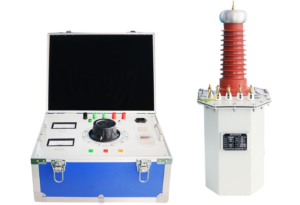
Wrindu AC Withstand Voltage Test Device(RDYD)
The RDYD series AC withstand voltage test device is a compact, durable tool for high-voltage insulation testing. Ideal for power systems, industry, and research labs.
The RDYD series power frequency AC withstand voltage test device is a reliable tool designed for high-voltage testing. It’s small, lightweight, and easy to use. With its compact structure and strong versatility, it is ideal for testing the insulation strength of electrical equipment, components, and materials under power frequency AC voltage. The device is commonly used in power systems, industrial sectors, and scientific research departments.
Click the image to know more about Wrindu AC Withstand Voltage Tester.
Key Features of Wrindu AC Withstand Voltage Test Device
-
Compact and Durable: The oil-immersed test transformer is compact, stable, and built to last.
-
Easy Setup: The device is lightweight with simple, intuitive wiring for quick setup and use.
-
Reliable Insulation: It offers excellent insulation performance and has a sleek design.
Specifications for the Wrindu AC Withstand Voltage Test Device
Oil Immersed Test Transformer
| Specification | Value |
|---|---|
| Capacity | 5 kVA |
| Output Voltage | 100 kV AC |
| Output Current | 50 mA AC |
| Input Voltage | 200 V |
| Input Current | 25 A |
| Transformation Ratio | 1000 (HV winding / instrument) |
| Temperature Rise (30 minutes) | 10°C |
Manual Console
| Specification | Value |
|---|---|
| Capacity | 5 kVA |
| Input Voltage | 220 V, 50 Hz |
| Input Current | 22 A |
| Output Voltage | 0-200 V |
| Output Current | 25 A |
| Operating Mode | Manual |
FAQs
What is the main purpose of an oil-immersed test transformer?
A: The primary purpose is to test the insulation strength of electrical equipment by applying high-voltage. This helps identify any weaknesses in insulation materials. It’s commonly used in power stations, distribution networks, and research labs.
Why is oil used instead of air in these transformers?
A: Oil is used because it offers better cooling and insulation than air, allowing the transformer to handle higher voltages in a more compact size. It also helps prevent arcing and dissipates heat more effectively.
How do oil-immersed and dry-type test transformers compare?
A: Oil-immersed transformers are ideal for high-voltage, outdoor use as they handle more power and have better thermal efficiency. Dry-type transformers, however, are safer for indoor use because they don’t contain flammable oil.
What maintenance is required for these transformers?
A: Regular maintenance includes checking oil levels, monitoring temperatures, and inspecting for leaks. You should also test the dielectric strength of the oil and inspect the bushings for cracks every few months. Annual checks should include electrical tests and oil filtration if needed.
What are the disadvantages of using oil?
A: The main drawbacks of oil are its fire risk and environmental impact. If the transformer leaks, the oil can contaminate the ground and water, and the oil itself is flammable, which could lead to explosions under extreme conditions.
You might be interested in
What do you know about insulation test equipment?
Which Test Transformer is Best for You: Dry-Type, Oil-Immersed, or Gas-Insulated?