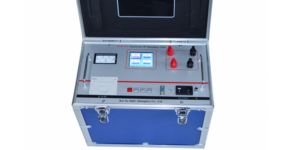
Introducing the Wrindu RDZR-40A Transformer DC Resistance Tester
Wrindu RDZR-40A Transformer DC Resistance Tester, a state-of-the-art solution designed for the precise measurement of DC resistance in power transformers. It is ideal for both field and laboratory use, this new model is perfect for conducting tests during transformer production, installation, overhaul, and preventive maintenance.
Click the picture to know more about Wrindu Transformer DC Resistance Tester.
Key Features:
-
High-Speed Microcomputer Control: The RDZR-40A features a high-speed single-chip microcomputer that ensures fast, accurate measurements with high automation levels. It also comes with an automatic discharge and discharge alarm function for added convenience and safety.
-
Wide Current Ranges & Measurement Range: The tester supports a variety of current ranges from <20mA to 40A, making it suitable for testing both small and large transformers. It provides measurement accuracy of ±(0.2%+2) and a resolution as low as 0.1μΩ.
-
Perfect Protection & Safety Features: Equipped with excellent protection functions, the RDZR-40A is designed to shield against the impact of back EMF, ensuring that the device remains safe and reliable even in the most challenging testing environments.
-
Data Storage & Retrieval: The tester features an LED display and has a built-in calendar clock. It can store up to 1000 test data points, allowing for easy retrieval and analysis. You can also transfer the data via USB and RS232 interfaces to a computer or external storage device for further analysis.
-
Energy-Efficient & Compact Design: Using intelligent power management technology, the instrument operates in the minimum power state, reducing energy consumption and preventing overheating during use. The compact design (400×225×350 mm) ensures ease of transport and storage.
-
Robust Build for Field Use: Built with a rugged housing, the RDZR-40A is capable of withstanding tough environments and field conditions, making it an ideal choice for testing transformers on-site.
Technical Specifications:
| Item | Technical Parameters | Notes |
|---|---|---|
| Measuring Current | <20mA, 2.5A, 5A, 10A, 20A, 40A | |
| Measuring Range | 50μΩ ~ 500mΩ (40A), 100μΩ ~ 1Ω (20A) | |
| Accuracy | ±(0.2%+2) (50μΩ to 500mΩ), ±(0.5%+2) (10Ω ~ 20KΩ) | |
| Minimum Resolution | 0.1μΩ | |
| Display | 320×240 LED Display | 4 significant digits |
| Data Storage | 1000 test results | |
| Working Environment | Temperature: 0°C ~ 40°C, Humidity: <90% RH | No condensation |
| Power Supply | AC 220V±10V, 50Hz±1Hz | Safety tube 10A |
| Maximum Power Consumption | 1000W | |
| Dimensions | 400×225×350 mm | |
| Weight | Main unit: 15.1kg, Line box: 5.75kg |
Applications:
-
Semi-Finished and Finished Product Testing: Perfect for testing transformer windings during the manufacturing process or during preventive maintenance.
-
Installation & Overhaul Testing: Ensures proper resistance measurement after installation or servicing of power transformers.
-
Tap Changer Testing: Identifies any abnormalities such as broken strands or issues in the tap changer.
-
Preventive Maintenance: Essential for power departments to regularly monitor the health of transformers.
Why Choose the Wrindu RDZR-40A DC Resistance Tester?
With its advanced technology, user-friendly operation, and high-level protection, the Wrindu RDZR-40A is a must-have tool for anyone working with transformers. Whether you’re in the manufacturing sector, handling installation, or conducting routine maintenance, this tester will help ensure your transformers perform optimally.
Ready to order or need more information? Reach out to us directly for pricing, quotes, or more details about the Wrindu RDZR-40A Transformer DC Resistance Tester. Our team is here to provide you with the best solutions for your transformer testing needs.
FAQs
Why is DC resistance testing important in electrical systems?
A: DC resistance testing is crucial to assess the integrity and performance of electrical equipment, especially transformers. It verifies the quality of winding joints, checks for possible short circuits, and ensures proper contact at tap changer positions.
How does the Kelvin four-wire method improve measurement accuracy in DC resistance tests?
A: The Kelvin four-wire method eliminates the impact of lead and contact resistances. It uses separate current and voltage terminals, ensuring that only the voltage drop across the actual resistance is measured, providing highly accurate results.
What is the typical resistance range for DC resistance testing in transformers?
A: DC resistance in transformers typically ranges from micro-ohms (μΩ) to milli-ohms (mΩ), depending on the size and configuration of the windings and leads.
How does temperature affect DC resistance measurements?
A: The resistance of materials like copper and aluminum increases with temperature due to their positive Temperature Coefficient of Resistance (TCR). Therefore, measurements need to be temperature-compensated to ensure accuracy and comparability over time.
Why is temperature compensation necessary during DC resistance tests?
A: Temperature compensation ensures that resistance measurements are corrected to a standard reference temperature. This step eliminates errors due to environmental temperature fluctuations, providing consistent and comparable data.
What role do DC resistance testers play in transformer maintenance?
A: DC resistance testers help in diagnosing the health of transformers by checking winding integrity, verifying contact points, and evaluating tap changers. This diagnostic information is crucial for identifying faults before they cause failures.
Can DC resistance testers measure resistance in large transformers?
A: Yes, specialized DC resistance testers are designed to handle large transformers with high inductance. They provide the necessary current and precision to measure very low resistance values, even in large-scale equipment.
How do DC resistance testers differ from megohmmeters?
A: DC resistance testers measure very low resistance (μΩ to mΩ) and are used for checking the conductivity and integrity of electrical connections. In contrast, megohmmeters measure high resistance (MΩ) and are used for assessing the insulation quality of electrical components.
What is the significance of measuring DC resistance imbalance in transformers?
A9: DC resistance imbalance indicates issues with transformer windings, such as uneven resistance across phases. A high imbalance suggests potential problems like faulty windings or tap changers, which could lead to overheating or equipment failure.
How often should a DC resistance tester be calibrated?
A10: A DC resistance tester should be calibrated regularly, especially if it is used in critical diagnostic applications. Calibration ensures measurement accuracy and compliance with industry standards, reducing the risk of incorrect readings during maintenance.
What is the recommended procedure if DC resistance test results show imbalances?
A11: If DC resistance test results show imbalances, the first step is to isolate the cause. This can be done by swapping test leads or checking the measurement setup. If the imbalance remains, it may indicate an issue with the transformer windings or connections.
Can DC resistance testers be used for other applications beyond transformers?
A: Yes, DC resistance testers can be used for other electrical systems, such as cables, switchgear, and busbars, to assess their conductivity and integrity. However, they are most commonly used in transformer diagnostics.
You might be interested in