

How DC Withstand Voltage Testing Helps Detect Moisture in Transformer Insulation?
DC withstand voltage testing helps detect moisture in transformer insulation, protect dielectric strength, and prevent hidden failures before they impact grid safety.
Ensuring the health of power equipment is vital for grid stability. DC withstand voltage testing serves as a critical diagnostic tool to evaluate the integrity of transformer insulation. While many tests check for general wear, this specific method excels at identifying hidden contaminants.
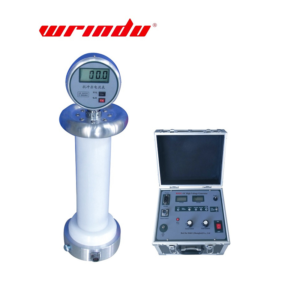
Click the picture to know more about Wrindu DC Withstand Voltage Tester.
By applying a controlled high-voltage DC charge, technicians can observe how the insulation reacts. If moisture is present, the insulation’s ability to hold the charge weakens, revealing potential risks before a catastrophic failure occurs.
Moisture: The Silent Enemy of Transformer Insulation
Moisture is a leading cause of insulation breakdown. It enters the system through aging seals or during improper maintenance. Once water molecules penetrate the transformer insulation, they create conductive paths.
This contamination significantly reduces the dielectric strength of the oil and paper structures. Over time, moisture leads to overheating, partial discharge, and eventually, a full short circuit. Regular monitoring is the only way to catch moisture before it destroys the core components.
How Does DC Withstand Voltage Testing Detect Water?
During high-voltage testing, we apply a steady DC voltage to the windings. A dry, healthy transformer acts like a high-quality capacitor with very low leakage current.
However, moisture changes the physical properties of the insulation. If the moisture detection process reveals a sharp rise in leakage current or inconsistent readings as the voltage increases, it strongly indicates water contamination. Unlike AC tests, DC testing allows for a clearer view of the insulation resistance and absorption characteristics.
Why Is Dielectric Strength Critical for Safety?
The dielectric strength represents the maximum electric field a material can withstand without breaking down. In a transformer, the insulation must block massive amounts of energy.
Moisture lowers this threshold. By performing a DC withstand voltage test, you verify that the insulation can still handle operational stress. If the material fails to maintain its properties during the test, it lacks the necessary strength to operate under a real-world load.
Common Operator Question From Wrindu
Will the high voltage applied during a DC withstand test cause permanent damage to aging transformers?
The answer depends on the application. When performed correctly using professional equipment from Wrindu, the test is a “nondestructive” way to find weaknesses. However, if the insulation is already heavily saturated with moisture, the test might trigger a breakdown. This is actually a positive outcome in a controlled environment, as it prevents a much more dangerous explosion while the transformer is in service.
How high should the test voltage be for moisture detection?
Engineers typically follow IEEE or IEC standards based on the transformer’s original rating. For in-service equipment, the DC withstand voltage is often set at a specific multiple of the rated AC voltage (e.g., 1.5 to 2 times). Always increase the voltage gradually in 4–6 steps to allow the transformer insulation to stabilize, which prevents unnecessary stress and ensures more accurate moisture detection.
Why do we use DC instead of AC for insulation resistance?
DC withstand voltage testing is preferred for field maintenance because it minimizes capacitive charging currents. In large transformers, AC testing requires massive equipment to handle the high capacitance. DC allows for a much smaller, portable tester that provides stable leakage current readings, making it easier to identify the specific impact of moisture on dielectric strength.
What does a “steep rise” in leakage current indicate?
During high-voltage testing, a linear increase in leakage current is normal as voltage rises. However, if the current jumps suddenly or fails to stabilize at a certain voltage level, it is a clear warning of a concentrated defect. This often points to localized transformer insulation failure caused by high moisture levels or severe surface contamination.
Is it safe to touch the transformer immediately after testing?
Absolutely not. High-voltage testing with DC acts like charging a large capacitor. The transformer insulation will hold a residual charge that can be lethal. You must use a high-resistance discharge rod to bleed off the energy for 1–3 minutes, then apply a direct ground before touching any terminals.
How do environmental factors affect the test results?
Relative humidity and temperature play a huge role. High humidity can cause surface leakage over bushings, which might be mistaken for internal moisture. It is best to perform moisture detection when the oil temperature is below 40°C and the external surface is clean and dry to ensure the dielectric strength readings represent the internal health of the unit.
