

How Long Does Cable Fault Location Usually Take?
Learn typical cable fault location time, key factors that affect speed, and proven methods to improve efficiency, reduce outages, and achieve faster underground cable repair.
Fast repair depends on short and predictable cable fault location time. Utilities want to restore power quickly, reduce outage impact, and control labor cost. The real duration varies with fault type, cable length, environment, and testing method. Clear workflow and efficient instruments can greatly shorten the total location process. This article explains typical time ranges and how engineers improve field efficiency.
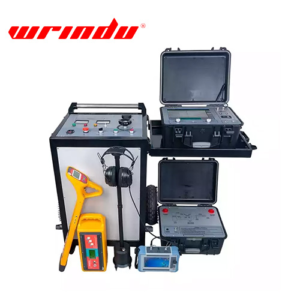
Click the picture to know more about Wrindu Cable Fault Testing System.
What Factors Affect Cable Fault Location Time?
Several technical and field conditions influence cable fault location time.
Fault type plays the biggest role. Low-resistance faults are easy to detect, while high-resistance or intermittent faults need more testing steps.
Cable length and route complexity also matter. Long underground routes or multiple joints increase tracing time.
Environment and noise can slow acoustic detection and signal analysis.
Instrument performance and workflow directly determine testing speed and accuracy.
When these factors align well, engineers complete location much faster.
How Long Does Each Step Usually Take?
Cable fault location follows staged testing, and each stage has a typical duration.
Fault identification with insulation and continuity testing often takes 10–30 minutes.
Pre-location distance measurement using TDR or surge methods usually requires 15–40 minutes.
On-site pinpointing with acoustic or electromagnetic detection may take 20–60 minutes depending on ground conditions.
Verification and repair confirmation often adds another 20–40 minutes.
In many field cases, total cable fault location time ranges from 1 to 3 hours when engineers use efficient equipment and clear procedures.
Why Do Some Cable Fault Locations Take Much Longer?
Extended troubleshooting often results from complex conditions rather than operator skill.
High-resistance faults may need repeated HV surge activation.
Urban noise can hide discharge sound and slow pinpointing.
Incorrect parameter settings may produce misleading waveforms.
Incomplete coordination between instruments can create repeated testing.
These issues increase cable fault location time and delay power restoration.
How Can Engineers Improve Cable Fault Location Efficiency?
Efficiency improves when teams optimize both technology and workflow.
Use staged testing that moves from identification to pre-location and then pinpointing.
Choose integrated digital instruments with fast sampling and clear waveform analysis.
Apply HV surge and acoustic methods for difficult high-resistance faults.
Train operators to interpret signals quickly and avoid repeated measurement.
Strong coordination between devices and procedures significantly reduces cable fault location time.
What Questions Do Instrument Users Often Ask?
Q1: What is the normal cable fault location time in the field?
Usually 1 to 3 hours. Efficient workflow keeps the process within this range.
Q2: Which step takes the longest time?
Pinpointing often takes the longest. Ground noise and environment affect detection speed.
Q3: Do high-resistance faults increase location time?
Yes. They require HV surge activation and repeated confirmation.
Q4: Can better instruments shorten the process?
Yes. Fast sampling, clear waveforms, and acoustic guidance reduce testing time.
Q5: What is the key to faster cable repair?
Accurate first-time location. Precision prevents repeated digging and saves hours.
Wrindu Expert Review
Typical cable fault location time ranges from one to three hours, but real duration depends on fault complexity, environment, and testing efficiency. Engineers who use coordinated staging, advanced instruments, and accurate signal interpretation can restore power much faster. Improving efficiency in cable fault location not only shortens outages but also strengthens long-term reliability of the power network.
