

How Impulse Energy Affects Cable Fault Pinpointing?
Learn how impulse energy affects cable fault pinpointing. Discover how the Wrindu 535T High-voltage Signal Generator improves accuracy and safety in underground cable testing.
Accurate cable fault pinpointing depends on clear discharge signals. Engineers often use impulse discharge cable testing to locate underground faults. The level of impulse energy directly affects signal strength, detection accuracy, and safety.
Professional equipment such as the Wrindu 535T Cable Test High-voltage Signal Generator (Three gear) provides controlled impulse energy for reliable field testing.
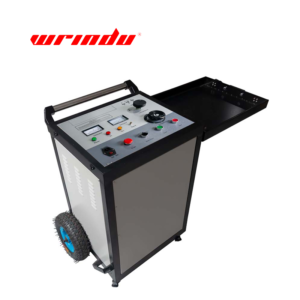
Click the picture to know more about Wrindu Cable Test High-voltage Signal Generator (Three gear).
What Is Impulse Discharge Cable Testing?
Impulse discharge cable testing sends a high-voltage surge into the faulty cable.
The surge forces the weak insulation point to break down briefly.
This breakdown produces:
-
Electrical pulse signals
-
Electromagnetic response
-
Audible acoustic discharge
Technicians track these signals to find the exact fault position underground.
Why Does Impulse Energy Matter in Fault Pinpointing?
Impulse energy determines how clearly the fault responds.
Too little energy creates weak or invisible signals.
Too much energy may stress cable insulation.
1. Signal strength
Higher impulse energy generates stronger acoustic and EM signals.
Clear signals improve pinpointing accuracy.
2. Discharge stability
Stable impulse energy keeps the flashover repeatable.
Repeatable discharge helps technicians confirm the same ground point.
3. Testing safety
Controlled energy prevents excess insulation damage.
Balanced settings protect both the cable and the operator.
Because of these factors, proper impulse energy control becomes essential in cable fault location.
How Does the Wrindu 535T Improve Impulse Discharge Testing?
The Wrindu 535T Cable Test High-voltage Signal Generator (Three gear) delivers adjustable impulse energy for different fault conditions.
Practical advantages in the field
-
Three-gear energy control for flexible testing
-
Strong impulse discharge cable signals for clear detection
-
Stable repeatable flashover for accurate pinpointing
-
Portable design for on-site underground cable testing
These features allow engineers to match impulse energy level with real cable conditions.
When Should Engineers Adjust Impulse Energy?
Technicians change impulse energy based on fault behavior:
-
Low energy for sensitive or short cables
-
Medium energy for common underground faults
-
High energy for high-resistance or deep faults
Correct adjustment ensures clear signals without unnecessary stress.
What Problems Occur with Incorrect Impulse Energy?
Improper settings may cause:
-
Weak fault sound detection
-
Unstable flashover position
-
Repeated digging errors
-
Possible insulation damage
These risks show why controlled impulse discharge cable testing is critical.
Common Questions About Impulse Discharge Cable Testing
Q1: Does higher impulse energy always improve pinpointing?
No. Use only the energy needed for clear signals. Excess energy may stress insulation.
Q2: Why choose the Wrindu 535T?
Because three-gear control provides flexible and stable impulse discharge.
Q3: Can impulse testing locate high-resistance faults?
Yes. Strong impulse energy activates weak insulation points.
Q4: Is acoustic detection still required?
Yes. Impulse discharge creates the sound used for final pinpointing.
Wrindu Expert Review
Impulse discharge cable testing plays a key role in underground fault location.
Proper impulse energy control determines signal clarity, safety, and accuracy.
With the Wrindu 535T Cable Test High-voltage Signal Generator (Three gear), engineers achieve:
-
Reliable impulse discharge signals
-
Accurate cable fault pinpointing
-
Safer high-voltage testing control
-
Faster power restoration
For modern cable maintenance, balanced impulse energy is essential for precise and dependable fault detection.
