

What Are IEC Standards of Transformer No Load Loss Testing?
Learn IEC 60076 standards for transformer no load loss testing, tolerance limits, acceptance criteria, and accuracy requirements for reliable FAT compliance.
IEC standards provide a unified framework for testing transformer no load loss. They ensure that manufacturers, utilities, and inspectors follow the same procedures, tolerance rules, and acceptance criteria. When engineers apply IEC 60076, test results become comparable across suppliers and projects. This reduces disputes during factory acceptance tests and improves technical credibility.
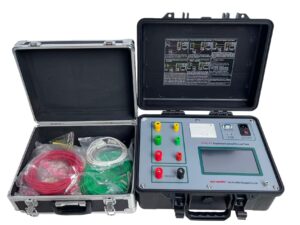
Click the picture to know more about Wrindu No load and load loss Tester.
What Is IEC 60076?
IEC 60076 is the core international standard covering power transformer design, testing methods, and performance requirements. It defines how routine, type, and special tests must be performed.
For no load loss testing, IEC 60076 specifies:
-
Rated voltage conditions
-
Sinusoidal waveform requirements
-
Measurement accuracy expectations
-
Permissible tolerance limits
By following IEC 60076, engineers ensure consistency between factory testing and on-site verification.
For a practical explanation of the test procedure, read: How to Perform Transformer No Load Loss Testing Step by Step?
How Does IEC Define Transformer No Load Loss?
IEC defines no load loss as the active power absorbed when:
-
Rated voltage is applied to the primary winding
-
The secondary winding remains open-circuited
Under these conditions, only magnetizing current flows. Because this current is small and the power factor is very low, measurement becomes technically demanding. Even small phase-angle errors can significantly affect results.
That is why IEC emphasizes:
-
Stable rated voltage
-
Low waveform distortion
-
High-precision power analyzers
What Are the IEC 60076 Tolerance Limits?
IEC does not assign one universal no load loss value. Instead, the manufacturer declares a guaranteed loss value in the contract.
The transformer passes if:
Measured No Load Loss ≤ Guaranteed Loss + Allowed IEC Tolerance
Typically, IEC allows a positive tolerance (often up to +15%, depending on rating and agreement).
Understanding this tolerance system prevents misinterpretation during FAT inspections.
For tolerance calculation examples, read:How to Calculate Transformer No Load Loss Tolerance Under IEC?
What Are the IEC Acceptance Criteria?
Acceptance depends on:
-
Compliance with declared guaranteed loss
-
Staying within IEC tolerance
-
Stable and repeatable measurements
If readings fluctuate, the issue often lies in:
-
Voltage instability
-
Core residual magnetism
-
Inadequate instrument accuracy
IEC testing is not just about measuring power—it is about ensuring reliable, repeatable data.
Why Does IEC Emphasize Measurement Accuracy?
No load loss testing involves:
-
Low current
-
Low power factor
-
High sensitivity to phase errors
Under these conditions, ordinary meters may produce significant errors.
IEC-compliant systems must:
-
Maintain phase accuracy
-
Handle low PF conditions
-
Resist electromagnetic interference
For equipment selection guidance, see: Best Instruments for IEC Transformer No Load Loss Testing
Wrindu Expert Review
IEC 60076 provides a structured, transparent method for transformer no load loss testing. By following IEC definitions, tolerance rules, and accuracy requirements, engineers ensure fair evaluation and international compliance. Proper understanding of IEC standards strengthens technical confidence and improves transformer procurement decisions.
