

Preventive Maintenance Strategies for Protective Relays
Preventive maintenance strategies for protective relays, including inspection, injection testing, TCC verification, and predictive diagnostics.
Protective relays are designed for long service life, often operating reliably for 15–25 years or more. However, even the most advanced relay will gradually degrade if maintenance is neglected. Environmental stress, electrical aging, and configuration errors can all compromise protection performance over time.
Preventive relay maintenance is not simply a routine task—it is a strategic reliability measure. Structured testing programs reduce unplanned outages, protect critical assets, and extend equipment lifespan.
Why Preventive Maintenance Is Essential?
Protective relays continuously monitor system conditions. If they malfunction, the consequences can include:
-
Equipment damage
-
Safety hazards
-
Unplanned shutdowns
-
Grid instability
-
Costly downtime
Common Causes of Relay Failure
Preventive maintenance focuses on addressing the most frequent failure mechanisms:
-
Aging insulation – Gradual dielectric breakdown in control wiring
-
Dust and humidity – Contamination leading to tracking or corrosion
-
Loose wiring – Thermal cycling can loosen terminal connections
-
Firmware errors (digital relays) – Configuration corruption or outdated firmware
-
Contact oxidation – Increased resistance in electromechanical relay contacts
-
CT circuit issues – Open CT secondaries can create dangerous conditions
Routine inspection and testing help identify small problems before they escalate into major failures.
Recommended Maintenance Schedule
A well-defined maintenance schedule ensures consistent reliability across substations and industrial facilities.
| Test Type | Recommended Frequency |
|---|---|
| Visual Inspection | Annually |
| Insulation Resistance Test | Annually |
| Secondary Injection Test | Every 1–2 years |
| Primary Injection Test | After major system modification |
| TCC Testing | During coordination review |
| Firmware & Setting Review | Every 1–2 years |
Maintenance intervals may vary depending on:
-
Environmental conditions
-
Load profile
-
Criticality of the installation
-
Regulatory requirements
Critical substations may require more frequent verification.
Core Preventive Maintenance Procedures
1️⃣ Visual and Mechanical Inspection
Visual inspection is the first defense against hidden failures.
Checklist includes:
-
Checking terminal tightness
-
Inspecting grounding continuity
-
Cleaning dust accumulation
-
Confirming proper labeling
-
Checking panel ventilation
For electromechanical relays:
-
Inspect moving contacts
-
Verify mechanical alignment
-
Check spring tension
Environmental contamination is one of the most common long-term degradation factors.
2️⃣ Insulation Resistance Testing
Insulation testing verifies dielectric integrity of control circuits.
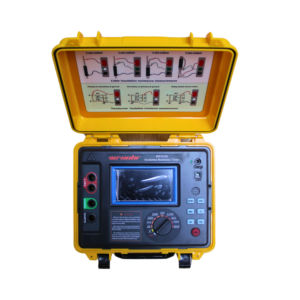
Click the picture to know more about Wrindu Insualtion Resistance Tester.
It helps detect:
-
Moisture intrusion
-
Cable deterioration
-
Contamination buildup
-
Insulation cracking
Testing phase-to-ground and control circuits ensures safe operation under normal and fault conditions.
3️⃣ Secondary Injection Testing
Secondary injection testing confirms relay settings and timing accuracy.
It verifies:
-
Pickup values
-
Trip timing
-
Protection curve compliance
-
Alarm outputs
-
Communication logic
This test ensures the relay configuration has not drifted from its intended settings.
4️⃣ Primary Injection Testing
Primary injection testing validates the entire protection path, including:
-
CT performance
-
Wiring integrity
-
Relay trip logic
-
Breaker operation
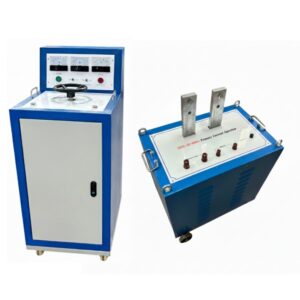
Click the picture to know more about Wrindu High Current Primary Injection Test Set.
This test is particularly important after:
-
CT replacement
-
Panel rewiring
-
Protection upgrades
-
Major system modifications
5️⃣ Time-Current Characteristic (TCC) Verification
TCC testing confirms correct timing performance and coordination.
Incorrect timing may lead to:
-
Nuisance tripping
-
Failure to clear faults
-
Cascading outages
Periodic curve verification ensures selective protection remains intact.
Predictive Maintenance with Digital Relays
Modern digital and microprocessor-based relays provide advanced diagnostic tools, including:
-
Event logs
-
Disturbance records
-
Self-diagnostic alerts
-
Communication monitoring
-
Temperature monitoring
These features support predictive maintenance strategies by identifying trends before faults occur.
For example:
-
Increasing pickup drift may indicate internal component aging.
-
Communication errors may signal firmware or hardware issues.
-
Repeated minor faults can indicate system stress.
Using relay diagnostic data transforms maintenance from reactive to proactive.
Benefits of Structured Relay Maintenance
A disciplined preventive maintenance program delivers measurable benefits:
✅ Reduced Downtime
Early fault detection prevents unexpected outages.
✅ Lower Lifecycle Cost
Preventive repair is significantly cheaper than emergency replacement.
✅ Improved System Stability
Proper coordination ensures selective fault clearing.
✅ Compliance with Safety Standards
Supports regulatory and audit requirements.
✅ Extended Relay Lifespan
Minimizes stress and operating errors.
Environmental Considerations in Relay Maintenance
Substation location heavily influences maintenance needs.
High Humidity Areas
Require more frequent insulation testing.
Industrial Environments
Dust and chemical exposure increase corrosion risk.
Coastal Installations
Salt contamination accelerates oxidation.
High-Vibration Zones
Terminal loosening is more likely.
Adjusting maintenance frequency based on environmental conditions improves long-term reliability.
FAQs About Preventive Relay Maintenance
How often should protective relays be tested?
Most utilities perform visual and insulation checks annually. Secondary injection testing is typically conducted every 1–2 years. Primary injection is recommended after major system modifications.
Is secondary injection enough for routine maintenance?
For routine verification, secondary injection is usually sufficient. However, primary injection is necessary when CT circuits or primary wiring are modified.
Do digital relays require less maintenance than electromechanical relays?
Digital relays have fewer moving parts and provide self-diagnostics, but they still require periodic setting verification, firmware updates, and injection testing.
What happens if relay maintenance is skipped?
Skipping maintenance may lead to misoperation, delayed tripping, equipment damage, and increased outage risk.
Can preventive maintenance reduce long-term costs?
Yes. Preventive testing identifies minor issues before they become major failures, reducing emergency repair costs and extending equipment life.
