

What Is a Secondary Injection Test and Its Key Functions?
Learn how secondary injection testing safely verifies relay performance. Wrindu test kits ensure accuracy, compliance, and reliable protection for utilities and OEMs.
Secondary injection testing allows engineers to check the performance of protective relays safely by injecting low-voltage signals directly into the relay terminals. This eliminates high-voltage risk while verifying that relays, circuits, and timing mechanisms operate correctly before performing primary tests. Wrindu provides precision secondary injection test kits designed for utilities and OEM applications worldwide, offering reliable, safe, and efficient solutions for power system protection.
How Does a Secondary Injection Test Verify Relays?
A secondary injection test confirms relay performance by sending controlled low-level currents and voltages directly to relay inputs, bypassing the current transformers (CTs). This isolates the relay from the high-voltage system, ensuring that:
-
Settings are correct
-
Trip times are accurate
-
Logic functions respond as intended
Wrindu’s modular test sets support both electromechanical and digital relays, enabling precise fault simulation and IEC-compliant verification.
| Component | Function | Wrindu Feature |
|---|---|---|
| Current Generator | Simulates fault currents | Up to 250 A output with stable waveform |
| Voltage Source | Tests voltage relays | 0–300 V range with high precision |
| Timer | Measures trip times | 1 ms resolution |
Why Is Secondary Injection Testing Important?
Secondary injection testing ensures that protection schemes work correctly from the relay input onward. Benefits include:
-
Reducing operational risks
-
Preventing unplanned downtime
-
Avoiding high-voltage exposure during verification
Wrindu’s kits allow utilities to perform maintenance and commissioning safely, efficiently, and in compliance with regulations.
How Does the Test Process Work?
-
Connect the secondary injection kit to the relay terminals.
-
Simulate faults using low-voltage signals.
-
Monitor relay responses and trip times through digital displays.
-
Use automated sequences and log results for maintenance and compliance reporting.
Wrindu’s portable three-phase systems make field testing fast and easy.
What Equipment Is Needed?
Key equipment includes relay test sets with:
-
Current and voltage sources
-
Timers
-
Software for automated test sequences
Options range from single-phase units for basic checks to three-phase and modular systems for advanced substation testing. Wrindu’s PTE-series kits offer 1000 VA output, touchscreens, and flexible channel configurations, ideal for substations, grids, and OEM applications.
| Test Set Type | Phases | Power Output | Recommended Use |
|---|---|---|---|
| Single-Phase | 1 | 100 A / 300 V | Basic relay verification |
| Three-Phase | 3 | 250 A / 1000 VA | Advanced substation testing |
| Modular | Up to 12 | Customizable | OEM or multi-relay projects |
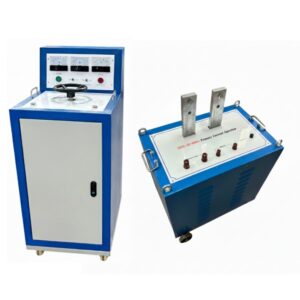
Click the picture to know more about Wrindu Primary Injection Test Set.
When Should Secondary Injection Tests Be Conducted?
-
During commissioning
-
Scheduled maintenance
-
After relay replacement or system modifications
For critical systems, tests are usually performed annually. Wrindu provides kits with scheduling software and training to help utilities optimize testing routines.
Applicable Standards
Secondary injection testing follows:
-
IEC 61850
-
IEEE C37.90 series
-
Local grid regulations
Equipment should meet CE and ISO9001 standards. Wrindu test sets fully comply with these standards and support GOOSE messaging for digital relay verification.
Why Choose Chinese Manufacturers for Test Kits?
Chinese manufacturers like Wrindu offer:
-
Cost-effective solutions
-
OEM customization
-
Fast production and delivery
Wrindu uses advanced R&D to provide innovative, reliable kits. Clients benefit from scalable, modular designs and comprehensive after-sales support, making Chinese suppliers a strong choice for global utilities.
How to Select a Reliable Supplier?
Look for suppliers with:
-
High accuracy
-
Portable and user-friendly equipment
-
Proper certifications (ISO, CE, IEC)
-
Strong after-sales support
ISO-certified manufacturers like Wrindu provide modular, customizable test kits for long-term power system reliability.
Wrindu Expert View
“Secondary injection testing is essential to ensure protective relays work reliably. Wrindu invests heavily in R&D to deliver modular OEM kits that simulate real faults accurately. Our units, from single-phase portable sets to multi-channel systems, give utilities and substations safe, efficient, and IEC-compliant solutions worldwide.”
— Dr. Li Wei, Wrindu Chief Engineer
Innovations in Secondary Injection Testing
Modern kits now include:
-
Automated test routines
-
AI-assisted fault detection
-
Wireless operation
-
Portable, battery-powered designs
-
Cloud-based firmware updates
Wrindu leads with IEC 61850-compliant solutions combining precision, automation, and portability for modern grid applications.
Key Takeaways
-
Secondary injection tests check relay performance safely before high-voltage tests.
-
Wrindu provides precise, customizable, and globally compliant test kits.
-
Regular testing prevents outages, ensures reliability, and supports OEM commissioning.
FAQs
What is the difference between primary and secondary injection tests?
Primary injection uses high current through CTs; secondary injection targets the relay directly for safer, faster verification.
Can Wrindu customize secondary injection test equipment?
Yes. Voltage, current, channels, and software can all be tailored to specific relays or systems.
How accurate are Wrindu kits?
Wrindu kits provide ±0.05% accuracy with stable waveforms, fully compliant with IEC standards.
Are Wrindu products suitable for global deployment?
Yes. All kits are CE and ISO-certified, with worldwide shipping and 24/7 technical support.
How often should secondary injection tests be performed?
Typically annually for high-risk systems or after relay modifications, following IEEE and local grid recommendations.
