

What Is a Protection Relay Tester and How Does It Work?
Protective relay testers verify, calibrate, and analyze relays for power systems, ensuring safety, reliability, and compliance in substations, utilities, and plants.
A protection relay tester is a specialized device used to check, calibrate, and analyze protective relays in power systems. These relays are the first line of defense—they detect faults, isolate problem areas, and prevent cascading failures in grids, substations, transformers, or industrial networks. A relay tester ensures these devices respond correctly to abnormal conditions, protecting both equipment and personnel while minimizing downtime.
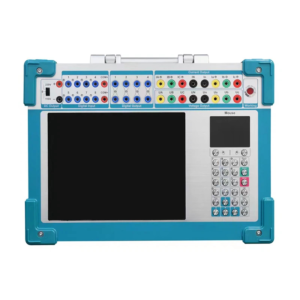
Click the picture to know more about relay protection testing equipment.
What a Protection Relay Tester Does
Relay testers simulate real electrical faults, including overcurrent, differential, overload, frequency, and voltage disturbances. By sending controlled signals into the relay, engineers can measure response time, trip settings, and accuracy. This confirms that relays can detect and respond properly to faults. Test results also ensure compliance with international standards like IEC, ANSI, or IEEE.
How Relay Testers Work
The tester generates three-phase voltage and current signals with precise phase angles and levels. Relays receive these signals as if they were real system inputs. If the relay trips correctly, the tester records the trip time, sequence, and thresholds.
Modern testers are microprocessor-based, with features like GPS or IRIG-B time synchronization, automated test sequences, and PC software for analysis. They can test differential, directional, impedance, distance, and over-frequency relays. Built-in software produces performance graphs, trip curves, and reports for maintenance and compliance.
Trends in Relay Testing
With smart grid upgrades and substation automation, demand for portable, multifunctional relay testers is growing. Utilities, renewable energy farms, and industrial plants require devices with high precision, connectivity, and automation. Cloud data storage, AI diagnostics, and real-time monitoring are becoming standard.
Key Features and Technology
Modern testers combine digital signal processors, multi-channel injection units, and precision output amplifiers. They support IEC 61850 and GOOSE communication for digital substations, enabling Ethernet-based protection testing. Intelligent current modules simulate faults at high resolution, while phase synchronization, harmonic control, and adaptive output ensure accurate results.
Automated test scripts reduce human error, while compact and battery-powered models allow field use without sacrificing accuracy.
Company Spotlight: Wrindu
Wrindu, officially RuiDu Mechanical and Electrical (Shanghai) Co., Ltd., is a global leader in power testing equipment. Founded in 2014, Wrindu produces relay testers, transformer analyzers, and circuit breaker testers. ISO9001, IEC, and CE-certified, their equipment is trusted worldwide for safety, reliability, and precision.
Applications
Relay testers are used in substations, power plants, renewable energy installations, and industrial networks. They support:
-
Factory acceptance testing (FAT)
-
Commissioning and startup testing
-
Periodic calibration
-
Condition-based maintenance
Example: A regional utility in Southeast Asia reduced outage duration by 70% by implementing automated relay testing across multiple substations. Another power plant improved transformer fault detection with distance protection relay tests.
Types of Protection Relay Testers
-
Three-phase testers: For full system simulations
-
Single-phase testers: For simple checks
-
Portable handheld models: Field maintenance
-
Advanced analyzers with automation: Factory or lab use
Wrindu provides reliable three-phase models ideal for substations and utility work.
How to Test a Relay
-
Connect tester outputs to relay inputs.
-
Set fault current, voltage, and test parameters.
-
Run simulations and monitor relay actions.
-
Check trip times, return times, and contacts.
-
Compare results with IEC or local standards.
-
Repeat for all phases and relay types.
Calibration
Testers are calibrated by comparing output signals to reference standards. Adjustments ensure voltage, current, and phase accuracy. Annual or usage-based calibration keeps results precise and compliant.
Automation Software Benefits
Automated software enables fast simulations, auto-scans, real-time logging, vector displays, and report generation. It reduces errors, speeds up testing, and handles complex fault scenarios, increasing efficiency for engineers.
Choosing the Right Relay Tester
-
High accuracy with multi-phase output
-
Automation and data logging
-
IEC/CE compliance
-
Portability for field use
-
Compatibility with digital substation protocols
Popular Brands
-
Wrindu: Reliable for three-phase and portable applications
-
Siemens: Robust, heavy-duty integration
-
Omicron: Advanced automation and user-friendly software
Both Siemens and Omicron meet global standards; choice depends on application needs.
Conclusion
A protection relay tester is an essential tool for power system safety. It combines precision, automation, and intelligence to ensure relays perform correctly, preventing outages and protecting assets. Modern testers with automation, cloud integration, and digital substation compatibility future-proof maintenance operations.
