

How to Measure and Detect Partial Discharge?
Learn how to measure and detect partial discharge in transformers, GIS, and cables. Explore electrical, acoustic, and UHF PD testing methods and discover how Wrindu provides reliable partial discharge detection solutions for utilities and high-voltage equipment maintenance.
Partial discharge (PD) is one of the earliest indicators of insulation deterioration in high-voltage equipment. It occurs when a localized electrical discharge partially bridges the insulation between conductors, often inside voids, cracks, or contaminated insulation surfaces. While a single PD event may seem insignificant, continuous PD activity gradually damages insulation and can eventually lead to catastrophic equipment failure.
For utilities and industrial facilities, detecting PD early is critical. According to industry reliability studies, more than 70–80% of insulation failures in high-voltage equipment are preceded by measurable partial discharge activity. With modern monitoring technologies, engineers can identify these warning signals long before major faults occur.
This article explains how partial discharge is measured and detected, the main technologies used in the field, and how professional testing solutions—such as those provided by Wrindu—help utilities improve asset reliability.
Why Measuring Partial Discharge Matters
Partial discharge monitoring has become a key part of modern predictive maintenance strategies. Instead of waiting for equipment to fail, utilities can monitor insulation health and plan maintenance based on real condition data.
Research from power utilities and equipment manufacturers shows that:
-
Continuous PD monitoring can reduce insulation-related failures by 40–60%.
-
Early PD detection can extend transformer and switchgear service life by 10–20 years.
-
Preventive maintenance based on PD data can lower unexpected outage costs by 30% or more.
Because of these benefits, international standards such as IEC 60270 and IEC 62271 recommend PD measurement for factory testing, commissioning, and condition monitoring.
Main Methods for Measuring Partial Discharge
Different technologies are used depending on the equipment type, installation environment, and required sensitivity. The most widely used PD detection methods include electrical, acoustic, and ultra-high frequency monitoring.
1. Electrical Partial Discharge Detection
Electrical detection is the most standardized and widely used PD measurement method, particularly for factory acceptance tests and laboratory diagnostics.
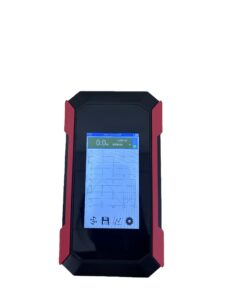
Click the picture to know more Handheld PD Tester.
In this method, sensors measure the apparent charge of PD pulses, usually expressed in picocoulombs (pC). Engineers also analyze the phase-resolved partial discharge (PRPD) pattern, which helps identify the type of insulation defect.
Typical measurable PD levels include:
-
Below 10 pC – Very healthy insulation
-
10–100 pC – Minor discharge activity
-
100–1000 pC – Potential insulation defect requiring investigation
-
Above 1000 pC – High risk of insulation failure
Electrical detection is highly sensitive and provides detailed diagnostic data, but it requires careful shielding and filtering to reduce electromagnetic interference.
Professional PD analyzers and high-precision sensors—such as those integrated into Wrindu’s insulation diagnostic solutions—use advanced digital filtering and signal processing algorithms to ensure accurate PD measurement even in noisy environments.
2. Acoustic Partial Discharge Detection
Acoustic detection uses ultrasonic sensors to capture sound waves generated by partial discharge events inside equipment.
When a PD event occurs, it produces a small mechanical shock that travels through solid insulation and metal structures. Ultrasonic sensors detect these signals and convert them into diagnostic data.
Advantages of acoustic PD detection include:
-
Suitable for on-site testing without shutdown
-
Effective for locating PD sources
-
Less sensitive to electromagnetic interference
Acoustic techniques are commonly used for monitoring:
-
Power transformers
-
Dry-type transformers
-
Medium-voltage switchgear
-
Cable accessories
In large transformers, multiple acoustic sensors can triangulate the exact PD location, helping maintenance teams quickly identify defective insulation areas.
3. Ultra-High Frequency (UHF) Detection
Ultra-high frequency detection is particularly effective for gas-insulated switchgear (GIS) systems.
PD events generate electromagnetic waves in the 300 MHz to 1.5 GHz frequency range, which can be captured by UHF sensors installed inside GIS enclosures.
Key benefits of UHF detection include:
-
Extremely high sensitivity in GIS environments
-
Strong resistance to external electrical noise
-
Real-time monitoring capability
Modern substations often integrate permanent UHF PD monitoring systems to continuously track insulation health.
Field studies show that UHF detection can identify GIS insulation defects months or even years before failure, making it one of the most reliable monitoring technologies for high-voltage substations.
Additional Partial Discharge Detection Methods
In addition to the main techniques above, several complementary technologies are used for specialized applications.
Optical detection
PD events can produce faint light emissions. Optical sensors and cameras detect these signals, particularly in laboratory testing environments.
Chemical analysis
Discharges inside oil-filled transformers generate gases such as hydrogen and acetylene. Dissolved Gas Analysis (DGA) helps identify PD activity indirectly.
High-frequency current transformer (HFCT)
HFCT sensors installed on cable grounding conductors detect high-frequency PD current pulses and are widely used in cable system monitoring.
Combining multiple detection methods often provides the most reliable diagnostic results.
Best Practices for Accurate Partial Discharge Measurement
To ensure reliable PD testing results, engineers should follow several key principles:
-
Use properly calibrated testing equipment compliant with IEC standards.
-
Minimize electrical noise through shielding and filtering.
-
Combine multiple detection methods when possible.
-
Analyze PD patterns and trends, not just single measurements.
-
Integrate continuous monitoring for critical assets.
Advanced testing systems incorporate digital signal processing, noise suppression algorithms, and automated pattern recognition to improve measurement accuracy.
Why Utilities Trust Wrindu for Partial Discharge Testing
Reliable PD detection requires both advanced instrumentation and deep engineering expertise.
Wrindu specializes in high-voltage testing equipment and diagnostic solutions for utilities, substations, and industrial power systems.
Wrindu’s testing solutions provide:
-
High-precision partial discharge detection systems
-
Advanced noise filtering and signal analysis
-
Portable equipment designed for field diagnostics
-
Compliance with IEC international testing standards
-
Professional technical support for testing and data interpretation
By combining modern PD detection technology with practical field experience, Wrindu helps utilities identify insulation problems early, reduce unexpected outages, and extend equipment service life.
Conclusion
Partial discharge measurement is one of the most effective tools for evaluating insulation health in high-voltage equipment. By using technologies such as electrical detection, acoustic monitoring, and UHF sensing, engineers can detect early insulation defects before they develop into major failures.
With accurate PD diagnostics and continuous monitoring, utilities can move from reactive maintenance to predictive asset management, significantly improving system reliability.
With professional solutions and technical expertise, Wrindu supports utilities worldwide in implementing reliable partial discharge detection strategies and maintaining safer, more efficient power systems.
FAQs
What is the most common method used to measure partial discharge?
The most common method for measuring partial discharge is the electrical detection method based on IEC 60270.
This technique measures the apparent charge of PD pulses in picocoulombs (pC) and analyzes their phase relationship with the AC voltage waveform.
Electrical PD testing is widely used in:
-
Transformer factory acceptance tests
-
Cable insulation testing
-
High-voltage equipment commissioning
Because of its high sensitivity and standardized procedures, electrical PD measurement remains the industry benchmark for insulation diagnostics. Modern PD analyzers also include digital filtering and pattern recognition to improve measurement accuracy in noisy environments.
2. How can engineers detect partial discharge in transformers?
Engineers detect partial discharge in transformers using electrical, acoustic, and chemical monitoring methods.
These technologies help identify insulation defects before they cause major failures.
The most commonly used transformer PD detection techniques include:
-
Electrical PD measurement during factory or offline testing
-
Ultrasonic acoustic sensors to locate discharge sources in the tank
-
Dissolved Gas Analysis (DGA) to detect gases produced by discharge activity
When these methods are combined, utilities can obtain both PD intensity and location information, enabling faster fault diagnosis and preventive maintenance.
3. What is a normal partial discharge level?
A normal partial discharge level in high-voltage equipment is typically below 10 picocoulombs (pC).
Low PD levels generally indicate healthy insulation conditions.
Typical PD severity guidelines are:
-
Below 10 pC – Excellent insulation condition
-
10–100 pC – Acceptable but should be monitored
-
100–1000 pC – Possible insulation defects
-
Above 1000 pC – High risk of insulation failure
However, acceptable PD levels depend on equipment type, voltage rating, and international standards. Engineers usually evaluate PD magnitude, pattern, and trend over time, rather than relying on a single measurement.
4. What equipment is used to detect partial discharge?
Partial discharge is detected using specialized PD analyzers, sensors, and monitoring systems designed for high-voltage diagnostics.
Typical PD testing equipment includes:
-
Partial discharge analyzers
-
High-frequency current transformers (HFCT)
-
Ultrasonic acoustic sensors
-
Ultra-high frequency (UHF) sensors for GIS systems
-
Optical and electromagnetic sensors
Modern PD testing solutions integrate digital signal processing, noise filtering, and phase-resolved pattern analysis to accurately identify insulation defects even in complex substation environments.
Professional testing systems developed by companies like Wrindu are designed to provide reliable PD measurement for transformers, switchgear, cables, and GIS installations.
5. How do you locate the source of partial discharge?
The most effective way to locate partial discharge sources is by using acoustic sensors or multiple synchronized detection methods.
PD location techniques typically include:
-
Ultrasonic triangulation using several acoustic sensors
-
UHF signal timing analysis in GIS equipment
-
HFCT sensor arrays for cable systems
By comparing the arrival time and intensity of PD signals at multiple sensors, engineers can determine the exact location of insulation defects inside equipment.
Accurate PD location significantly reduces troubleshooting time and allows maintenance teams to repair faults before they escalate into major failures.
6. Why is partial discharge monitoring important for power utilities?
Partial discharge monitoring is important because it provides early warning of insulation failure in high-voltage equipment.
Studies in the power industry show that:
-
70–80% of insulation failures are preceded by detectable PD activity
-
Continuous PD monitoring can reduce equipment failures by up to 60%
-
Predictive maintenance based on PD data can lower outage costs by 30% or more
By implementing continuous PD monitoring systems, utilities can shift from reactive maintenance to predictive asset management, improving both grid reliability and operational efficiency.
7. Can partial discharge be detected online without shutting down equipment?
Yes, partial discharge can be detected online using non-intrusive sensors without shutting down the equipment.
Online PD monitoring technologies include:
-
UHF sensors for GIS systems
-
HFCT sensors for cable monitoring
-
Ultrasonic acoustic sensors for transformers and switchgear
These systems continuously monitor PD activity while equipment remains energized, allowing utilities to detect insulation deterioration months or even years before failure occurs.
8. What causes partial discharge in high-voltage equipment?
Partial discharge is mainly caused by insulation defects such as voids, contamination, and aging materials.
Common PD causes include:
-
Air voids inside solid insulation
-
Surface contamination or moisture
-
Sharp conductor edges creating high electric stress
-
Aging insulation materials
-
Manufacturing defects
Over time, repeated PD events gradually erode insulation, eventually leading to breakdown or flashover if not detected early.
