

Future Trends of PD Testers and Partial Discharge Monitoring Technology
Discover the future trends of PD testers and partial discharge monitoring technology. Learn how AI, IoT sensors, and advanced PD detection systems improve insulation diagnostics for transformers, cables, and GIS. Explore how Wrindu develops reliable partial discharge testing equipment for modern power systems.
Partial discharge (PD) monitoring is becoming one of the most important technologies in modern power system maintenance. As electrical networks grow more complex and equipment ages, utilities and energy companies are shifting from traditional time-based maintenance to condition-based and predictive asset management.
According to recent industry reports, the global partial discharge monitoring market is expected to grow steadily over the next decade, driven by grid modernization, renewable energy expansion, and increasing demand for reliable high-voltage infrastructure. PD testers and monitoring systems are evolving rapidly to support this transformation.
This article explores the future trends of partial discharge testing and PD tester technology, highlighting how advanced diagnostics will play a key role in maintaining reliable electrical systems.
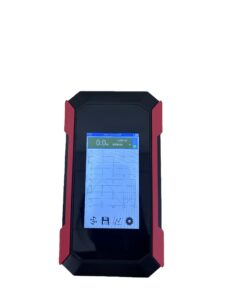
Click the picture to know more about Comprehensive PD Tester.
Growing Demand for Partial Discharge Monitoring

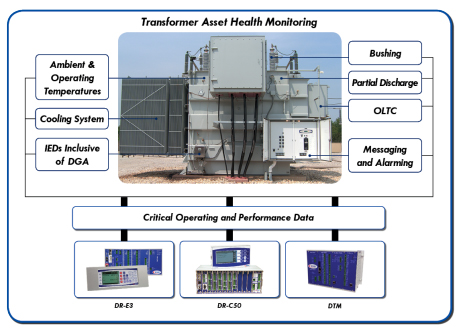
The demand for partial discharge monitoring continues to increase as power systems worldwide face several major challenges.
One of the biggest drivers is aging electrical infrastructure. Many transformers, cables, and switchgear installations have been operating for more than 30 years. Insulation degradation becomes more likely over time, making PD monitoring essential for early fault detection.
Another factor is the rapid expansion of renewable energy systems, including wind farms and solar plants. These facilities rely heavily on high-voltage cables, transformers, and switchgear, all of which require continuous insulation monitoring to ensure reliable operation.
Electrification trends—such as electric vehicles, data centers, and smart grids—are also placing higher stress on electrical networks. Utilities are therefore investing in advanced diagnostic technologies to prevent unexpected failures.
Industry studies indicate that condition-based maintenance strategies supported by PD monitoring can reduce insulation failures by 40–70%, making PD testing one of the most valuable tools in modern asset management.
Evolution of PD Tester Technology
Modern PD testers are becoming more intelligent, portable, and capable of analyzing complex electrical signals.
Traditional PD testing equipment focused primarily on measuring discharge magnitude. Today’s advanced analyzers integrate multiple technologies, including:
-
High-speed digital signal processing
-
Advanced noise filtering algorithms
-
Automatic pattern recognition
-
Portable field-testing capabilities
One important innovation is the ability to generate Phase-Resolved Partial Discharge (PRPD) patterns. By synchronizing measurements with the power frequency, PD testers can distinguish between different types of discharge sources, such as internal voids, surface discharges, or corona activity.
Manufacturers like Wrindu (RuiDu Mechanical and Electrical Shanghai Co., Ltd.) are contributing to this technological progress by developing high-precision PD detectors, portable testing instruments, and advanced insulation diagnostic systems used by utilities and equipment manufacturers worldwide.
These modern devices allow engineers to perform accurate on-site PD testing with faster setup and higher measurement reliability.
Integration with Digital Monitoring Platforms

Another major trend is the integration of PD monitoring systems with digital asset management platforms.
Instead of performing occasional offline tests, utilities are increasingly installing continuous online PD monitoring systems that collect data 24/7.
These systems combine signals from multiple sensors, including:
-
Ultra-high frequency (UHF) sensors for GIS
-
Acoustic sensors for transformers
-
High-frequency current transformers (HFCT) for cable systems
Collected data is transmitted to centralized software platforms where advanced analytics tools convert raw PD signals into actionable maintenance insights.
Cloud-based monitoring systems allow engineers to:
-
Track equipment condition remotely
-
Detect abnormal discharge activity early
-
Plan predictive maintenance more efficiently
This shift toward digital monitoring is transforming PD testing from a diagnostic tool into a core component of intelligent grid management.
Expanding Applications Across Power Equipment

As technology improves, partial discharge detection is being applied to a wider range of electrical equipment.
For power cables, PD testing combined with advanced diagnostic techniques can identify insulation defects and even determine the exact fault location.
For transformers, online PD monitoring systems continuously track discharge activity during normal operation, providing early warning of insulation deterioration.
For gas-insulated switchgear (GIS), ultra-high frequency sensors installed inside the enclosure can detect internal discharge signals that are impossible to observe externally.
Renewable energy installations such as wind farms and offshore substations are also adopting PD monitoring systems to protect critical electrical infrastructure.
These applications demonstrate how PD diagnostics help utilities maintain reliability without interrupting normal system operation.
Real Industry Benefits of Partial Discharge Monitoring
The practical benefits of PD monitoring have already been demonstrated in many power systems around the world.
For example, a 400 kV transmission substation in Southeast Asia installed a continuous PD monitoring system across several critical assets. After implementation, the utility reported a 70% reduction in insulation-related failures because engineers could detect problems early and schedule maintenance before major breakdowns occurred.
Wind farm operators also benefit significantly from cable PD monitoring. Underground cable failures can lead to expensive repairs and long production interruptions. By identifying insulation defects early, operators can avoid unexpected downtime and improve annual energy output.
These real-world cases show that partial discharge diagnostics provide both technical reliability and measurable economic value.
Future Outlook for Partial Discharge Technology
Looking ahead, the future of partial discharge management will rely heavily on automation, artificial intelligence, and advanced data analytics.
Next-generation PD monitoring systems will combine multiple sensor technologies with machine learning algorithms capable of automatically identifying discharge patterns and predicting insulation failures.
Emerging technologies such as IoT sensors and edge computing will allow PD signals to be analyzed closer to the equipment in near real time, enabling faster maintenance decisions.
As global power networks operate at higher voltages and handle more complex energy flows, maintaining insulation reliability will become increasingly critical.
With continuous innovation in testing technology and diagnostic equipment, companies like Wrindu are helping utilities adopt more advanced PD monitoring solutions that improve grid reliability, extend equipment life, and support the transition toward smarter energy systems.
Conclusion
Partial discharge monitoring is rapidly evolving from a specialized diagnostic method into a core technology for modern power system asset management. Advances in sensor technology, digital analytics, and intelligent PD testers are making it easier than ever to detect insulation problems early.
As power systems continue to expand and integrate renewable energy, reliable insulation monitoring will play a crucial role in ensuring safe and stable operation.
By adopting advanced PD testing solutions and continuous monitoring technologies, utilities can reduce failures, extend equipment lifespan, and build more resilient electrical infrastructure for the future.
FAQs
What is a PD tester used for?
A PD tester is used to detect and measure partial discharge activity in high-voltage electrical equipment. Engineers use PD testers to identify insulation defects in transformers, cables, switchgear, and generators before major failures occur. By detecting small discharge signals early, utilities can perform maintenance in advance and avoid costly outages.
Why is partial discharge testing important for power systems?
Partial discharge testing is important because it provides early warning of insulation deterioration. Small discharge signals often appear long before insulation fails. Detecting PD early allows engineers to repair or replace damaged components, improving power system reliability and preventing unexpected equipment breakdowns.
What equipment can detect partial discharge?
Partial discharge can be detected using specialized equipment such as PD analyzers and monitoring sensors. Common tools include partial discharge testers, ultra-high frequency (UHF) sensors, acoustic sensors, and high-frequency current transformers (HFCT). These devices capture electrical or electromagnetic signals generated by discharge activity.
Can partial discharge be monitored while equipment is operating?
Yes, partial discharge can be monitored online without shutting down the equipment. Online PD monitoring systems use sensors installed on transformers, cables, or GIS equipment to continuously detect discharge signals. This allows utilities to track insulation condition in real time while the system remains energized.
What is the future of partial discharge monitoring technology?
The future of partial discharge monitoring will focus on intelligent analysis and digital monitoring platforms. Modern PD systems are integrating cloud data platforms, artificial intelligence, and IoT sensors to automatically analyze discharge patterns and predict insulation failures. This helps utilities move toward predictive maintenance and smarter grid management.
