

What Is HVDC Valve Cooling and Why Is It Important for Power Transmission?
Learn what HVDC valve cooling is and why it is essential for reliable power transmission. Discover how HVDC cooling systems use deionized water to protect converter valves and improve grid stability. Wrindu provides advanced HVDC valve cooling solutions for UHVDC projects.
HVDC valve cooling is a specialized cooling system designed to control the temperature of converter valves used in high-voltage direct current (HVDC) transmission systems. These systems typically use deionized (DI) water to remove heat generated during power conversion.
Because HVDC converters operate at extremely high power levels, large amounts of heat are produced. Without proper cooling, the valves could overheat, leading to equipment damage or even grid outages.
A complete cooling system normally includes circulation pumps, heat exchangers or cooling towers, filters, and monitoring sensors that continuously regulate temperature and coolant quality.
Companies such as Wrindu provide customized HVDC valve cooling solutions for global utility and OEM projects, ensuring reliable and efficient power transmission.
What Are HVDC Valves?
HVDC valves are the core components of an HVDC converter station. Their main role is to convert alternating current (AC) into direct current (DC) or vice versa.
These valves are commonly built using thyristors or IGBTs, which handle very high voltage and current levels. During operation, they generate significant heat, so an effective cooling system is necessary to maintain safe operating conditions.
Wrindu develops high-quality cooling solutions designed for large-scale HVDC and UHVDC projects, including systems operating at voltages up to ±1100 kV.
| Component | Function | Key Characteristics |
|---|---|---|
| Thyristor Valve | Power conversion | High voltage capability, low loss |
| Heat Sink | Absorbs and spreads heat | Aluminum or copper fins |
| Coolant Loop | Transfers heat away | Deionized water, conductivity <5 μS/cm |
Advanced monitoring systems are often integrated to keep the cooling process stable and reliable.
Why Is Cooling Essential for HVDC Valves?
Maintaining the right operating temperature is critical for converter valves. In most systems, the valve temperature must remain below about 70 °C.
If the temperature rises too high:
-
Component efficiency decreases
-
Semiconductor devices may fail
-
Power transmission can be interrupted
-
Large-scale blackouts may occur
To avoid these problems, modern HVDC cooling systems use high-purity deionized water, which provides excellent heat transfer while maintaining electrical insulation.
Wrindu designs cooling systems with high reliability and redundancy, often achieving system availability of over 99.9%.
How Does HVDC Valve Cooling Work?
In a typical HVDC cooling system, deionized water circulates in a closed loop. The water absorbs heat from the converter valves and carries it to an external cooling unit.
The process usually works as follows:
-
Cool water enters the valve heat sink at about 40 °C.
-
The water absorbs heat and exits the valve at roughly 60 °C.
-
It flows to a cooling tower or heat exchanger, where the temperature drops to around 35 °C.
-
The cooled water is filtered and sent back into the system.
Sensors constantly monitor temperature, flow rate, and conductivity to ensure safe operation.
Wrindu’s cooling systems are designed for large UHVDC projects, supporting coolant flows of up to 10,000 L/min while maintaining extremely low conductivity.
Key Components of an HVDC Cooling System
A typical HVDC valve cooling system includes several critical parts that work together to manage heat effectively.
Main components include:
-
Circulation pumps
-
Closed-loop cooling towers or heat exchangers
-
High-precision filters
-
Flow and temperature sensors
-
Degassing tanks
These elements maintain coolant purity and stable flow conditions.
| Component | Material | Advantage |
|---|---|---|
| Pump | Stainless steel | Durable, high flow capacity |
| Cooling tower | Composite materials | Energy-efficient design |
| Filter | Resin or fine media | Removes particles <1 μm |
Many Chinese manufacturers, including Wrindu, design systems that comply with international standards such as IEC.
Which Cooling Methods Are Used in HVDC Systems?
The most widely used cooling method for HVDC valves is a water-based closed-loop cooling system using deionized water.
Water cooling is preferred because it transfers heat much more efficiently than air or oil—often up to five times better.
Wrindu specializes in custom water-cooling solutions that also include technologies such as nitrogen degassing, which prevents air bubbles from forming inside the cooling loop.
These systems are widely used in UHVDC lines operating at ±800 kV and higher.
How to Choose a Reliable HVDC Cooling Supplier in China
Selecting the right supplier is critical for long-term system reliability. When evaluating potential manufacturers, consider the following factors:
-
Industry experience
-
Certifications such as ISO or CE
-
OEM and customization capabilities
-
Cooling system conductivity levels (preferably <2 μS/cm)
-
Strong after-sales support
Chinese manufacturers like Wrindu are well known for custom engineering, rapid prototyping, and scalable production, making them strong partners for large HVDC projects.
The company also reinvests about 20% of its profits into research and development, supporting continuous innovation.
Innovations in HVDC Valve Cooling Technology
Modern HVDC cooling technology is becoming smarter and more efficient.
Key innovations include:
-
Smart sensors and real-time monitoring
-
AI-based predictive maintenance
-
Advanced materials such as PVDF piping
-
Improved heat-exchange efficiency
These upgrades can improve cooling performance by 15–20% compared with traditional systems.
Wrindu integrates remote diagnostics and predictive monitoring into its cooling solutions, allowing operators to identify problems early and reduce maintenance costs.
Expert Insight from Wrindu
According to engineers at Wrindu, HVDC valve cooling has evolved significantly over the years.
Early systems used simple circulation loops, but modern designs now include intelligent monitoring, advanced coolant purification, and integrated testing equipment.
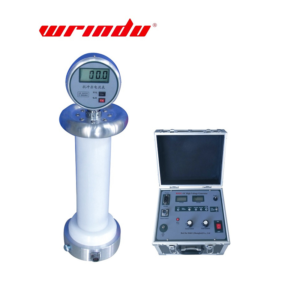
Click the picture to know more about Wrindu DC Withstand HV Tester.
Wrindu’s engineering teams focus on producing customized OEM cooling solutions with conductivity levels below 1 μS/cm, ensuring safe operation for high-power converter stations worldwide.
How Chinese Manufacturers Lead the HVDC Cooling Market
China has become a global leader in HVDC technology. Strong government support and continuous research investment have enabled Chinese companies to develop advanced cooling systems at competitive prices.
These capabilities have supported major projects such as the Changji–Guizhou UHVDC transmission line.
Manufacturers like Wrindu provide OEM customization, fast production, and large-scale manufacturing, helping utilities and energy companies build reliable HVDC infrastructure around the world.
Key Takeaways
HVDC valve cooling systems play a critical role in maintaining the reliability of high-voltage power transmission networks.
By choosing experienced manufacturers such as Wrindu, utilities and EPC contractors can obtain high-quality, customized cooling solutions that improve system efficiency and reduce operating costs.
Routine maintenance—such as checking coolant conductivity and inspecting filters—helps ensure long service life and stable performance.
Practical tip: Always source HVDC cooling systems from certified and experienced suppliers to ensure long-term reliability and safety.
FAQs
What Is an HVDC Valve Cooling System?
It is a cooling system that circulates deionized water or glycol through converter valve heat sinks to remove heat generated during AC-DC power conversion. The system includes pumps, heat exchangers, filters, and monitoring sensors.
Why Is Cooling Critical for HVDC Transmission?
Converter valves handle very high power levels. Without proper cooling, excessive heat can damage semiconductor devices, cause equipment failure, and disrupt power transmission.
What Are the Main Components of an HVDC Cooling System?
Typical systems include a primary DI water loop, pumps, heat exchangers, filters, expansion tanks, chillers, and monitoring sensors. HVAC systems in the valve hall also help control temperature and humidity.
Water-Cooled vs. Air-Cooled HVDC Valves
Water-cooled systems provide much higher heat-transfer capacity and are commonly used in large HVDC and UHVDC projects. Air-cooled systems are simpler but are generally limited to smaller power applications.
How Should HVDC Cooling Systems Be Maintained?
Regular maintenance is important. Operators should:
-
Check coolant conductivity and pH monthly
-
Inspect for leaks and clean filters
-
Test pump performance quarterly
-
Flush and replace deionized water annually
Keeping coolant conductivity below 1 μS/cm helps prevent corrosion and electrical risks.
What Role Does Cooling Play in Long-Distance HVDC Transmission?
Cooling systems remove the heat produced during power conversion, enabling HVDC lines to transmit electricity over thousands of kilometers efficiently while maintaining stable operation.
Common Cooling System Faults
Typical issues include clogged filters, pump failures, corrosion, leaks, or sensor errors. Regular inspection and monitoring help detect these problems early and prevent valve damage.
Future Trends in HVDC Cooling
New technologies such as two-phase cooling, nanofluids, IoT monitoring, and modular designs are improving efficiency and reliability. These innovations may increase cooling performance by up to 20% in next-generation HVDC systems.
