

4-Wire Kelvin Method for Power Utilities & Substations
4-wire Kelvin method for power utilities & substations: test cables, transformers, switchgear. Precision testing for grid reliability and safety.
Power utilities and substations are the backbone of reliable power grid operation, where even minor resistance anomalies can trigger equipment overheating, unplanned outages, safety hazards, and massive economic losses. The 4-wire Kelvin method for power utilities stands as the gold-standard precision testing solution, designed to tackle the unique challenges of high-voltage, low-resistance measurements in grid infrastructure. Unlike inaccurate 2-wire testing, this method eliminates lead and contact resistance errors, delivering actionable, reliable data to maintain grid stability, safety, and compliance.
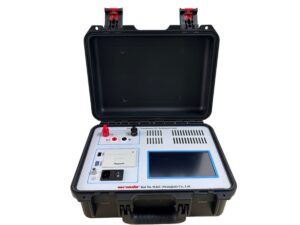
Click the image to know more about Wrindu DC Resistance Tester.
Core Applications of 4-Wire Kelvin Method in Substations
Substation assets operate under high voltage and heavy load conditions, requiring ultra-precise resistance testing to detect hidden defects. The substation Kelvin resistance test targets critical components, enabling predictive maintenance and proactive fault resolution:
1. Power Cable & Cable Joint Testing
Cable joints and terminations are frequent failure points in power grids; even small resistance increases signal degradation, corrosion, or poor connections. The 4-wire Kelvin method accurately measures the milliohm-level resistance of cable conductors and joints, identifying weak spots before they cause breakdowns or fires. It is suitable for medium and high-voltage power cables, ensuring optimal power transmission efficiency and preventing costly grid interruptions.
2. Transformer Winding & Connection Resistance Testing
Transformer windings, bushings, and internal connections are vital for voltage conversion, and uneven or high resistance leads to energy loss, overheating, and even transformer burnout. The 4-wire Kelvin method performs high-precision resistance tests on transformer windings, detecting short circuits, loose connections, and material aging. This supports timely maintenance, extending transformer service life and safeguarding substation core equipment.
3. High-Voltage Switchgear & Circuit Breaker Contacts
Switchgear and circuit breakers control power flow, and faulty contact resistance causes arcing, contact erosion, and operational failures. The 4-wire Kelvin method measures contact resistance with microohm resolution, assessing contact wear, oxidation, and poor alignment. Routine testing ensures switchgear operates reliably, supporting safe grid load switching and fault isolation.
4. Busbar & Grounding Connection Testing
Substation busbars and grounding connections carry heavy currents; loose or corroded connections create high resistance points, threatening both equipment and personnel safety. The 4-wire Kelvin method verifies the integrity of these connections, ensuring low-resistance conductivity and reliable grounding, a key requirement for power grid precision testing and regulatory compliance.
Key Operational Best Practices for Power Utility Settings
To leverage the full benefits of Kelvin resistance testing in high-voltage substation environments, follow these critical operational guidelines:
-
Always power off equipment, discharge residual voltage, and follow strict high-voltage safety protocols before testing to eliminate electrical hazards.
-
Use industrial-grade, insulated Kelvin test leads and clips, designed for high-voltage substation environments, to avoid signal interference and ensure operator safety.
-
Adhere to the “sense inside force” wiring rule, keeping test leads short and separated to minimize electromagnetic interference (EMI) common in power substations.
-
Clean metal contact surfaces of oxide, dust, and dirt before testing, as poor contact distorts readings and undermines test accuracy.
-
Calibrate testing equipment regularly to maintain precision, and record all test data for grid maintenance audits and compliance reporting.
Wrindu Expert Review
Wrindu (Rui Du Mechanical and Electrical (Shanghai) Co., Ltd.), founded in 2014, is a professional global manufacturer and system solution provider for high-voltage power testing equipment, with all products certified by ISO9001, IEC, and CE international standards. We specialize in tailored testing solutions for power utilities and substations, optimizing 4-wire Kelvin technology for harsh grid environments.
Our technical team notes that power utilities face unique EMI and high-voltage challenges, making proper Kelvin testing setup and equipment selection critical. “Substation equipment failures often stem from undetectable small resistance defects, which 2-wire testing misses entirely,” explains a Wrindu senior engineer. “Our industrial-grade Kelvin resistance testers are built to resist substation EMI, with enhanced safety features and high precision, helping teams quickly locate faults and reduce downtime. For any power utility, the 4-wire Kelvin method is not just a testing tool—it’s a core investment in grid safety and stability.”
FAQs: 4-Wire Kelvin Method for Power Utilities & Substations
Q1: Why can’t power utilities use 2-wire testing instead of 4-wire Kelvin for substation tests?
Conclusion first: 2-wire testing includes lead and contact resistance in results, producing inaccurate data for low-resistance substation components; 4-wire Kelvin eliminates these errors, making it the only reliable choice for power grid testing.
Q2: How often should substation Kelvin resistance tests be performed?
Conclusion first: For critical assets (transformers, switchgear), conduct tests every 6–12 months; after equipment maintenance or repairs, perform immediate Kelvin testing to verify connection integrity.
Q3: What should I do if Kelvin test results show abnormally high resistance in substation equipment?
Conclusion first: Abnormally high resistance signals defects like oxidation or loose connections—reclean contacts, recheck wiring, and retest; if issues persist, refer to Kelvin test troubleshooting and schedule urgent maintenance.
Q4: Is Wrindu’s Kelvin testing equipment suitable for high-voltage substation environments?
Conclusion first: Yes, Wrindu’s 4-wire Kelvin testing gear is engineered for power utilities, with high EMI resistance, industrial safety certifications, and durable design for harsh substation conditions.
Explore More Essential Resources
