

4-Wire Kelvin Measurement Mistakes to Avoid | How to Avoid Errors | Wrindu
Avoid common 4-wire Kelvin measurement mistakes including wrong wiring, bad contacts, improper leads, and instrument errors. Get accurate low-resistance test results every time.
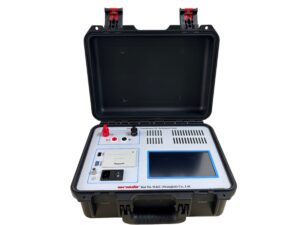
The Most Common 4-Wire Kelvin Measurement Mistakes and How to Fix Them
1. Incorrect Lead Wiring & Connection Mix-Up
The Mistake: One of the most fundamental errors is confusing the roles of the current leads (I+) and (I-) and the voltage sensing leads (V+) and (V-). Connecting them in the wrong order, or shorting them together, completely skews the reading.
The Fix:
- Follow the Standard Diagram: Always adhere to the standard 4-wire Kelvin setup where current flows through the outer leads (I) and voltage is measured across the inner leads (V).
- Label Your Leads: Clearly label each test lead with positive (+) and negative (-) indicators to avoid cross-connection during setup.
- Double-Check Before Testing: A quick visual confirmation of the lead connections before initiating a test run can eliminate this costly error.
2. Poor Probe Contact & Dirty Terminals
- Clean Regularly: Wipe probe tips and test terminals with isopropyl alcohol to remove oxidation, flux residue, or dust.
- Maintain Sharp Tips: Replace worn or flattened probe tips immediately to ensure a sharp, focused contact point.
- Apply Consistent Pressure: Use a fixture or apply uniform pressure to guarantee stable contact across multiple test cycles.
3. Using the Wrong Test Leads or Probes
The Mistake: Using standard coaxial cables or alligator clips instead of dedicated Kelvin test leads is a common oversight. Standard leads cannot separate current and voltage paths effectively.
The Fix:
- Invest in Kelvin-Specific Leads: Purchase genuine Kelvin test leads with four independent conductors and low-resistance connectors.
- Choose the Right Probe Type: For SMD components, use a spring-loaded or ceramic probe. For cables and terminals, use a sharp-point or retractable tip probe based on your specific DUT.
- Keep Leads Short: Minimize lead length to reduce inherent lead resistance and electromagnetic interference (EMI).
4. Incorrect Range Setting or Overloading the Instrument
The Mistake: Setting the multimeter or Kelvin source measure unit (SMU) to the wrong resistance range can lead to “out of range” errors or inaccurate readings. Similarly, applying too much current can heat the DUT, altering its resistance.
The Fix:
- Start High and Auto-Range: Begin with the highest range and allow the instrument to auto-range, or manually select a range slightly higher than your expected reading.
- Calibrate Your Equipment: Regularly calibrate your Kelvin measurement device to ensure it is operating within factory specifications.
- Control Test Current: Refer to the DUT’s datasheet for maximum current tolerance and set your instrument accordingly to prevent self-heating.
5. Neglecting Thermal EMF & Environmental Interference
The Mistake: Temperature differentials between the test leads and the DUT can generate small thermal electromotive forces (EMF), which interfere with microvolt-level voltage measurements.
The Fix:
- Allow Thermal Equilibrium: Let the test setup acclimate to the ambient temperature for a few minutes before testing.
- Minimize Temperature Gradients: Keep test leads and the DUT at the same temperature. Avoid placing the setup near heat sources or in direct sunlight.
- Use Guarded Leads: For ultra-precise measurements, use guarded Kelvin leads to reject common-mode noise and interference.
6. Failing to Account for Load Resistance
The Mistake: Forgetting that the input impedance of the voltmeter section of the Kelvin instrument forms a voltage divider with the DUT’s resistance. While this is minimal for low impedance, it can affect readings for very high impedance circuits.
The Fix:
- Verify Input Impedance: Ensure your instrument’s voltmeter input impedance is sufficiently high (typically in the GΩ range) for your specific measurement requirements.
- Stick to Low-Impedance Applications: 4-wire Kelvin measurement is optimized for low resistance (milliohms to microohms). For high-resistance measurements, a 2-wire approach may be more suitable, though it has its own limitations.
Why Avoiding These Mistakes Matters
- Guarantee Product Quality: Catch true defects, not those masked by measurement error.
- Reduce Rework & Waste: Avoid scrapping good components or reworking assemblies based on bad data.
- Optimize Production Efficiency: Integrate reliable testing into automated lines without unexpected failures.
- Build Trust with Clients: Deliver consistent, accurate results that your customers can rely on.
Related Resources
FAQs
Q1: What is the most common mistake that ruins 4-wire Kelvin measurements?
Q2: Can dirty probe tips really affect the accuracy of my Kelvin test results?
Q3: Is it okay to use regular alligator clips for Kelvin testing?
Q4: How can I prevent my test equipment from overheating the device under test (DUT)?
Q5: My Kelvin measurements are fluctuating randomly. What could be the cause?
Q6: Can I use 4-wire Kelvin measurement for high-resistance components?
