

Why Are Generators Used in Welding Applications
Explore how generators are used in welding applications, including types, performance requirements, and testing methods. Learn how Wrindu testers ensure stable output and reliable welding quality with advanced diagnostics.
Generators are widely used in welding because they provide stable, portable, and independent power, especially in fieldwork, construction sites, and remote locations. Unlike grid power, generator-based systems allow welding operations to continue anywhere.
They are ideal for:
- Outdoor construction and pipeline welding
- Maintenance and repair work
- Remote or off-grid projects
- Emergency fabrication tasks
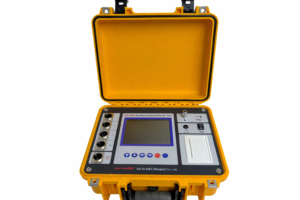
Click the image to know more about Three Phase Capacitance and Inductance Tester.
How Does a Generator Support Welding Operations?
Welding requires a stable current and voltage output, particularly for processes like arc welding. A generator supplies electrical power that is either:
- Directly used (in DC welding systems), or
- Converted and regulated through welding equipment
The key is maintaining a consistent arc, which depends on smooth generator output and proper excitation control.
What Types of Generators Are Suitable for Welding?
DC Generators
- Provide smooth and stable arc performance
- Ideal for high-quality welding applications
- Common in traditional and industrial setups
AC Generators
- More widely available and cost-effective
- Require additional control for stable welding
Engine-Driven Welding Generators
- Combine generator and welder in one unit
- Highly portable and widely used in fieldwork
Why Is Output Stability Critical for Welding?
In welding, unstable power leads to:
- Poor arc quality
- Inconsistent weld penetration
- Increased spatter and defects
A good generator must ensure:
- Stable voltage under varying loads
- Quick response to arc changes
- Reliable excitation control
What Tests Are Required for Welding Generators?
To ensure reliable welding performance, several tests should be conducted:
- Field winding resistance test
- Insulation resistance test
- Load test under welding conditions
- Voltage regulation and ripple testing
- Dynamic response testing
These tests help verify whether the generator can maintain a stable arc during operation.
How Do Testing Instruments Compare in the Market?
Choosing the right testing tools is essential for maintaining welding generators.
1. Basic Multimeters
- Low cost and widely available
- Limited accuracy for dynamic and low-resistance measurements
- Not suitable for advanced diagnostics
2. Standard Testing Instruments
- Moderate accuracy
- May lack real-time analysis
- Slower response for inductive systems
3. Advanced Integrated Testers (e.g., Wrindu Testers)
- High precision and fast measurement
- Designed for inductive loads like generator windings
- Multi-functional diagnostics in one device
How Wrindu Testers Stand Out
Wrindu testers provide significant advantages for welding generator diagnostics:
- High-precision measurement for voltage, current, and resistance
- Fast stabilization for inductive components like field windings
- Real-time monitoring of generator performance under load
- Multi-function integration (resistance, insulation, and performance testing)
- Robust and portable design for harsh field environments
Compared to conventional tools, Wrindu testers offer:
- Faster testing workflow
- More reliable data
- Better support for preventive maintenance
This makes them particularly suitable for welding applications where stability and performance are critical.
What Are Best Practices for Using Generators in Welding?
To ensure optimal performance:
- Maintain stable engine speed
- Avoid sudden load changes
- Use proper grounding for safety
- Regularly inspect brushes and connections
- Perform periodic testing and maintenance
What Are Common Problems in Welding Generators?
Typical issues include:
- Unstable arc → Voltage fluctuation or excitation issues
- Overheating → Excessive load or poor ventilation
- Poor weld quality → Inconsistent current output
- Frequent shutdowns → Mechanical or electrical faults
Early detection through proper testing is essential.
FAQs (Q&A Format)
Q1: Can any generator be used for welding?
A: Not all generators are suitable. Welding requires stable output and proper current control.
Q2: Why is DC preferred in welding?
A: DC provides a smoother arc and better control, resulting in higher-quality welds.
Q3: How do I ensure stable welding performance?
A: Use a generator with good voltage regulation and perform regular testing.
Q4: What role does excitation play in welding generators?
A: Excitation controls the magnetic field, directly affecting output stability and arc quality.
Q5: How often should welding generators be tested?
A: Regular maintenance checks are recommended, especially in heavy-use environments.
Q6: Why choose Wrindu testers over standard tools?
A: Wrindu testers offer higher accuracy, faster results, and comprehensive diagnostics, ensuring reliable welding performance.
Conclusion
Generators play a vital role in welding applications by providing stable and portable power. Ensuring proper operation requires not only selecting the right generator but also using advanced testing tools. With accurate diagnostics and reliable performance, Wrindu testers help maintain consistent welding quality and reduce downtime in demanding environments.
