

How to Test DC Generator Excitation Systems
Learn how to test DC generator excitation systems, including armature testing methods, common faults, and the best generator testing equipment for accurate diagnostics.
Common Generator Faults and Diagnostic Methods
Reliable generator performance depends on accurate testing and timely diagnostics. Whether you are working in a power plant, substation, or testing laboratory, understanding how to test DC generator excitation systems is essential for ensuring stable voltage output and preventing failures.
This guide covers practical testing methods, common faults, and the role of modern dc generator testing equipment in improving accuracy and efficiency.
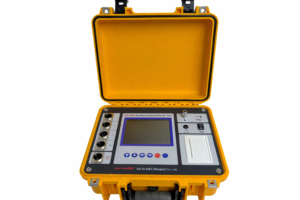
Click the image to know more about Three Phase Capacitance and Inductance Tester.
Why Generator Testing Is Important
Regular testing helps to:
- Ensure stable voltage output
- Detect early faults in excitation systems
- Prevent unexpected downtime
- Extend generator lifespan
- Improve system safety
Excitation system issues are one of the most common causes of generator instability, making excitation system testing a critical maintenance task.
What Is Included in Excitation System Testing?
Excitation system testing focuses on components that control the magnetic field:
- Field winding
- Armature winding
- Brushes and commutator
- External excitation source (if applicable)
The goal is to verify that the generator can build, maintain, and regulate voltage correctly.
Key Tests for DC Generator Excitation Systems
1. Field Winding Resistance Test
This test checks whether the field winding is:
- Continuous
- Free from short circuits
- Within standard resistance values
📌 Abnormal results may indicate:
- Overheating damage
- Loose connections
- Insulation degradation
2. Insulation Resistance Test
Insulation testing ensures that there is no leakage current between:
- Windings and ground
- Different winding sections
High insulation resistance = good condition
Low resistance = potential failure risk
3. Open Circuit Characteristic (OCC) Test
This test is especially important for self-excited generators.
It measures how voltage builds up without load.
Results help determine:
- Residual magnetism condition
- Voltage build-up capability
- Field performance
4. Load Test
Load testing evaluates generator performance under real conditions.
It helps measure:
- Voltage stability
- Current output
- Efficiency
This is essential for identifying voltage drop in generators under load.
5. Field Current Measurement
For separately excited generators, measuring field current is critical.
It ensures:
- Proper excitation control
- Stable magnetic flux
6. Armature Testing Methods
The armature is a key component and requires detailed inspection.
Common armature testing methods include:
- Resistance measurement
- Surge testing
- Commutator inspection
These tests help detect:
- Winding faults
- Uneven current distribution
- Mechanical wear
Common Generator Faults and Their Causes
1. Failure to Build Voltage
Possible causes:
- Loss of residual magnetism
- Open field circuit
- Incorrect wiring
2. Voltage Instability
Possible causes:
- Poor excitation control
- Fluctuating field current
- Load variations
3. Excessive Voltage Drop
Possible causes:
- Armature reaction effect
- High internal resistance
- Weak field excitation
4. Brush Sparking
Possible causes:
- Worn brushes
- Dirty commutator
- Incorrect brush position
5. Overheating
Possible causes:
- Overload conditions
- Poor ventilation
- Insulation failure
Diagnostic Methods for Accurate Fault Detection
To identify faults efficiently, engineers use a combination of:
Visual Inspection
- Check brushes, wiring, and connections
Electrical Measurement
- Measure voltage, current, and resistance
Trend Analysis
- Compare historical data to detect abnormalities
Advanced Testing Equipment
- Provides precise and automated diagnostics
Role of Generator Testing Equipment
Modern generator testing equipment plays a crucial role in improving testing accuracy and efficiency.
Typical tools include:
- Insulation resistance testers
- Winding resistance meters
- Load bank simulators
- Voltage and current analyzers
These tools help engineers:
- Perform faster diagnostics
- Reduce human error
- Improve maintenance planning
How Wrindu Testers Stand Out
Wrindu provides advanced solutions for generator testing and diagnostics, designed for real-world industrial applications.
Our equipment supports:
- Excitation system testing
- Armature and field winding analysis
- Voltage regulation testing
- Load simulation and performance evaluation
With high precision and user-friendly design, Wrindu testers help engineers ensure reliable generator operation and reduce downtime.
Best Practices for Generator Testing
To achieve accurate results:
- Perform tests regularly
- Follow standard testing procedures
- Use calibrated equipment
- Record and analyze data
- Address issues immediately
Conclusion
Testing DC generator excitation systems is essential for maintaining performance, stability, and safety. By using proper armature testing methods and reliable generator testing equipment, engineers can quickly identify faults and prevent major failures.
Regular diagnostics not only improve system reliability but also reduce long-term maintenance costs.
