

What Is Droop Control and How Does It Improve Power Systems
Learn how droop control works in power systems, including its mechanism, advantages, and role in microgrids and renewable energy integration. Discover why droop control is essential for stable, decentralized power management.
Droop control remains one of the most important techniques in modern power systems for balancing generation and load without relying on centralized communication. It is widely used in microgrids, distributed energy systems, and renewable power networks to maintain stability by automatically adjusting output based on frequency and voltage changes.
When electricity demand shifts or multiple generators operate in parallel, droop control ensures stable operation by proportionally increasing or decreasing power output in response to system deviations.
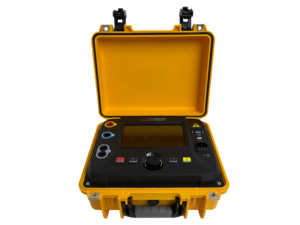
Click the image to know more about Wrindu New IR Tester.
What Is Droop Control and How Does It Work?
At its core, droop control is a decentralized feedback method that enables multiple power sources to share load efficiently. It establishes a proportional relationship between:
- Active power and system frequency
- Reactive power and system voltage
When system frequency drops due to higher load demand, generators increase active power output. When frequency rises, output decreases. Similarly, voltage droop adjusts reactive power to maintain voltage balance.
Because this mechanism relies only on local measurements, it eliminates the need for high-speed communication between generators. This makes it especially valuable in microgrids where infrastructure may be limited or unreliable.
Why Droop Control Is Critical for Grid Stability
Droop control plays a vital role in maintaining system stability, particularly in decentralized energy networks. Unlike traditional centralized control methods, each power source independently responds to real-time changes.
For example, when a sudden load increase causes a frequency dip, droop-controlled units immediately respond by supplying more power. This distributed response:
- Improves transient performance
- Reduces frequency fluctuations
- Prevents circulating currents between generators
As a result, droop control enhances both reliability and operational efficiency in multi-source power systems.
Key Components of Droop Control Implementation
Modern droop control systems are implemented through embedded control loops in generators, inverters, or turbine governors. The key elements include:
- Droop coefficient: Determines how sensitive power output is to frequency or voltage changes
- Control loops: Continuously monitor system conditions and adjust output
- Power electronics: Enable precise and fast response in inverter-based systems
In renewable energy systems, droop control is often combined with:
- Phase-locked loop (PLL) synchronization
- Virtual synchronous machine (VSM) algorithms
- Real-time digital signal processing
These technologies allow inverter-based resources to mimic the behavior of traditional synchronous generators, improving system stability in low-inertia grids.
Industry Trends and Market Adoption
With the rapid growth of renewable energy, droop control has become a standard feature in modern grid design. Industry data indicates that a majority of newly deployed microgrids now rely on droop-based strategies.
Key drivers include:
- Increased integration of solar and wind power
- Expansion of battery energy storage systems
- Demand for decentralized and resilient grid architectures
In hybrid systems—such as diesel generators combined with solar PV—droop control ensures smooth load sharing without communication delays, making it highly efficient and scalable.
About Wrindu: Supporting Reliable Power Systems
Wrindu is a globally recognized provider of high-voltage testing and diagnostic equipment. Established in 2014, the company focuses on delivering accurate, durable, and safe solutions for power system testing.
Its engineering philosophy—precision, adaptability, and reliability—aligns closely with the principles behind droop control, supporting stable and intelligent energy systems worldwide.
Droop Control vs Other Control Strategies
Although droop control is widely used, other control methods also exist:
- Master-slave control: Centralized, requires communication
- Virtual synchronous generator (VSG): Provides better inertia simulation but is more complex
- Model predictive control (MPC): Offers optimization capabilities but requires higher computational resources
Compared to these approaches, droop control stands out for its simplicity, scalability, and independence from communication networks.
In advanced systems, droop control is often integrated into hierarchical frameworks that include:
- Primary control (droop)
- Secondary control (frequency restoration)
- Tertiary control (economic optimization)
This layered approach improves both accuracy and long-term performance.
Real-World Applications and Benefits
Droop control is widely used across various sectors, including:
- Microgrids in remote or island regions
- Industrial facilities with critical loads
- Data centers requiring uninterrupted power
- Renewable energy plants with storage systems
Practical benefits include:
- Reduced frequency deviations
- Higher renewable energy penetration
- Lower maintenance and synchronization costs
- Improved system resilience during disturbances
Utilities and operators often report significant efficiency gains and cost savings when implementing droop-based control systems.
Future Development of Droop Control Technology
As power systems evolve, droop control continues to advance with new technologies. Future developments include:
- Adaptive droop coefficients based on real-time conditions
- Integration with machine learning algorithms
- Predictive analytics for faster response
- Grid-forming inverter capabilities
- Edge computing and 5G-enabled monitoring
These innovations aim to enhance performance in low-inertia and highly dynamic renewable energy systems.
Frequently Asked Questions (FAQs)
What is the main purpose of droop control?
Droop control enables stable load sharing and frequency regulation among multiple generators without centralized coordination.
How is droop control different from automatic generation control (AGC)?
AGC relies on centralized control signals, while droop control operates independently using local measurements.
Can droop control be applied to renewable energy systems?
Yes, it is widely used in solar, wind, and battery storage systems for stable and efficient integration.
What are the limitations of droop control?
It may have limited accuracy in restoring nominal frequency and can face challenges in low-inertia systems, which are typically addressed with secondary control layers.
Is droop control suitable for both grid-connected and islanded systems?
Yes, it works effectively in both modes and supports seamless transitions between them.
Conclusion: The Backbone of Decentralized Energy Systems
Droop control continues to be a cornerstone of modern power system operation. Its decentralized, communication-free approach makes it ideal for microgrids, renewable integration, and hybrid energy systems.
As the global energy landscape shifts toward cleaner and more distributed architectures, droop control will remain essential for ensuring stable, efficient, and autonomous grid performance.
