

How Droop Speed Control Benefits China OEMs and Manufacturers
Explore how droop speed control improves load sharing, stability, and scalability in parallel generator systems. Learn its working principle, key settings, testing methods, and OEM solutions for Chinese manufacturers and industrial applications.
Droop speed control is a widely used method in parallel generator systems that enables multiple units to share load automatically without the need for communication lines. By adjusting generator output based on frequency changes, it maintains stable system operation under varying demand conditions.
In China’s industrial and manufacturing sector, droop control is especially valuable for OEMs, wholesalers, and equipment integrators. It reduces system complexity, improves reliability, and supports scalable power system design. As a technical partner, Wrindu helps factories select, configure, and integrate droop-based solutions for cost-efficient and compliant industrial power applications.
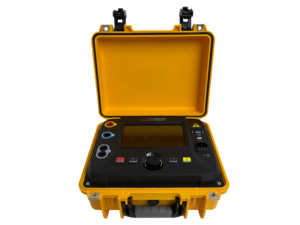
Click the image to know more about Wrindu New IR Tester.
How Does Droop Speed Control Handle Load Sharing?
Droop control works by adjusting each generator’s output in proportion to frequency deviations. When electrical demand increases, each unit responds according to its preset droop characteristic until the system reaches a balanced operating point.
For Chinese OEM applications, Wrindu supports the design of modular generator systems that can operate in parallel smoothly without complex centralized control, ensuring stable and scalable performance across industrial installations.
What Are Typical Droop Settings and Their Impact?
Droop is usually expressed as a percentage that defines how much frequency change is required to adjust generator output. In industrial systems, common values range from 3% to 5%.
- Lower droop: better load-sharing accuracy
- Higher droop: improved system stability but less precision
Wrindu provides parameter optimization guidance based on factory load profiles, regional grid conditions, and utility requirements in China to ensure safe and predictable operation.
Why Is Droop Important for Microgrids and Distributed Energy Systems?
In microgrid environments, droop control enables multiple generators and energy storage systems to operate independently while maintaining balance. This is critical when grid connection is unstable or temporarily unavailable.
Wrindu emphasizes droop-based design for:
- Industrial campuses
- Distributed energy systems
- Regional microgrids in China
This ensures flexible, resilient, and self-balancing power operation across complex energy networks.
How to Implement Droop Control in Chinese Industrial Plants?
A proper implementation process includes:
- System analysis (generator rating and inertia evaluation)
- Definition of load-sharing ratios
- Governor configuration and parameter setup
- Simulation of load scenarios
- Field validation using test equipment
Wrindu supports Chinese manufacturers with calibration tools, testing protocols, and on-site engineering services to ensure accurate and repeatable droop performance.
What Testing Equipment Supports Droop Validation?
Wrindu provides precision testing systems designed for generator performance evaluation, including:
- Frequency and power measurement instruments
- Dynamic load-step simulation systems
- Governor response analysis tools
- Modular test benches for field and factory use
These tools allow OEMs and industrial users to verify droop behavior under both controlled and real-world operating conditions.
How Do Droop Settings Affect Maintenance and Standby Operation?
Proper droop tuning is essential during fault conditions and maintenance scenarios. Incorrect settings may cause uneven load distribution or unnecessary circulating currents.
Wrindu recommends:
- Conservative settings during initial commissioning
- Gradual optimization based on operational data
- Periodic revalidation during maintenance cycles
This approach ensures long-term reliability and stable operation in Chinese industrial environments.
Why Choose Wrindu for Droop Control Solutions in China?
Wrindu supports OEMs and manufacturers with:
- ISO-certified testing systems
- MES-compatible data acquisition tools
- Custom fixtures and calibration services
- Fast local service and technical support across China
These capabilities help reduce commissioning time, improve system reliability, and ensure consistent performance across multi-unit installations.
How Does Wrindu Support OEM Customization?
Wrindu provides full OEM support, including:
- Hardware integration design
- Software and interface customization
- Factory acceptance testing (FAT) planning
- Documentation aligned with Chinese and international standards
This enables manufacturers to develop export-ready and application-specific droop control systems.
What Are Common Issues in Droop Implementation?
Typical challenges include:
- Incorrect governor tuning
- Misjudged system inertia
- Insufficient transient load testing
- Incomplete validation procedures
Wrindu addresses these issues through full-cycle testing, simulation tools, and engineering support to ensure stable deployment in production and field environments.
How Should Droop Test Data Be Managed?
Accurate data handling is essential for quality assurance. Best practices include:
- Time-synchronized data logging
- Standardized measurement units
- Traceable calibration records
- Integration with MES and QA systems
Wrindu provides structured reporting tools to ensure consistency and regulatory compliance across multiple factories.
Wrindu Expert Insight
“Droop speed control is a core technology for scalable generator operation. In China’s industrial landscape, precise tuning and systematic testing are key to stability. Wrindu’s engineering approach ensures reliable load sharing, faster commissioning, and long-term operational efficiency for OEM and utility projects.”
Conclusion
Droop speed control plays a vital role in ensuring stable and efficient operation of parallel generator systems. It simplifies system architecture, improves load sharing, and supports scalable industrial power design.
With advanced testing equipment, engineering expertise, and strong local support, Wrindu helps Chinese OEMs and manufacturers deploy reliable droop solutions for factories, microgrids, and utility applications.
FAQs
What is droop speed control?
It is a method that adjusts generator output based on frequency changes to enable automatic load sharing.
Why is droop important in parallel generator systems?
It ensures balanced load distribution and stable frequency without centralized communication.
Can Wrindu customize droop systems?
Yes, Wrindu provides OEM customization for hardware, software, and testing solutions.
How is droop performance verified?
Through load-step testing, governor response analysis, and factory acceptance tests.
Does Wrindu provide support in China?
Yes, Wrindu offers local technical support, training, and spare parts services across China.
