

Helium vs Pressure Decay Testing: Which Leak Testing Method Is Better for High-Voltage Equipment
Compare helium leak testing vs pressure decay testing for high-voltage equipment. Learn the differences in sensitivity, accuracy, leak detection methods, and the best applications for HV equipment leak tests.
Leak testing is essential for maintaining the safety, insulation performance, and long-term reliability of high-voltage equipment. Even small leaks in transformers, GIS systems, vacuum interrupters, or cable accessories can lead to moisture ingress, insulation degradation, and costly failures.
Among the most widely used leak detection methods are helium leak testing and pressure decay testing. Each method has different advantages, sensitivity levels, and application scenarios.
This article explains the differences between helium vs pressure decay testing, how each method works, and which approach is best for various HV equipment leak test applications.
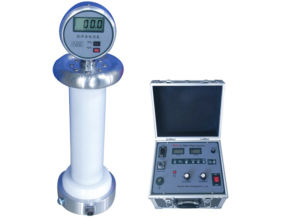
Click the image to know more about DC Withstand Voltage Tester.
What Is Helium Leak Testing?
Helium leak testing uses helium gas as a tracer gas to identify extremely small leaks in sealed systems.
A helium leak detector measures escaping helium using highly sensitive sensors, often based on mass spectrometry technology.
Because helium atoms are very small and inert, this method can detect microscopic leak paths that other testing methods may miss.
Helium leak testing is commonly used for:
- GIS equipment
- Vacuum interrupters
- Transformers
- SF6 gas systems
- Cable joints and terminations
- Sealed electrical components
What Is Pressure Decay Testing?
Pressure decay testing evaluates leaks by monitoring pressure changes inside a sealed system over time.
During the test:
- The equipment is pressurized with air, nitrogen, or another gas
- The system is isolated
- Pressure is monitored for a specific period
- Pressure loss indicates possible leakage
Pressure decay testing is widely used because it is simple, economical, and easy to perform.
How Does Helium Leak Testing Work?
Helium leak testing usually follows two main approaches.
Vacuum Method
The equipment is placed under vacuum conditions while helium is introduced.
A helium leak detector measures even tiny traces of escaping helium.
This method offers extremely high sensitivity.
Sniffer Method
Helium is pressurized inside the equipment while an operator uses a sniffer probe around seals, welds, and joints.
This method is often used for field maintenance and on-site inspections.
How Does Pressure Decay Testing Work?
Pressure decay testing measures whether internal pressure changes over time.
The basic process includes:
- Pressurizing the equipment
- Stabilizing temperature and pressure
- Monitoring pressure readings
- Calculating pressure loss
If pressure drops beyond acceptable limits, leakage is suspected.
Unlike helium testing, pressure decay testing does not directly locate leak points.
What Is the Main Difference Between Helium and Pressure Decay Testing?
The biggest difference is sensitivity.
Helium leak testing detects microscopic leaks with extremely high precision, while pressure decay testing mainly identifies larger leaks through pressure changes.
Helium testing focuses on tracer gas detection.
Pressure decay testing focuses on pressure stability.
Which Method Has Higher Sensitivity?
Helium Leak Testing
Helium leak detection offers ultra-high sensitivity.
It can identify very small leaks that pressure decay testing cannot detect.
This is critical for:
- GIS systems
- Vacuum interrupters
- SF6-insulated equipment
- High-reliability sealed systems
Pressure Decay Testing
Pressure decay testing is less sensitive.
Very small leaks may not produce measurable pressure loss during the test period.
For critical HV insulation systems, this limitation can be significant.
Which Method Is Faster?
The answer depends on the testing objective.
Helium Leak Testing
Helium testing quickly identifies exact leak locations, especially when using sniffer probes.
However, setup may require specialized equipment and trained operators.
Pressure Decay Testing
Pressure decay testing setup is relatively simple.
But testing time may become longer because the system must stabilize before accurate measurements can be taken.
Which Method Is Better for Finding Exact Leak Locations?
Helium Leak Detection
Helium leak detectors can precisely locate leaks at:
- Weld seams
- Gaskets
- Valves
- Flanges
- Cable connectors
This makes repairs more efficient.
Pressure Decay Testing
Pressure decay testing only indicates whether leakage exists.
Additional inspection methods are usually needed to find the exact leak point.
Which Leak Testing Method Is More Cost-Effective?
Pressure Decay Testing
Pressure decay systems generally have:
- Lower equipment cost
- Simpler operation
- Lower maintenance requirements
This makes them suitable for basic industrial testing.
Helium Leak Testing
Helium leak detection equipment is more advanced and typically more expensive.
However, it reduces the risk of undetected micro-leaks that may later cause expensive equipment failures.
For critical high-voltage assets, the higher accuracy often justifies the investment.
Which Method Is Better for High-Voltage Equipment?
The best choice depends on the equipment type and reliability requirements.
Helium Leak Testing Is Preferred For:
- GIS systems
- SF6 compartments
- Vacuum interrupters
- High-voltage cable accessories
- Critical sealed insulation systems
Pressure Decay Testing Is Suitable For:
- General industrial pressure systems
- Preliminary leak checks
- Lower-risk equipment
- Large-volume systems with moderate leak tolerance
Why Is Leak Testing Important in HV Equipment?
Leak testing helps maintain insulation reliability and operational safety.
Leaks may cause:
- Moisture ingress
- SF6 gas loss
- Reduced dielectric strength
- Corrosion
- Partial discharge
- Insulation breakdown
- Unexpected outages
Early leak detection reduces maintenance costs and improves long-term equipment reliability.
What Factors Affect Leak Testing Accuracy?
Several factors influence both helium and pressure decay testing performance.
Temperature Stability
Temperature fluctuations can affect pressure readings and gas behavior.
Equipment Cleanliness
Dust, oil, or contamination may interfere with measurements.
Proper Calibration
Leak detectors and pressure sensors require regular calibration.
Operator Skill
Correct testing procedures significantly improve accuracy.
How Wrindu Testers Stand Out
As a professional manufacturer of electrical testing equipment, Wrindu provides advanced solutions for high-voltage diagnostics and preventive maintenance.
Wrindu testing solutions are designed to support reliable leak inspection and insulation assessment in substations, utilities, and industrial environments.
Key advantages include:
- High testing accuracy
- Stable performance in demanding environments
- User-friendly operation
- Durable industrial-grade design
- Efficient field testing capability
- Support for preventive maintenance programs
Wrindu focuses on helping power industry professionals improve equipment reliability while reducing maintenance risks and downtime.
Helium vs Pressure Decay Testing Comparison Table
| Feature | Helium Leak Testing | Pressure Decay Testing |
|---|---|---|
| Sensitivity | Extremely High | Moderate |
| Detects Micro-Leaks | Yes | Limited |
| Leak Location Capability | Excellent | Poor |
| Equipment Cost | Higher | Lower |
| Test Speed | Fast Leak Detection | Moderate |
| Suitable for HV Equipment | Excellent | Basic Applications |
| On-Site Testing | Yes | Yes |
| SF6 System Testing | Highly Suitable | Limited |
FAQs About Helium vs Pressure Decay Testing
Which leak testing method is more accurate?
Helium leak testing is significantly more accurate for detecting microscopic leaks in high-voltage equipment.
Can pressure decay testing detect small leaks?
Pressure decay testing can detect moderate leaks, but very small leaks may not create measurable pressure loss.
Why is helium used for leak detection?
Helium atoms are extremely small, chemically inert, and easy to detect, making helium ideal for high-sensitivity leak testing.
Is helium leak testing suitable for GIS equipment?
Yes. Helium leak testing is widely used in GIS and SF6-insulated systems because it can detect extremely small sealing defects.
What industries use helium leak detectors?
Industries include:
- Power utilities
- Transformer manufacturing
- Aerospace
- Automotive
- Semiconductor manufacturing
- Vacuum equipment production
Is pressure decay testing cheaper than helium testing?
Yes. Pressure decay testing usually has lower equipment and operating costs, but it offers lower sensitivity.
Which method is better for preventive maintenance?
Helium leak testing is generally better for preventive maintenance because it can identify micro-leaks before major failures occur.
Conclusion
Both helium leak testing and pressure decay testing play important roles in industrial leak detection. Pressure decay testing offers a simple and economical solution for general applications, while helium leak testing provides superior sensitivity and precise leak localization for critical high-voltage equipment.
For utilities, substations, and manufacturers requiring reliable insulation integrity and long-term equipment performance, helium leak testing remains one of the most effective leak detection methods available today.
