

Cable Partial Discharge Testing and Diagnostics in Power Networks
Learn why power cable diagnostics are important and how PD testing, VLF testing, and tan delta analysis work together. Understand cable fault detection methods and how modern systems locate insulation failures early to improve reliability.
Why Are Power Cable Diagnostics Important?
Power cables are exposed to:
- Mechanical stress
- Installation damage
- Aging insulation
These factors can cause insulation failure if not detected early.
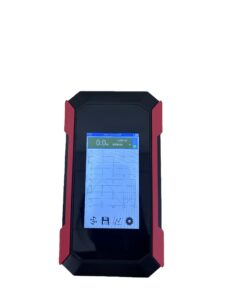
Click the picture to know more about Comprehensive PD Tester.
How Does Partial Discharge Testing Work on Cables?
PD testing detects microscopic electrical discharges inside insulation defects.
Cable testing systems like ICMflex combine:
- PD measurement
- Tan delta analysis
- Fault location capability
What Is the Role of VLF Testing in Cable Diagnostics?
Very Low Frequency (VLF) testing is commonly used because:
- It reduces power demand
- Enables field testing
- Detects insulation weaknesses
PD testing combined with VLF helps validate cable installation quality.
What Is the Difference Between PD Testing and Tan Delta Testing?
PD testing:
- Detects localized insulation defects
- Finds discharge activity points
Tan delta testing:
- Measures overall insulation aging
- Detects moisture and degradation
Together they provide a complete cable health assessment.
How Is Cable Fault Location Performed?
Modern systems use:
- Time-domain analysis
- Signal reflection methods
- Pulse propagation tracking
These techniques help locate the exact position of defects.
How does partial discharge testing detect cable faults?
Partial discharge (PD) testing detects cable faults by identifying small electrical discharges that occur inside insulation defects. These defects can include voids, cracks, moisture, or damage caused during installation. When high voltage is applied, these weak points release tiny discharge signals. PD measurement systems capture and analyze these signals to locate potential fault areas before the cable fails. This helps engineers find hidden insulation problems early and prevent unexpected power outages.
What is the difference between VLF and PD testing?
VLF (Very Low Frequency) testing and PD testing serve different purposes in cable diagnostics. VLF testing applies a low-frequency high voltage to check whether a cable can withstand electrical stress and detect major insulation weaknesses. In contrast, PD testing focuses on detecting very small internal discharges that indicate early-stage defects. In simple terms, VLF testing checks “can the cable survive,” while PD testing checks “is there any hidden damage inside.”
Why is tan delta important for cable diagnostics?
Tan delta testing is important because it measures the overall condition and aging of cable insulation. It detects energy losses caused by moisture, contamination, or insulation deterioration. A higher tan delta value usually means the insulation is aging or damaged. Unlike PD testing, which finds local defects, tan delta provides a general health overview of the entire cable system. This makes it a key tool for long-term condition monitoring.
Which system is used for cable PD fault location?
Cable PD fault location is performed using advanced partial discharge measurement systems that combine multiple diagnostic methods. These systems often include PD detection, time-domain analysis, and signal processing to pinpoint the exact location of insulation faults. Portable and online PD systems with multi-channel capability are commonly used in field testing. Modern solutions can analyze signal arrival times from different sensors to accurately locate cable defects, improving maintenance efficiency and reducing downtime.
FAQs
What is PD testing in power cables?
It detects insulation defects before they cause failure.
Why is tan delta testing used in cable systems?
To measure insulation aging and moisture content.
Can PD testing locate cable faults?
Yes, using time-domain reflection and signal analysis.
