

How to Choose the Right Test Voltage for an Insulation Test
Learn how to choose the correct insulation test voltage for electrical systems. Understand when to use 500V or 1kV testing, how modern testers improve accuracy, and how to select the right settings for building wiring, troubleshooting, and sensitive equipment.
If you work with electrical systems, you know how crucial insulation testing is. It keeps equipment safe and prevents unexpected failures. But with modern testing instruments offering so many options, how do you pick the right test voltage?
Let’s break down everything you need to know in a simple, straightforward way.
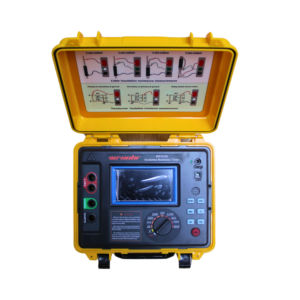
Click the image to know more about Wrindu IR Tester.
Why has choosing a test voltage changed?
In the past, insulation testers were very basic. Most of them only offered one fixed option—usually 500V. If you wanted to run a stress test or test sensitive equipment, you had to use complicated multipliers printed on the device to calculate the real numbers.
Today, modern instruments are much smarter. High-quality testers allow you to adjust voltages in tiny 1V increments all the way up to 1 kV (1000V). They also show you the exact applied voltage in real-time, making your testing much more precise and compliant with industry standards.
What voltage should you use for standard building wiring?
For standard building wiring and the everyday equipment that runs off it, 500V is the industry go-to standard.
-
500V: Used for routine maintenance, standard record-keeping, and basic pass/fail testing.
-
1 kV (1000V): Used by technicians during troubleshooting to spot weak insulation before it completely fails.
How do you choose a tester based on your skill level?
You don’t always need the most expensive, feature-heavy tool. Your choice should depend on who is using it and what they are testing:
-
For Beginners & Apprentice Technicians: Less is more. A basic tester with only one to three fixed voltage settings (like a simple 500V model) is ideal. It prevents setup mistakes and speeds up pass/fail testing.
-
For Advanced & Specialized Industries: If you work with solar power, marine systems, nuclear plants, or heat trace cabling, you need a full-featured model that allows you to dial in exact, custom voltages across a broad spectrum.
FAQs
What test voltage is safe for sensitive telecom equipment?
Telecom networks and sensitive electronics can be damaged by high voltages. For these applications, you should use lower voltages like 100V or 250V. Many manufacturers offer specialized testers that cap the voltage at 100V specifically to protect sensitive components.
Why is my tester showing 522V when I selected 500V?
Don’t worry, your device isn’t broken! Test voltage naturally floats against the electrical load. Older tools used to drop in voltage under a heavy load, which caused errors. Modern, high-quality testers are designed to deliver a little bit more than selected to ensure accuracy, though premium models keep this window tightly controlled to just a few extra volts.
Can I use a 1 kV setting for routine maintenance?
It is usually not recommended. A 500V setting is preferred for routine maintenance and historical record-keeping. The 1 kV setting acts as a stress test and is best reserved for targeted troubleshooting when you suspect the insulation is starting to degrade.
