

How to Distinguish Transformer Insulation Aging From Moisture Faults
Learn how to distinguish transformer insulation aging and moisture faults using FDS dielectric response curves, and avoid common on-site testing misjudgments.
Why Are Aging and Moisture Faults Easily Confused in Transformer Testing?
Transformer insulation aging and moisture dampness are the two most common faults of oil-paper insulation. Both problems will cause increased dielectric loss, changed capacitance and decreased insulation performance. In traditional single-parameter testing, their electrical characteristics are highly similar, resulting in frequent misjudgment in on-site maintenance.
Only through full-band FDS dielectric response analysis can engineers effectively separate aging interference and accurately locate pure moisture faults.
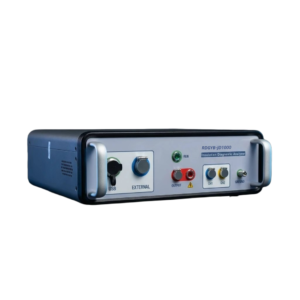
Click the image to know more about Wrindu Frequency Domain Dielectric Response Insulation Diagnostic Analyzer.
What Are the Core Differences Between Aging and Moisture Dielectric Characteristics?
Frequency Curve Trend Difference
Moisture faults mainly affect the low-frequency band, causing a sharp increase in low-frequency dielectric loss with obvious curve fluctuation. Insulation aging affects the full frequency band uniformly, with smooth and gentle dielectric loss changes in both low and high frequency ranges.
Capacitance Change Rule
Excessive moisture leads to rapid and abnormal capacitance growth in low frequency. Insulation aging causes slow and stable capacitance attenuation, without sudden low-frequency changes.
Polarization Response Characteristics
Damp insulation has abnormal enhanced slow polarization response. Aged insulation has stable polarization attenuation, and no abnormal low-frequency polarization peak appears.
How Does FDS Testing Realize Accurate Fault Classification?
FDS technology integrates full-frequency dielectric loss, capacitance variation and polarization response data. By analyzing the curve slope, low-frequency amplification degree and full-band stability, it can quantitatively calculate insulation moisture content and aging degree respectively. This method eliminates mutual interference between the two faults and provides accurate maintenance basis for transformers.
What Are the Maintenance Differences Between Aging and Moisture Faults?
Transformer moisture faults can be solved by oil filtration, vacuum dehumidification and drying treatment to restore insulation performance. Insulation aging is irreversible material degradation, which requires insulation replacement, oil renewal and equipment overhaul to eliminate hidden dangers. Misjudgment will lead to ineffective maintenance and waste of cost.
FAQs About Transformer Aging and Moisture Fault Distinction
Q1: Why do moisture and aging show similar insulation test results?
A: Both reduce insulation performance and increase dielectric loss, leading to overlapping single-parameter test results.
Q2: What is the most reliable way to tell aging and moisture apart?
A: Full-band FDS dielectric response testing, relying on low-frequency curve characteristics to distinguish the two faults accurately.
Q3: Can transformer damp insulation be repaired?
A: Yes. Moisture faults are reversible through dehumidification and oil purification, while aging is irreversible.
Q4: Will misjudging aging and moisture affect transformer maintenance?
A: Yes. It will cause improper maintenance measures, fail to eliminate hidden dangers, and accelerate equipment failure.
