

How Does Moisture in Transformer Insulation Affect FDS Test Results?
Learn how moisture affects transformer insulation aging and how frequency domain dielectric response testing helps detect cellulose moisture content and insulation problems.
Why Is Moisture Detection Critical for Transformer Reliability?
Transformer insulation is designed to provide reliable electrical isolation for decades. However, during long-term operation, moisture gradually enters the insulation system and becomes one of the most serious threats to transformer life.
Moisture can come from:
- Atmospheric humidity
- Aging of insulating materials
- Oil oxidation
- Poor sealing conditions
- Maintenance activities
Although moisture levels may appear low, even a small amount of water inside cellulose insulation can significantly accelerate aging.
For power utilities, detecting moisture before insulation deterioration becomes severe is essential.
Traditional oil testing methods mainly measure moisture in transformer oil, but they cannot fully evaluate moisture stored inside solid insulation materials.
Frequency Domain Dielectric Response (FDS) testing provides a more comprehensive method by analyzing the dielectric behavior of insulation across different frequencies.
The RDGYB-JD1000 Frequency Domain Dielectric Response Insulation Diagnostic Analyzer can evaluate transformer insulation conditions including cellulose moisture content, oil conductivity, and uneven moisture distribution.
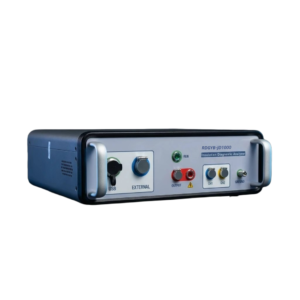
Click the image to know more about Wrindu Frequency Domain Dielectric Response Insulation Diagnostic Analyzer.
Why Is Moisture One of the Biggest Risks in Transformer Insulation?
How Does Water Damage Oil-Paper Insulation Systems?
Most high-voltage transformers use oil-paper insulation systems.
This system consists mainly of:
- Transformer oil
- Cellulose paper
- Pressboard insulation
Under normal conditions, these materials provide excellent electrical insulation.
However, moisture changes the physical and electrical properties of insulation.
When moisture increases, it can cause:
Reduced Dielectric Strength
Water molecules increase electrical conductivity and reduce insulation performance.
Faster Cellulose Aging
Moisture accelerates chemical reactions inside paper insulation, reducing mechanical strength.
Increased Dielectric Loss
Wet insulation consumes more electrical energy during AC operation, resulting in higher dielectric loss.
Higher Failure Risk
Severely aged and wet insulation becomes more vulnerable to:
- Partial discharge
- Electrical breakdown
- Transformer failure
Therefore, accurate moisture evaluation is a key part of transformer condition assessment.
Why Is Measuring Oil Moisture Not Enough?
Can Transformer Oil Testing Show the Complete Moisture Condition?
Many maintenance teams perform oil sampling to measure moisture content.
This method is useful, but it has limitations.
Moisture distribution inside a transformer is not uniform.
Most water may exist in:
- Cellulose insulation
- Pressboard
- Paper layers around windings
The relationship between oil moisture and paper moisture changes with temperature.
For example:
- At high temperature, moisture moves from paper into oil.
- At low temperature, moisture moves from oil back into paper.
Therefore, oil test results alone may not represent the real insulation condition.
Frequency Domain Dielectric Response testing evaluates the complete insulation system rather than only the oil.
How Does FDS Detect Moisture Inside Transformer Insulation?
Why Can Frequency Response Reveal Hidden Moisture Problems?
Moisture affects the polarization characteristics of insulation materials.
When AC voltage is applied, molecules inside insulation respond differently depending on:
- Moisture level
- Material structure
- Temperature
- Aging condition
FDS measures dielectric properties at multiple frequencies.
The low-frequency response is especially sensitive to:
- Polarization behavior
- Moisture content
- Conductive losses
By analyzing the response curve, advanced software models can estimate insulation moisture conditions.
The RDGYB-JD1000 integrates FDS and PDC technologies to analyze insulation characteristics in both frequency and time domains.
What Information Can FDS Provide About Transformer Moisture?
Can FDS Show More Than Average Moisture Content?
Yes.
Modern dielectric response analysis provides more detailed information than a simple moisture percentage.
The RDGYB-JD1000 software can evaluate:
Cellulose Moisture Content
The system estimates moisture levels inside paper insulation.
This helps determine whether insulation is:
- Dry
- Slightly affected by moisture
- At risk of accelerated aging
Uneven Moisture Distribution
Moisture is not always evenly distributed.
Some areas may become wetter because of:
- Temperature differences
- Insulation structure
- Local aging
The analyzer can evaluate uneven moisture distribution characteristics, especially for equipment with complex insulation structures.
Insulation Oil Conductivity
Changes in oil conductivity can indicate:
- Oil degradation
- Contamination
- Aging products
How Does Moisture Change FDS Test Curves?
What Happens to Dielectric Response When Transformer Insulation Becomes Wet?
Dry insulation and wet insulation produce different dielectric response patterns.
When moisture increases:
- Dielectric loss increases
- Low-frequency response changes
- Polarization effects become stronger
The curve shape changes because water molecules increase the movement of electrical charges inside insulation.
Engineers can compare measured curves with:
- Reference models
- Historical test data
- Database information
to determine insulation condition.
Why Is Low-Frequency Measurement Important for Moisture Diagnosis?
Why Does FDS Use Very Low Frequencies for Transformer Testing?
Moisture-related polarization processes occur slowly.
Therefore, low-frequency measurement provides more information about moisture behavior.
High-frequency measurements mainly show:
- Geometrical capacitance
- Fast polarization effects
Low-frequency measurements reveal:
- Moisture influence
- Conductive losses
- Slow polarization processes
The RDGYB-JD1000 supports measurements from 0.1 mHz to 10 kHz, providing a wide range for insulation analysis.
How Does Temperature Affect Moisture Assessment Results?
Why Must Transformer Moisture Diagnosis Include Temperature Correction?
Temperature has a strong influence on dielectric response.
The same transformer may show different test results at:
- 10°C
- 30°C
- 50°C
Without temperature correction, engineers may incorrectly evaluate insulation condition.
Advanced analysis software applies correction methods to compare results under standard conditions.
The RDGYB-JD1000 provides temperature correction based on the Arrhenius equation to improve diagnosis reliability.
How Can FDS Help Decide Whether a Transformer Needs Drying Treatment?
Can Moisture Detection Prevent Unnecessary Transformer Maintenance?
Yes.
Traditional maintenance decisions often rely on fixed schedules.
However, not every transformer requires the same treatment.
FDS moisture assessment helps engineers determine:
When No Action Is Needed
If insulation moisture is within acceptable limits, the transformer can continue operation.
When Monitoring Should Increase
Slight moisture increase may require more frequent testing.
When Drying Treatment Is Required
High moisture levels may require insulation drying procedures.
This condition-based approach reduces unnecessary maintenance costs.
How Does RDGYB-JD1000 Improve Transformer Moisture Diagnosis?
What Features Help Engineers Perform Accurate Field Moisture Assessment?
The RDGYB-JD1000 is designed for practical field applications.
Key advantages include:
Integrated FDS and PDC Analysis
Combining different diagnostic methods provides more complete insulation information.
Multi-Frequency Measurement
Multiple frequencies improve analysis accuracy and reduce testing time.
Advanced Moisture Evaluation Models
The software uses insulation databases and models to analyze moisture conditions.
Strong Noise Resistance
Substations often have electromagnetic interference. Reliable measurement stability is important for accurate diagnosis.
Portable Design
The compact structure allows engineers to perform testing at different sites.
What Does a Transformer Bushing Moisture Test Demonstrate?
Can FDS Be Used for Real High-Voltage Equipment Diagnosis?
Yes.
A field test was performed on a 220kV transformer bushing using frequency domain dielectric response technology.
The test evaluated:
- Capacitance
- Dielectric loss
- Cellulose moisture content
- Oil conductivity
The results demonstrated that FDS testing could provide effective insulation condition evaluation for high-voltage equipment.
This confirms the practical value of dielectric response technology in transformer maintenance.
What Are the Long-Term Benefits of Transformer Moisture Monitoring?
Why Should Utilities Regularly Monitor Insulation Moisture?
Continuous moisture monitoring helps utilities:
Extend Transformer Service Life
Early detection prevents accelerated insulation aging.
Reduce Unexpected Failures
Potential problems can be identified before breakdown occurs.
Improve Maintenance Planning
Maintenance can be scheduled according to actual insulation condition.
Protect Grid Reliability
Healthy transformers support stable power transmission.
FAQs
Why is moisture dangerous for transformer insulation?
Moisture reduces dielectric strength, accelerates cellulose aging, increases dielectric loss, and increases the risk of transformer failure.
Can FDS measure moisture in transformer paper insulation?
Yes. Frequency Domain Dielectric Response testing can estimate cellulose moisture content through dielectric analysis.
Is transformer oil moisture testing enough?
No. Oil testing only measures moisture in the liquid insulation. FDS provides information about the complete oil-paper insulation system.
What frequency range is important for moisture detection?
Low-frequency measurements are especially important because moisture strongly affects slow polarization processes.
How does temperature affect transformer moisture measurement?
Temperature changes moisture distribution between oil and paper and affects dielectric response results. Temperature correction improves diagnosis accuracy.
Can FDS detect uneven moisture distribution?
Yes. Advanced FDS analysis can evaluate uneven moisture distribution in insulation systems.
How often should transformer moisture testing be performed?
The frequency depends on transformer age, importance, operating conditions, and previous diagnostic results.
What equipment is used for transformer moisture diagnosis?
A frequency domain dielectric response analyzer, such as the RDGYB-JD1000, is used to analyze insulation moisture and condition.
Conclusion
Moisture is one of the most important factors affecting transformer insulation life.
Traditional tests may provide useful information, but they cannot always reveal moisture hidden inside cellulose insulation.
Frequency Domain Dielectric Response testing provides deeper insight by analyzing insulation behavior across a wide frequency range.
With capabilities such as:
- Cellulose moisture assessment
- Oil conductivity evaluation
- Uneven moisture analysis
- Temperature correction
- FDS and PDC integration
the RDGYB-JD1000 helps utilities make better maintenance decisions and improve transformer reliability.
