

Why Cable Testing & Fault Location Matters for Underground Power Grids?
Learn underground cable test challenges, industry trends and key test items. Wrindu‑Professional HV Testers Manufacturer acts as OEM Manufacturer to supply reliable cable and line testing instruments.
What Challenges Do Underground Power Cables Bring to Power Grid Operation?
Underground power cables are widely used in urban power distribution, industrial parks and renewable energy projects. Compared with overhead lines, buried cables save surface space, yet they come with unique hidden risks.
According to industry statistics, underground cable failures account for roughly 28% of total distribution grid outages. Once buried cables break down, physical inspection is extremely difficult because faults are hidden under the ground. Digging blindly without precise location will cause high cost and long‑time power interruption.
Aging insulation, construction damage, moisture ingress and over‑voltage stress are the main causes of underground cable defects. Early hidden faults cannot be found by visual check, which makes professional cable and line testing instruments essential for asset management.
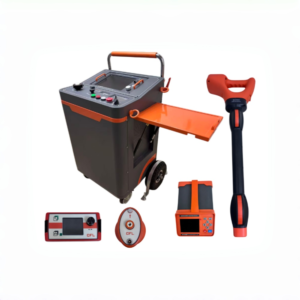
Click the image to know more about Cable Fault Testing System.
How Are Global Industry Trends Pushing up Cable Testing Requirements?
Two major market shifts drive higher demand for cable testing solutions worldwide.
First, massive underground cable network expansion. Many cities carry out overhead‑to‑cable transformation. IEA data shows that global underground cable installation volume will keep growing at about 4.2% per year from 2026 to 2031. More buried assets mean heavier routine inspection workload.
Second, the industry shift toward preventive maintenance. Instead of repairing cables after breakdown, more power utilities carry out periodic withstand tests and partial discharge checks to find defects in advance. Portable, easy‑to‑operate cable test devices become highly preferred.
Besides, many regional distributors and system integrators hope to source customized devices. They look for a qualified OEM Manufacturer to adjust functions, software interfaces and report formats for local project standards.
Wrindu‑Professional HV Testers Manufacturer provides complete cable and line testing instrument portfolio, covering VLF AC withstand testing, cable fault location and partial discharge inspection. As an experienced OEM Manufacturer, it supports tailored solutions for global power utilities, contractors and agents.
What Key Tests Are Required for Underground Power Cables?
Complete cable condition assessment includes multiple core test items for acceptance and daily maintenance:
- VLF AC Withstand Voltage Test: Verify overall insulation integrity of long‑distance underground cables after installation or during periodic maintenance.
- Cable Fault Location: Locate short‑circuit, open‑circuit and high‑resistance faults rapidly when cable failure occurs.
- Partial Discharge Testing: Detect tiny internal insulation defects before serious cable breakdown happens.
- Insulation Resistance Measurement: Evaluate cable insulation aging and moisture intrusion status.
Different test devices cooperate with each other, covering the full lifecycle: factory acceptance, on‑site commissioning, routine maintenance and post‑fault troubleshooting.
What Losses Will Happen Without Proper Cable Testing and Fault Location?
Neglecting cable testing will create obvious operational and economic risks for power operators:
- Tiny insulation defects gradually worsen and trigger sudden cable breakdown, leading to large‑area blackouts.
- Without accurate fault‑location tools, maintenance teams spend many working hours on blind excavation, raising repair cost greatly.
- Hidden cable faults may bring safety hazards for site staff and surrounding facilities.
- Project acceptance cannot pass without standardized withstand tests for newly‑laid cables.
Industry feedback shows that regular cable testing plus fast fault‑location tools can cut cable‑related outage duration by more than 55%.
What Features Should You Look for When Choosing Cable Testing Instruments?
When sourcing cable and line testing instruments, buyers need to evaluate these practical points:
- Field‑adapted performance: Portable structure for outdoor site work, stable output under complex site conditions.
- Compatibility: Support different cable voltage classes and cable lengths for your local projects.
- Data function: Automatic test record storage and one‑click test report generation to reduce manual work.
- Customization possibility: If you are a distributor or large‑project contractor, confirm whether the supplier can act as an OEM Manufacturer for function modification.
- After‑sales support: On‑line technical guidance and spare‑part supply for overseas users.
Wrindu‑Professional HV Testers Manufacturer supplies integrated VLF cable testing systems and cable fault location systems. Products are built for heavy‑duty field application and support OEM adjustment for global partners.
What Is the Future Development Trend of Cable Test Technology?
Cable testing equipment is evolving in three clear directions:
- Higher integration: One‑device multi‑function design combines withstand test, partial discharge and fault pre‑diagnosis, lowering equipment procurement cost.
- Intelligent fault analysis: Built‑in algorithm helps engineers judge cable health status without heavy manual calculation.
- Lighter portable units: Compact hardware makes transport and field deployment easier for urban underground cable inspection.
As more underground cables are deployed in smart grids, reliable cable testing and fault‑location capacity will become a core capability for every power maintenance team.
FAQs About Cable Testing & Fault Location
Q1: What is the difference between VLF test and cable fault location?
A: VLF AC withstand test checks whether cable insulation is intact, mostly used for new‑cable acceptance and periodic preventive inspection. Cable fault location is used after cable breakdown, to find the exact underground position of the fault point.
Q2: How often should underground power cables go through testing?
A: New‑laid cables must complete VLF withstand test before putting into operation. In‑service medium‑voltage underground cables usually need full testing every 1‑3 years. Cables running in wet or heavy‑load environments require more frequent checks.
Q3: Can cable fault locators work for all types of cable faults?
A: Professional cable fault location systems can handle open‑circuit, short‑circuit and high‑resistance faults for most power cables. You need to select the matching device according to cable voltage level and fault type.
Q4: What benefits can you get by cooperating with an OEM Manufacturer for cable test instruments?
A: An eligible OEM Manufacturer can offer factory‑direct price, customized hardware or software, multi‑language UI and special report templates, which fits regional distributors and large‑scale engineering projects.
Q5: Why select Wrindu‑Professional HV Testers Manufacturer for your cable testing needs?
A: Wrindu delivers full‑range cable and line testing instruments including VLF AC withstand testers and cable fault location systems. As a professional OEM Manufacturer, it offers standard devices and custom‑tailored solutions together with global technical support for power‑sector clients.
