

On-Site Safety Guidelines for CT and PT Testing in Electrical Systems
Learn essential CT and PT testing safety guidelines, including isolation, grounding, CT secondary protection, test area control, and safe field practices.
Why Is Safety Important During CT and PT Testing?
Current transformers (CTs) and potential transformers (PTs), also called voltage transformers (VTs), are important components in power systems. They provide current and voltage signals for protection relays, meters, and control equipment.
However, CT and PT testing involves electrical circuits connected with high-voltage equipment. During testing, engineers may apply test signals, disconnect secondary circuits, or measure transformer characteristics under special conditions.
Without proper safety procedures, testing activities may create risks such as electric shock, equipment damage, or incorrect test results.
Therefore, on-site safety management is an essential part of CT and PT testing. A safe testing process helps engineers obtain reliable data while protecting personnel and electrical assets.
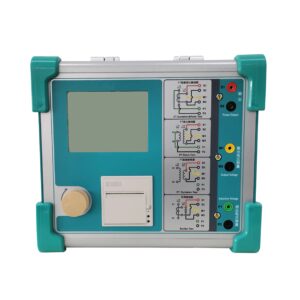
Click the image to know more about Wrindu CT and PT Analyzer.
What Are the Main Safety Risks During CT and PT Testing?
CT and PT testing involves different electrical characteristics, so the safety risks are also different.
Common risks include:
- High-voltage exposure during PT testing
- Open secondary circuits during CT testing
- Stored electrical energy after testing
- Incorrect wiring connections
- Poor grounding conditions
- Unauthorized access to the testing area
- Wrong test parameters
Understanding these risks helps engineers prepare suitable safety controls before starting the test.
How Should Engineers Prepare Before CT and PT Testing?
Preparation is the first step in safe field testing.
Before testing, engineers should review:
- Transformer nameplate information
- Test requirements
- Electrical drawings
- Connection diagrams
- Safety procedures
- Equipment status
The testing team should confirm:
- The transformer is correctly identified
- The equipment is isolated when required
- The testing area is controlled
- The test instrument is suitable for the application
A clear preparation process reduces the possibility of testing mistakes.
Why Is Equipment Isolation Important Before Testing?
Isolation prevents unexpected electrical connection during testing.
Before CT and PT testing, engineers should confirm:
- Power sources are disconnected
- Related circuits are identified
- Switching equipment is secured
- Other systems cannot energize the tested equipment
Proper isolation creates a safer environment for both testing personnel and connected equipment.
What Safety Risks Exist During CT Testing?
CT testing has unique safety requirements because current transformers operate differently from voltage transformers.
A CT secondary circuit should not remain open when the primary side carries current.
An open CT secondary can generate a dangerous high voltage because the transformer attempts to maintain current flow.
Therefore, engineers should:
- Confirm CT secondary connections
- Avoid opening CT secondary circuits under load
- Use proper shorting methods when required
- Follow approved CT testing procedures
This is one of the most important safety rules during CT testing.
How Can Engineers Safely Perform CT Ratio and Polarity Tests?
CT ratio and polarity tests require correct connections between the analyzer and transformer.
Before starting:
- Check CT terminal markings
- Confirm primary and secondary connections
- Verify test cable installation
- Confirm grounding conditions
During testing:
- Monitor test values
- Avoid unnecessary contact with terminals
- Stop the test if abnormal conditions appear
Correct preparation helps prevent connection errors and improves testing reliability.
What Safety Considerations Are Needed During CT Excitation Testing?
CT excitation and knee point tests apply voltage to the CT secondary circuit.
Although the test voltage may be generated from the analyzer, the secondary circuit can still reach hazardous levels.
Engineers should:
- Keep away from energized test terminals
- Use proper test cables
- Confirm the test area is controlled
- Avoid touching connections during testing
After the test, the CT secondary circuit should be safely discharged before handling.
What Safety Risks Exist During PT Testing?
PT testing mainly involves voltage measurement circuits.
During PT testing, engineers should pay attention to:
- High-voltage terminals
- Test voltage output
- Insulation condition
- Grounding connections
- Residual voltage
Before applying test voltage, the team should confirm that:
- The test area is clear
- Warning signs are installed
- Personnel are in safe positions
- Connections are correct
Why Is Grounding Important After CT and PT Testing?
Grounding is a critical safety step after electrical testing.
After completing a test, equipment may still contain:
- Stored electrical energy
- Residual voltage
- Induced voltage
Engineers should:
- Turn off the test output.
- Wait for discharge according to the procedure.
- Confirm safe voltage conditions.
- Apply grounding before touching equipment.
This step helps prevent accidental electric shock.
How Should Engineers Manage the CT and PT Test Area?
A controlled testing area improves safety during field work.
Important safety measures include:
Establish a Safety Boundary
Use barriers and warning signs around the testing area.
Control Personnel Access
Only trained personnel should enter the high-voltage testing zone.
Assign Testing Responsibilities
The team should clearly define roles before starting.
For example:
- Test operator
- Safety supervisor
- Connection inspector
Clear responsibilities reduce communication problems.
How Should Engineers Check CT and PT Analyzer Safety?
The test instrument is an important part of the safety system.
Before use, engineers should inspect:
- Test cables
- Connection terminals
- Grounding wires
- Power supply
- Insulation condition
- Control functions
A professional CT and PT analyzer can also improve testing safety through automatic measurement and controlled operation.
For example, the Wrindu RDHG-E Variable Frequency Transformer Comprehensive Tester integrates CT and PT testing functions and supports automatic testing, data storage, USB transfer, and report generation.
These functions can reduce manual calculation work and improve test process management.
What Personal Protective Equipment Is Required for CT and PT Testing?
Personal protective equipment depends on the working environment and electrical safety requirements.
Common PPE may include:
- Insulated gloves
- Safety footwear
- Protective clothing
- Safety helmet
- Eye protection
Engineers should select suitable protection based on the voltage level and site conditions.
What Should Engineers Do If Abnormal Conditions Occur?
Testing should stop immediately when abnormal conditions appear.
Examples include:
- Unexpected voltage changes
- Unusual equipment sounds
- Incorrect measurement results
- Damaged cables
- Communication problems
After stopping the test, engineers should:
- Remove test voltage safely
- Discharge the equipment
- Check the test setup
- Identify the cause before continuing
Why Is Test Documentation Important for Safety Management?
Complete test records support future maintenance and safety planning.
A CT and PT test report should include:
- Equipment identification
- Test date
- Test method
- Test parameters
- Test results
- Abnormal conditions
- Corrective actions
Good documentation helps engineers understand equipment history and improves future testing preparation.
What Are Common CT and PT Testing Safety Mistakes?
Testing Without Confirming Equipment Isolation
Unexpected electrical connection may create safety hazards.
Opening CT Secondary Circuits
An open CT secondary can create dangerous voltage.
Ignoring Residual Voltage
Equipment should always be discharged after testing.
Using Incorrect Test Connections
Wrong wiring can damage equipment and affect results.
Allowing Untrained Personnel Near the Test Area
High-voltage testing requires controlled access.
How Can Engineers Improve On-Site CT and PT Testing Safety?
Engineers can improve safety by combining:
- Proper training
- Detailed preparation
- Correct test procedures
- Reliable testing equipment
- Effective communication
- Complete documentation
Safety should continue throughout the entire testing process, including preparation, testing, and post-test handling.
FAQs About CT and PT Testing Safety
Why is safety important during CT and PT testing?
CT and PT testing involves electrical circuits and possible high-voltage conditions. Proper safety procedures help protect personnel and equipment.
Why should CT secondary circuits not be open?
An open CT secondary circuit can create a dangerous high voltage when current flows through the primary side.
Should CT and PT equipment be grounded after testing?
Yes. Engineers should discharge and ground the equipment according to the approved procedure before touching connections.
Can one analyzer test both CTs and PTs safely?
A multifunction CT and PT analyzer can support both tests, but engineers must still follow correct safety procedures during operation.
What should engineers check before CT and PT testing?
They should confirm equipment isolation, test connections, grounding, safety barriers, and test parameters.
How can automatic analyzers improve field testing?
Automatic testing functions can reduce manual operations, improve consistency, and help engineers manage test data more efficiently.
How Does Wrindu Support Safe CT and PT Testing?
Wrindu provides electrical testing solutions for power utilities, substations, manufacturers, and maintenance teams.
The RDHG-E Variable Frequency Transformer Comprehensive Tester combines CT and PT testing functions in one portable instrument. It supports transformer testing, automatic calculation, data storage, and report generation.
When engineers combine suitable testing equipment with correct safety procedures, CT and PT testing can be completed more efficiently while maintaining a safer on-site working environment.
