

How Do Current Transformers Support Protection Relay Systems?
Understand how current transformers work with protection relays and how CT testing improves protection system reliability.
Why Are CTs Important for Protection Systems?
Protection systems depend on accurate electrical signals.
Current transformers provide reduced current signals from high-voltage equipment to protection relays.
Based on these signals, relays can detect abnormal conditions and send control commands.
Therefore, CT performance directly affects protection system reliability.
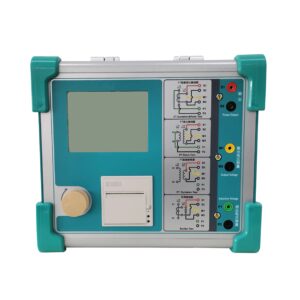
Click the image to know more about Wrindu CT and PT Analyzer.
How Does a CT Work With Protection Relays?
A protection CT connects the power system with relay equipment.
The CT reduces high primary current into a smaller secondary current.
The relay then analyzes this signal to identify conditions such as:
- Overcurrent
- Short circuit
- Equipment faults
If the CT signal is inaccurate, the relay may not operate correctly.
Why Are Protection CTs Different From Measurement CTs?
Protection CTs and measurement CTs have different purposes.
Measurement CTs focus on high accuracy during normal operation.
Protection CTs focus on maintaining reliable output during fault conditions.
Therefore, protection CTs require good saturation performance.
Why Is CT Saturation a Risk for Protection Relays?
During a fault, current can increase significantly.
If the CT core saturates, the secondary current may become distorted.
As a result, the protection relay may receive incorrect information.
Therefore, engineers need to evaluate CT saturation characteristics before using CTs in protection systems.
Which CT Tests Are Important for Protection Applications?
Protection CT testing usually includes:
- Excitation test
- Knee point test
- Ratio test
- Polarity test
- Resistance test
These tests help engineers confirm whether the CT meets protection requirements.
How Does Knee Point Testing Help Protection Engineers?
Knee point testing shows when the CT core begins strong saturation.
A suitable knee point value helps ensure that the CT can provide reliable current signals during fault conditions.
Therefore, knee point testing is an important part of protection CT evaluation.
How Does CT Testing Improve Relay Reliability?
CT testing helps engineers confirm that the relay receives correct current information.
When CT performance meets requirements, protection systems can operate more reliably.
Therefore, CT testing is an important step in protection system commissioning and maintenance.
FAQs About CT Protection Testing
Why are CTs important for protection relays?
CTs provide current signals that allow protection relays to detect abnormal conditions.
What CT test is important for protection applications?
Excitation testing and knee point testing are important for evaluating protection CT performance.
Can CT saturation affect relay operation?
Yes. CT saturation can distort current signals and affect relay decisions.
What is the difference between protection CT and measurement CT?
Protection CTs focus on fault conditions, while measurement CTs focus on normal measurement accuracy.
