

How to Choose the Right CT Analyzer for Current Transformer Testing?
Learn how to choose a CT analyzer by checking testing functions, measurement range, application needs, data management, and technical support.
Why Is Choosing the Right CT Analyzer Important?
Different projects have different testing requirements.
A utility maintenance team may need field testing.
A manufacturer may need production testing.
A testing company may need flexible functions.
Therefore, engineers should select a CT analyzer based on actual applications.
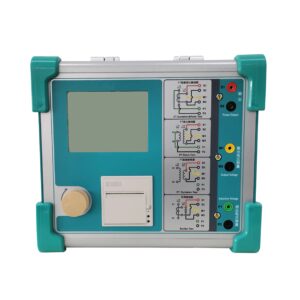
Click the image to know more about Wrindu CT and PT Analyzer.
What CT Testing Functions Should Engineers Consider?
A suitable CT analyzer should support important testing functions.
Ratio and Polarity Testing
Ratio testing confirms whether the CT provides the correct current conversion.
Polarity testing checks whether current direction is correct.
These functions are basic requirements for many CT applications.
Excitation and Knee Point Testing
Protection CTs require accurate excitation analysis.
Engineers should check whether the analyzer can measure:
- Excitation curve
- Knee point voltage
- Saturation characteristics
These functions help evaluate CT magnetic performance.
Resistance and Burden Testing
Secondary circuit conditions can affect CT performance.
Engineers should consider whether the analyzer supports:
- Secondary resistance measurement
- Burden testing
These results help verify complete CT performance.
What Measurement Range Should a CT Analyzer Provide?
The measurement range should match the project requirements.
Important specifications include:
- Maximum test voltage
- Resistance range
- Burden range
- CT ratio range
For example, high-voltage applications may require a wider testing range.
Engineers should check technical specifications before purchase.
Should Engineers Consider Testing Environment?
The working environment affects equipment selection.
Laboratory Testing
Laboratories may focus on:
- High accuracy
- Detailed analysis
- Data export
Field Testing
Field teams usually need:
- Easy operation
- Portable design
- Fast setup
Factory Testing
Manufacturers may require:
- Stable testing process
- Repeated measurements
- Report generation
Why Are Data Functions Important in CT Analyzer Selection?
Modern testing requires digital records.
Useful functions include:
- Data storage
- USB export
- Automatic reports
- Test result management
These features help engineers organize maintenance information.
What Should Engineers Check About After-Sales Support?
Testing equipment requires long-term technical support.
Before purchasing, engineers should check:
- Warranty period
- Technical assistance
- Spare parts supply
- Software updates
Reliable support helps maintain testing efficiency.
CT Analyzer Selection FAQs
What is the most important function of a CT analyzer?
The most important functions depend on the application. Common requirements include ratio, polarity, excitation, and resistance testing.
How do I choose a CT analyzer for field testing?
Choose a model with suitable portability, measurement range, and easy operation.
Does a higher test range always mean better performance?
Not always. Engineers should select equipment based on actual testing needs.
What information should I check before buying a CT analyzer?
Important information includes testing functions, accuracy, measurement range, data management, and technical support.
