

How to Collect Transformer Oil Samples for PCB Testing?
Learn how to collect, label, store, and transport transformer oil samples for PCB laboratory analysis. Understand ASTM D923 and common sampling errors.
Accurate sampling is an important part of PCB testing in old transformers. Even when a laboratory uses a suitable analytical method, a contaminated or unrepresentative sample can produce misleading results.
Transformer oil may contain different contaminants because of previous maintenance, oil replacement, or cross-contamination during storage and handling.
A proper sampling procedure helps laboratories receive a representative sample and reduces the risk of contamination during collection and transportation.
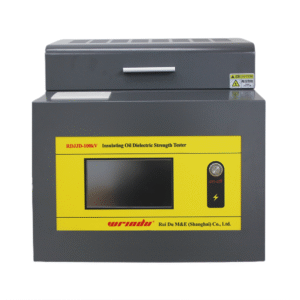
Click the image to know more about Wrindu Oil BDV Tester.
Which Standard Covers Transformer Oil Sampling?
ASTM D923-15(2023), Standard Practices for Sampling Electrical Insulating Liquids, provides guidance for collecting samples from electrical equipment.
The standard covers insulating liquids in transformers, circuit breakers, cables, and other electrical apparatus. It also addresses sampling equipment, container preparation, storage, packaging, and transportation.
ASTM D923 emphasizes that an unrepresentative sample can lead to incorrect conclusions about the quality of the insulating liquid.
Reference: ASTM D923-15(2023).
For PCB sampling, the laboratory and equipment owner should also confirm applicable environmental regulations and any additional sampling requirements.
What Equipment Is Needed for PCB Oil Sample Collection?
The sampling equipment must be suitable for the oil type and the laboratory’s analytical requirements.
Common sampling materials include:
| Sampling material | Purpose |
|---|---|
| Suitable sample bottle | Holds the transformer oil sample |
| Clean sampling device | Collects oil from the equipment |
| Compatible tubing or fittings | Connects the sampling device when required |
| Disposable gloves | Reduces direct contact and contamination |
| Labels | Identifies the transformer and sample |
| Sealed transport packaging | Protects the sample during transportation |
| Sampling record | Documents sample information and collection conditions |
The laboratory should specify the bottle material, sample volume, sealing method, and any special handling requirements before collection.
Do not assume that a container used for DGA or moisture analysis is automatically suitable for PCB analysis.
How Do You Collect a Representative Transformer Oil Sample?
A representative sample should reflect the insulating liquid being investigated.
Follow the equipment manufacturer’s safety instructions and the approved site sampling procedure. Transformer sampling should only be performed by qualified personnel using appropriate electrical and chemical safety controls.
A general sampling workflow includes:
- Identify the transformer and confirm its operating and maintenance history.
- Review the sampling point and select a suitable collection procedure.
- Prepare clean sampling equipment and a laboratory-approved container.
- Flush the sampling connection as required by the approved procedure.
- Collect the oil without introducing external contamination.
- Seal, label, and record the sample immediately.
- Package and transport the sample according to laboratory instructions.
The sampling point matters. Oil remaining in a valve or sampling connection may not represent the oil inside the transformer.
ASTM D923 explains that poor preparation of sampling connections can result in unrepresentative samples.
Why Should You Avoid Cross-Contamination During Sampling?
Cross-contamination can change the measured PCB concentration.
For example, sampling equipment previously used on PCB-contaminated oil may transfer residual contamination into a sample from another transformer.
This can produce a false positive or an artificially increased PCB result.
To reduce this risk:
- Use dedicated or properly decontaminated sampling equipment.
- Avoid sharing unclean hoses, containers, and transfer tools.
- Follow the laboratory’s cleaning procedure.
- Keep sample containers closed when they are not being filled.
- Store samples separately from contaminated tools and materials.
- Record any unusual sampling conditions.
If the previous PCB status of the equipment or sampling tools is unknown, discuss the sampling procedure with the laboratory before collection.
How Should Transformer Oil Samples Be Stored and Transported?
Sample storage conditions depend on the analytical method and laboratory requirements.
The container must be compatible with the insulating liquid and the selected PCB analysis procedure. It should be properly sealed to prevent leakage and external contamination.
Each sample should have a unique identification number.
The sample label and accompanying record should include:
| Information | Example |
|---|---|
| Transformer ID | TR-001 |
| Sampling location | Main transformer oil sampling point |
| Sample date | 2026-11-09 |
| Oil type | Mineral insulating oil |
| Equipment manufacturer | Available nameplate information |
| Transformer manufacturing year | If known |
| Sampling personnel | Responsible technician |
| Previous oil treatment | If known |
The laboratory may request additional information, such as the oil replacement date, previous PCB results, and suspected contamination source.
Follow the laboratory’s instructions for packaging, shipping, and legal transport of potentially PCB-contaminated materials.
What Information Should You Provide to a PCB Testing Laboratory?
The laboratory needs enough information to select the correct analytical procedure and interpret the result.
Provide the following details whenever available:
- Transformer nameplate information.
- Oil type and previous oil replacement history.
- Possible contamination source.
- Previous PCB test results.
- Required reporting limit.
- Applicable environmental regulations.
- Required reporting units, such as ppm or mg/kg.
If the transformer previously contained a commercial PCB insulating liquid, inform the laboratory. This information may help determine which PCB reference standards and analytical procedures are appropriate.
What Are the Common Mistakes in PCB Oil Sampling?
Several sampling errors can affect PCB test results.
| Sampling mistake | Possible consequence |
|---|---|
| Using contaminated sampling tools | False positive or increased PCB result |
| Collecting oil without proper preparation | Unrepresentative sample |
| Using an unsuitable container | Sample contamination or material interaction |
| Poor sample identification | Incorrect result assignment |
| Leakage during transportation | Sample loss and handling risk |
| Missing maintenance records | Difficult result interpretation |
| Mixing oil from different transformers | Loss of equipment-specific information |
One particularly important issue is oil mixing.
When investigating possible PCB contamination, do not combine samples from different transformers unless the laboratory has specifically designed a composite sampling procedure for the intended purpose.
How Can You Improve the Reliability of PCB Laboratory Results?
Reliable PCB results depend on more than the analytical instrument.
The laboratory should use a validated GC method, suitable calibration standards, appropriate sample preparation, and documented quality control.
Ask the laboratory to provide:
- The analytical method and standard reference.
- The PCB concentration and reporting unit.
- The method detection or reporting limit.
- Quality control information when required.
- Any limitations affecting the result.
- The laboratory’s interpretation of the findings.
ASTM D4059 describes gas chromatographic analysis of PCBs in insulating liquids. The selected method must be suitable for the oil matrix and suspected PCB mixture.
What Should You Do After Receiving a PCB Test Report?
Compare the reported PCB concentration with the applicable regulatory requirements.
Do not use a single international threshold for every country. PCB classification, permitted use, handling, storage, and disposal requirements vary by jurisdiction.
If the result is close to a regulatory limit or inconsistent with previous records, consult the laboratory about repeat sampling or confirmatory analysis.
For suspected PCB contamination, keep the laboratory report, sampling record, equipment history, and waste management documents together.
Accurate sampling and complete documentation help transformer owners make better decisions about maintenance, oil handling, equipment transfer, and decommissioning.
About Wrindu – OEM HV Testers Manufacturer
Wrindu is a China-based manufacturer of high-voltage testing equipment, transformer testing instruments, and customized electrical testing solutions. Since 2014, Wrindu has supplied testing equipment to power utilities, electrical contractors, transformer manufacturers, and industrial customers in international markets.
For transformer oil maintenance, Wrindu offers instruments for breakdown voltage, water content, acid value, and dielectric dissipation factor testing. These instruments support routine oil condition assessment and help maintenance teams monitor changes in insulating oil properties.
Accurate PCB analysis requires proper sample collection and dedicated laboratory testing. Wrindu’s transformer oil testers support routine oil analysis but do not perform PCB concentration measurements.
Learn more about Wrindu’s transformer oil testing equipment.
