

PCB Testing Methods for Transformer Oil: GC-ECD, GC-MS and DGA Explained
Learn how to test PCB in transformer oil, compare GC-ECD and GC-MS methods, and understand why DGA cannot measure PCB concentration.
PCB testing is necessary when old transformers have an unknown oil history or a possible contamination problem. The correct testing method must identify polychlorinated biphenyls (PCBs) and measure their concentration in the insulating liquid.
Gas chromatography is widely used for PCB analysis in transformer oil. Two commonly used detection techniques are gas chromatography with electron capture detection (GC-ECD) and gas chromatography-mass spectrometry (GC-MS).
These methods are different from dissolved gas analysis (DGA), which measures gases formed inside electrical equipment rather than PCB compounds.
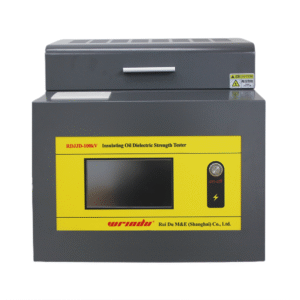
Click the image to know more about Wrindu Oil BDV Tester.
What Is the Most Common Method for PCB Testing in Transformer Oil?
Gas chromatography (GC) is a standard analytical approach for measuring PCB concentrations in electrical insulating liquids.
ASTM D4059-00(2018) describes a quantitative method for analyzing PCBs in insulating liquids by gas chromatography. Its scope includes mineral oil and silicone insulating liquids, subject to the method’s stated limitations.
The laboratory compares the chromatographic response of the oil sample with appropriate PCB reference standards. The result is usually reported as a PCB concentration in parts per million (ppm), equivalent to milligrams per kilogram (mg/kg) for mass-based reporting.
Reference: ASTM D4059 – Analysis of PCBs in Insulating Liquids.
How Does GC-ECD Detect PCB in Transformer Oil?
GC-ECD combines gas chromatography with an electron capture detector.
The gas chromatograph separates compounds in the prepared oil sample. The electron capture detector responds strongly to many electronegative compounds, including chlorinated PCB compounds.
This makes GC-ECD useful for PCB analysis because PCBs contain chlorine atoms. The laboratory compares the detected peaks with PCB reference standards to identify and quantify the target compounds.
GC-ECD is commonly used when the PCB contamination pattern is similar to known commercial PCB mixtures, such as Aroclors.
However, other chlorinated compounds may also produce detector responses. Proper sample preparation, chromatographic separation, reference standards, and quality control are necessary to avoid incorrect identification.
When Should Laboratories Use GC-MS for PCB Analysis?
GC-MS combines gas chromatography with mass spectrometry.
The gas chromatograph separates compounds, while the mass spectrometer provides information about their molecular fragments. This additional information helps laboratories identify individual PCB compounds and distinguish them from some interfering substances.
GC-MS is useful when:
- The contamination source is unknown.
- The sample may contain several different PCB mixtures.
- Individual PCB congeners need to be identified.
- More detailed chemical confirmation is required.
- The sample contains compounds that may interfere with other detection methods.
The laboratory must select an appropriate GC-MS method, calibration standard, and reporting approach for the required analysis.
GC-MS is not automatically more accurate than GC-ECD in every situation. Detection limits, sample preparation, instrument configuration, and analytical quality control all affect the final result.
What Is the Difference Between GC-ECD and GC-MS for PCB Testing?
Both methods can measure PCB concentrations, but they use different detection principles.
| Comparison | GC-ECD | GC-MS |
|---|---|---|
| Full name | Gas Chromatography–Electron Capture Detection | Gas Chromatography–Mass Spectrometry |
| Detection principle | Electron capture response | Mass-to-charge ratio |
| Main application | PCB detection and quantification | PCB identification and quantification |
| Reference materials | PCB mixture standards | PCB mixture or individual congener standards |
| Chemical identification | Based mainly on retention behavior and reference patterns | Uses retention behavior and mass spectral information |
| Common application | Routine PCB analysis | Detailed or confirmatory analysis |
The choice depends on the PCB mixture, required detection limit, applicable regulations, and laboratory capability.
Laboratories should follow a validated analytical procedure rather than select an instrument based only on its detector type.
Can DGA Testing Detect PCB in Transformer Oil?
No. Conventional dissolved gas analysis cannot determine PCB concentration.
DGA measures gases dissolved in transformer oil, including hydrogen (H₂), methane (CH₄), ethane (C₂H₆), ethylene (C₂H₄), and acetylene (C₂H₂).
These gases help identify electrical and thermal faults such as partial discharge, overheating, and arcing.
PCB analysis measures chlorinated organic compounds in the insulating liquid. It requires a separate analytical method.
| Test method | Main measurement | Can it measure PCB? |
|---|---|---|
| DGA | Dissolved fault gases | No |
| GC-ECD | PCB compounds | Yes |
| GC-MS | PCB compounds and individual congeners | Yes |
| Oil BDV test | Dielectric breakdown voltage | No |
| Karl Fischer test | Water content | No |
| Tan delta test | Dielectric dissipation factor | No |
IEC 60567:2023 covers sampling of free gases and analysis of free and dissolved gases in mineral oils and other insulating liquids. It is a gas-analysis standard, not a PCB concentration test method.
Reference: IEC 60567:2023.
How Should You Choose a PCB Testing Method?
The testing method should match the laboratory’s analytical objective.
| Testing requirement | Suggested method |
|---|---|
| Routine PCB concentration measurement | Validated GC method, often GC-ECD |
| Analysis of known Aroclor contamination | GC method using suitable Aroclor standards |
| Identification of individual PCB congeners | Suitable GC-MS method |
| Confirmation of suspected interference | Confirmatory GC-MS analysis where appropriate |
| Transformer fault diagnosis | DGA, as a separate test |
Before submitting a sample, confirm the required detection limit, reporting units, analytical method, and regulatory acceptance criteria with the laboratory.
Can Routine Transformer Oil Testers Replace PCB Testing Equipment?
No. Routine transformer oil testers and PCB analytical instruments measure different properties. A breakdown voltage tester evaluates the dielectric strength of insulating oil. A moisture tester measures water content, while a tan delta tester evaluates dielectric losses. These measurements help assess transformer oil condition, but they do not identify or quantify PCBs. PCB analysis requires suitable laboratory chromatography equipment and a validated analytical procedure.
What Should Transformer Owners Remember About PCB Testing?
PCB testing and routine transformer oil testing serve different purposes. Use GC-based laboratory analysis when PCB contamination is suspected. Use DGA and routine oil tests to evaluate transformer operating conditions and insulating oil performance. A reliable maintenance program should keep these testing objectives separate and use the appropriate method for each requirement.
About Wrindu – OEM HV Testers Manufacturer
Wrindu is a Chinese OEM manufacturer of high-voltage testing equipment and transformer testing solutions. Established in 2014, the company develops and manufactures electrical testing instruments for power utilities, transformer manufacturers, and electrical laboratories.
Wrindu supplies transformer oil testing equipment for breakdown voltage, moisture content, acid value, and dielectric dissipation factor measurement. These instruments help users evaluate the condition of insulating oil during routine maintenance.
PCB concentration analysis requires separate laboratory equipment, such as GC-ECD or GC-MS. Wrindu’s routine oil testing instruments are not designed to detect or measure PCB contamination.
Visit Wrindu to explore its high-voltage testing equipment and transformer oil testing solutions.
