

Impulse Voltage vs. Capacitance: How Do They Affect Cable Fault Testing?
Learn how impulse voltage and capacitance affect stored energy in cable fault testers. Compare different voltage and capacitance combinations and their applications.
Impulse voltage and capacitance are two important parameters in high-voltage cable fault testing equipment. Together, they determine the theoretical electrical energy stored before capacitor discharge.
Engineers should understand how these parameters work together when comparing cable fault testers or selecting a capacitor configuration.
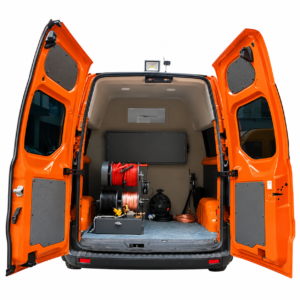
Click the image to know more about Wrindu RDCD-C Vehicle-Mounted Cable Fault Testing System.
What Is the Difference Between Impulse Voltage and Capacitance?
Impulse voltage is the voltage applied to the cable test circuit during discharge. Capacitance describes the ability of a capacitor to store electrical charge.
They have different units and functions.
| Parameter | Meaning | Unit |
|---|---|---|
| Impulse voltage | Voltage applied during impulse testing | kV |
| Capacitance | Electrical charge storage capacity | μF |
| Stored energy | Energy stored before capacitor discharge | J |
Neither voltage nor capacitance alone describes the complete energy capacity of a cable fault tester.
How Do Impulse Voltage and Capacitance Affect Stored Energy?
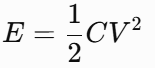
The relationship is described by the capacitor energy formula:
[
E=\frac{1}{2}CV^2
]
The formula shows two important relationships:
- Stored energy increases linearly with capacitance.
- Stored energy increases with the square of voltage.
For example, doubling capacitance doubles stored energy. Doubling voltage increases stored energy by four times, provided the other parameter remains unchanged.
Can Different Voltage and Capacitance Combinations Produce the Same Energy?
Yes. Different capacitor configurations can provide the same theoretical stored energy.
The following examples show three combinations:
| Capacitance | Charging Voltage | Stored Energy |
|---|---|---|
| 4 μF | 32 kV | 2,048 J |
| 16 μF | 16 kV | 2,048 J |
| 64 μF | 8 kV | 2,048 J |
Although all three configurations store 2,048 J theoretically, their voltage and capacitance values are different.
The same stored energy does not mean that the configurations produce identical impulse waveforms or testing performance.
Why Do Cable Fault Testers Use Different Capacitor Configurations?
Different capacitor configurations allow the equipment to operate with different combinations of charging voltage and capacitance.
A higher-voltage, lower-capacitance configuration and a lower-voltage, higher-capacitance configuration can have the same theoretical energy.
However, the suitable configuration depends on the cable, the test method, and the equipment’s rated operating limits.
Engineers should follow the manufacturer’s instructions when selecting a configuration.
How Does Capacitor Configuration Affect Cable Fault Testing?
The selected configuration affects the electrical conditions of the impulse discharge.
For example, the RDCD-C provides three configurations:
| Configuration | Voltage | Capacitance | Stored Energy |
|---|---|---|---|
| 1 | 32 kV | 4 μF | 2,048 J |
| 2 | 16 kV | 16 μF | 2,048 J |
| 3 | 8 kV | 64 μF | 2,048 J |
The three configurations have the same theoretical stored energy but different voltage and capacitance ratings.
This gives engineers different electrical configurations within the equipment’s specified operating range.
Is Higher Impulse Voltage Always Better for Cable Fault Testing?
No. A higher impulse voltage does not automatically mean better test performance.
The applied voltage must be suitable for the cable’s rated voltage, insulation condition, and selected test method. The equipment’s maximum output voltage should not be treated as the required test voltage for every cable.
Engineers should also consider capacitance, stored energy, cable characteristics, and manufacturer operating limits.
What Should Buyers Compare When Selecting a Cable Fault Tester?
Buyers should compare the complete high-voltage configuration instead of checking only the maximum voltage rating.
| Selection Parameter | What Buyers Should Check |
|---|---|
| Maximum output voltage | Highest specified charging voltage |
| Capacitance | Available capacitor values |
| Maximum impulse energy | Maximum specified stored energy |
| Configuration options | Available voltage and capacitance combinations |
| Impulse interval | Adjustable time between impulses |
| Safety functions | Discharge protection and grounding arrangements |
These specifications help buyers understand the equipment’s electrical capacity and operating options.
What Voltage and Capacitance Configurations Does the RDCD-C Support?
The WRINDU RDCD-C high-voltage control system supports three built-in capacitor configurations.
- 4 μF at 32 kV
- 16 μF at 16 kV
- 64 μF at 8 kV
Each configuration has a theoretical stored energy of 2,048 J.
The system provides a 0–32 kV output voltage range and an adjustable impulse interval of 1–10 seconds.
Frequently Asked Questions
Does higher capacitance always mean higher impulse energy?
No. Stored energy depends on both capacitance and charging voltage. A higher capacitance can store the same energy at a lower voltage.
Can a 4 μF capacitor at 32 kV store the same energy as a 16 μF capacitor at 16 kV?
Yes. Both configurations store 2,048 J theoretically.
Why should buyers check capacitance as well as voltage?
Voltage and capacitance jointly determine stored energy. Checking both parameters provides a more complete understanding of the equipment’s specifications.
Does the RDCD-C support different capacitor configurations?
Yes. It supports 4 μF/32 kV, 16 μF/16 kV, and 64 μF/8 kV configurations.
Does the same stored energy guarantee the same testing result?
No. Discharge characteristics and testing results also depend on the test circuit, cable characteristics, and other operating conditions.
About Wrindu High-Voltage Cable Fault Testing Equipment
Wrindu is a Chinese OEM manufacturer of electrical testing equipment and power testing solutions, established in 2014.
The RDCD-C Vehicle-Mounted Cable Fault Testing System supports three high-voltage capacitor configurations, with a maximum specified impulse energy of 2,048 J and an output voltage range of 0–32 kV.
Contact Wrindu for technical specifications and configuration information.
