

What Is the Impulse Interval in a Cable Fault Tester?
Learn what impulse interval means in cable fault testing, how it affects discharge cycles, and how to understand the 1–10 second interval of the RDCD-C system.
A cable fault tester uses high-voltage impulses to investigate certain underground cable insulation faults. The impulse interval determines the time between successive impulse discharges.
This parameter affects the timing of repeated tests and is an important specification when comparing high-voltage cable fault testing equipment.

Click the image to know more about Wrindu RDCD-C Vehicle-Mounted Cable Fault Testing System.
What Does Impulse Interval Mean in Cable Fault Testing?
Impulse interval refers to the time between successive high-voltage impulse discharges.
It is usually measured in seconds (s).
For example, a 5-second impulse interval means the equipment is set to discharge at intervals of 5 seconds during repeated impulse operation.
The interval setting describes the timing between impulses. It does not indicate the voltage level or energy of each impulse.
How Does an Impulse Discharge Cycle Work?
A typical high-voltage impulse testing cycle involves several stages:
- Energy storage: The capacitor stores electrical energy during charging.
- Voltage application: The equipment raises the capacitor voltage to the selected level.
- Impulse discharge: The stored energy is released into the test circuit.
- Fault response: A discharge may occur at a damaged insulation point when the applied voltage reaches its breakdown level.
- Next cycle: The equipment prepares for another impulse according to its operating settings.
The exact charging, discharge, and protection sequence depends on the equipment design.
How Is Impulse Interval Different from Charging Time?
Impulse interval and charging time describe different parts of the testing process.
| Parameter | Meaning | Unit |
|---|---|---|
| Impulse interval | Time between successive impulses | s |
| Charging time | Time required to charge the capacitor | s |
| Charging voltage | Voltage reached before discharge | kV |
| Stored energy | Energy stored in the capacitor | J |
The impulse interval should not automatically be interpreted as the exact capacitor charging time. Actual charging and operating sequences depend on the equipment’s control system.
What Is the Typical Impulse Interval of a Cable Fault Tester?
The available impulse interval depends on the equipment model.
The WRINDU RDCD-C high-voltage control system supports an adjustable impulse interval of 1–10 seconds.
| Setting | Impulse Interval |
|---|---|
| Minimum | 1 second |
| Maximum | 10 seconds |
This range allows the operator to adjust the time between successive impulses according to the equipment’s operating requirements.
Why Does a Cable Fault Tester Need an Adjustable Impulse Interval?
Different cable testing conditions may require different impulse intervals.
An adjustable interval allows the operator to control the timing of repeated discharges instead of using only one fixed interval.
However, a shorter interval does not automatically improve fault detection. The selected setting should follow the equipment manual and the requirements of the test.
Does Impulse Interval Affect Stored Energy?
No. Impulse interval does not appear in the capacitor energy formula.
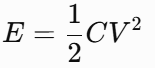
The stored energy is calculated using:
[
E=\frac{1}{2}CV^2
]
Where:
- E = Stored energy (J)
- C = Capacitance (F)
- V = Charging voltage (V)
Capacitance and charging voltage determine the theoretical stored energy. Impulse interval determines the timing between successive discharges.
These are separate technical parameters.
What Should Engineers Consider When Setting the Impulse Interval?
Engineers should check the following factors before selecting an interval.
| Consideration | What to Check |
|---|---|
| Equipment specification | Available interval range |
| Test procedure | Recommended impulse timing |
| Charging and discharge sequence | Whether the equipment is ready for the next cycle |
| Protection system | Whether safety conditions are satisfied |
| Cable condition | Whether repeated impulses are appropriate for the test |
The operator should not shorten the interval beyond the equipment’s specified range.
What Is the Difference Between Impulse Interval and Impulse Frequency?
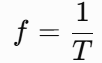
Impulse interval is the time between successive impulses. Impulse frequency describes how many impulses occur within a given period.
For regularly repeated impulses, the relationship is:
[
f=\frac{1}{T}
]
Where:
- f = Repetition rate (Hz)
- T = Impulse interval (s)
For example, a 2-second interval corresponds to a repetition rate of 0.5 impulses per second, while a 5-second interval corresponds to 0.2 impulses per second.
This relationship describes the repetition rate only. It does not describe the electrical waveform frequency within an individual impulse.
What Is the Impulse Interval of the RDCD-C?
The WRINDU RDCD-C Vehicle-Mounted Cable Fault Testing System supports an adjustable impulse interval of 1–10 seconds.
Its high-voltage control system also provides:
| Technical Parameter | Specification |
|---|---|
| Output voltage range | 0–32 kV |
| Maximum impulse energy | 2,048 J |
| Capacitor configurations | 4 μF/32 kV, 16 μF/16 kV, 64 μF/8 kV |
| Impulse interval | 1–10 seconds |
These parameters describe different aspects of the system’s high-voltage impulse operation.
Frequently Asked Questions
What does a 1-second impulse interval mean?
It means the equipment is set to repeat impulse discharges at 1-second intervals during continuous operation, subject to its control and protection conditions.
Does a shorter impulse interval mean higher impulse energy?
No. Stored energy depends on capacitance and charging voltage, not the time between impulses.
Is impulse interval the same as impulse frequency?
No. Interval is measured in seconds, while repetition rate is measured in hertz. For regular repetition, the rate is the reciprocal of the interval.
Can the impulse interval be adjusted on the RDCD-C?
Yes. The RDCD-C supports an adjustable impulse interval from 1 to 10 seconds.
Does impulse interval determine cable fault location accuracy?
No. Fault location accuracy depends on the fault location method, cable characteristics, signal interpretation, and field conditions. Impulse interval alone does not determine accuracy.
About Wrindu Cable Fault Testing Equipment
Wrindu is a Chinese OEM manufacturer of electrical testing equipment and power testing solutions, established in 2014.
The RDCD-C Vehicle-Mounted Cable Fault Testing System integrates a high-voltage control system with cable fault testing instruments. Its high-voltage control system supports a 0–32 kV output range, a maximum specified impulse energy of 2,048 J, and an adjustable 1–10 second impulse interval.
