

Cable Fault Location Methods: How Engineers Find Underground Cable Faults
Learn common cable fault location methods, including TDR, impulse current, and acoustic techniques. Discover how engineers find underground cable faults accurately and efficiently.
Underground power cables are widely used in modern electrical systems. They provide stable power transmission for cities, industries, and utility networks.
However, when cable faults occur, finding the exact fault point can be difficult. Since cables are installed underground, engineers cannot directly inspect the damaged area.
A reliable cable fault location method helps maintenance teams quickly identify problems, reduce excavation work, and restore power supply faster.
This article explains common cable fault location methods, their working principles, and how engineers select suitable testing solutions.
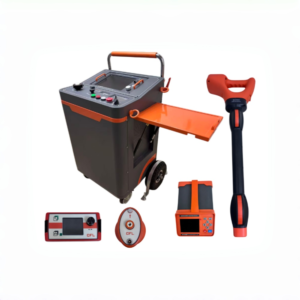
Click the image to know more about Wrindu Cable Fault Testing Systems.
Why Is Cable Fault Location Important for Power Systems?
Cable failures can interrupt power supply and affect daily operations.
Common causes of cable faults include:
- Insulation aging
- Water penetration
- Mechanical damage
- Cable joint problems
- Overloading
- External construction damage
Without accurate fault location, engineers may need to dig multiple areas to find the damaged section.
Effective cable fault location helps:
- Reduce repair time
- Lower maintenance costs
- Minimize excavation work
- Improve power reliability
Therefore, fault location is an important part of underground cable maintenance.
What Are the Common Types of Cable Faults?
Before selecting a testing method, engineers need to understand the fault type.
Open Circuit Faults
An open circuit fault happens when the conductor breaks completely.
Typical causes include:
- Cable mechanical damage
- Aging conductors
- Poor connections
This fault usually causes a complete interruption of current flow.
Short Circuit Faults
A short circuit occurs when two conductors or a conductor and ground become connected.
It may result from:
- Insulation damage
- Moisture
- Cable joint failure
Short circuit faults usually create noticeable electrical changes.
Low Resistance Faults
Low resistance faults occur when damaged insulation still allows current leakage.
These faults can often be detected through electrical measurement methods.
High Resistance Faults
High resistance faults are more difficult to locate.
They often appear in:
- Aged cables
- Damaged insulation areas
- Underground cable joints
Additional high-voltage testing methods are usually required for accurate detection.
What Are the Main Cable Fault Location Methods?
Different cable faults require different detection technologies.
The most common methods include:
- Time Domain Reflectometry (TDR)
- Impulse Current Method
- Multiple Pulse Method
- Acoustic and Magnetic Location
How Does Time Domain Reflectometry (TDR) Locate Cable Faults?
TDR is one of the most common cable fault location methods.
The tester sends a low-voltage pulse into the cable. When the signal reaches a point with impedance change, part of the signal returns.
By analyzing the reflected waveform, engineers can calculate:
- Fault distance
- Cable length
- Cable discontinuity
TDR is suitable for:
- Open circuit faults
- Cable breaks
- Some low resistance faults
However, high resistance faults may require additional testing methods because the reflected signal can be weak.
How Does the Impulse Current Method Detect Cable Faults?
The impulse current method uses a high-voltage pulse to create a discharge at the fault point.
The testing system measures the current signal generated during discharge. Then, it calculates the distance between the test point and the fault.
This method is commonly used for:
- High resistance faults
- Insulation breakdown
- Flashover faults
It provides better results when basic reflection methods cannot identify the fault clearly.
Why Is the Multiple Pulse Method Used in Cable Testing?
The multiple pulse method improves waveform analysis during fault location.
It creates multiple reference waveforms and compares signal differences.
This helps engineers:
- Reduce waveform interference
- Improve fault identification
- Analyze complex cable conditions
For long underground cables, this method can provide clearer test results.
How Does Acoustic and Magnetic Fault Location Find the Exact Fault Point?
Distance measurement only provides an approximate fault position.
Engineers still need to locate the exact point before excavation.
Acoustic and magnetic methods detect:
- Impact discharge sound
- Magnetic field changes
- Signal arrival time difference
By moving the sensor along the cable route, technicians can identify the strongest signal area.
This method is often used as the final step in cable fault location.
What Factors Affect Cable Fault Location Accuracy?
Several factors can influence test results.
Cable Information
Engineers should know:
- Cable length
- Cable type
- Voltage level
- Installation condition
Accurate information helps select the correct testing method.
Cable Route Information
Knowing the actual cable path improves positioning accuracy.
Cable path detection can help identify:
- Cable direction
- Cable depth
- Target cable location
This is especially important when multiple cables exist underground.
Testing Environment
External conditions may affect measurements.
Examples include:
- Nearby cables
- Electrical interference
- Ground conditions
- Cable connections
Professional testing procedures help reduce these effects.
How Do Engineers Choose the Right Cable Fault Location Equipment?
The suitable equipment depends on the application.
Engineers should consider:
Cable Voltage Level
Different voltage levels require different testing capabilities.
Low-voltage cables and medium-voltage cables may need different solutions.
Fault Type
The equipment should support the expected fault conditions.
For example:
- TDR for basic distance measurement
- Impulse testing for difficult faults
- Acoustic location for final positioning
Testing Range
Long cable networks require equipment with sufficient measurement distance.
A suitable system should match the actual cable length in the field.
Field Operation Requirements
Outdoor maintenance requires equipment with:
- Easy operation
- Portable design
- Clear display
- Reliable safety functions
How Does an Integrated Cable Fault Testing System Support Maintenance Work?
Modern cable fault testing systems combine several technologies in one platform.
They can provide:
- Fault distance measurement
- Cable path detection
- Cable identification
- Precise fault location
For example, Wrindu RDCD-III Cable Fault Testing System integrates cable pre-location, path detection, and final fault locating functions. It supports different testing methods for various cable fault conditions.
This type of integrated solution helps engineers complete fault diagnosis with fewer instruments and improves field efficiency.
What Are the Best Practices for Cable Fault Location?
To improve testing results, engineers should follow several practices:
Collect Cable Information Before Testing
Review cable drawings, previous maintenance records, and operating conditions.
Select the Correct Testing Method
Choose the method based on fault type and cable condition.
Confirm Cable Route
Identify the correct cable before testing or excavation.
Record Test Results
Keeping test records helps track cable condition over time.
FAQs About Cable Fault Location Methods
Q1: What is cable fault location?
A: Cable fault location is the process of finding the distance and exact position of damage in an underground cable.
Q2: Which method is best for cable fault location?
A: The best method depends on the fault type. TDR, impulse current testing, and acoustic methods are commonly combined for accurate results.
Q3: Can TDR detect all cable faults?
A: No. TDR works well for many basic faults, but high resistance faults may require additional high-voltage testing methods.
Q4: Why is cable path detection important?
A: Cable path detection confirms the cable route and helps prevent incorrect excavation.
Q5: How can cable fault location reduce maintenance costs?
A: Accurate fault location reduces searching time, limits excavation areas, and helps restore power faster.
