

What Is the Difference Between Primary and Secondary Injection Testing?
Compare primary and secondary injection testing, including test methods, applications, equipment requirements, and limitations for electrical protection systems.
Primary and secondary injection testing both help verify electrical protection systems, but they test different parts of the system.
Primary injection applies current through the main circuit. Secondary injection supplies test signals to the protection relay or related secondary circuits. Engineers choose between them based on the test objective and required coverage.
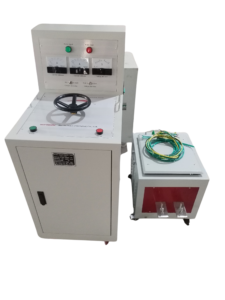
Click the image to know more about 6000A Primary Current Injection Tester.
How Does Primary Injection Testing Work?
Primary injection passes a test current through the primary current path of equipment such as a circuit breaker, CT, or switchgear assembly. It can help verify current flow, CT response, connections, and protection operation under the test conditions.
Because the test uses the primary circuit, it can cover more of the installed current path than a relay-only test. However, it may require higher current, heavier cables, and more preparation.
For high-current applications, the Wrindu RDSL-82-6000D Primary Current Injection Tester offers up to 6000 A output current and a rated capacity of 36 kVA. Its split-type structure helps with positioning, and its two ammeters support large- and small-range current monitoring.
How Does Secondary Injection Testing Work?
Secondary injection applies controlled electrical signals directly to a relay’s current or voltage inputs. It is commonly used to check relay settings, logic, timing, and selected protection functions without passing high current through the primary circuit.
This method can be easier to set up for relay-focused checks. However, it does not independently verify every primary connection or the complete CT-to-relay current path.
What Are the Main Differences?
| Comparison | Primary Injection | Secondary Injection |
|---|---|---|
| Test connection | Main or primary circuit | Relay or secondary circuit |
| Main purpose | Verify primary current path and associated response | Check relay functions and settings |
| Test current | Often high | Typically lower-level test signals |
| Setup | May require high-current cables and substantial power | Usually focuses on secondary wiring and relay inputs |
| Typical applications | Circuit breakers, CT paths, connections, integrated checks | Relay settings, logic, timing, and protection functions |
| Main limitation | More demanding setup and duty-cycle considerations | Does not by itself verify the complete primary current path |
The exact coverage depends on the equipment and test procedure.
Should Engineers Use Primary or Secondary Injection?
Use secondary injection when the objective is to verify relay settings, logic, and response to simulated inputs. Use primary injection when the test requires current through the primary circuit or needs to check more of the installed current path.
For many commissioning and maintenance programs, the two methods complement each other rather than replace one another.
What Should You Consider When Selecting a Primary Injection Tester?
Check the required current, rated capacity, working cycle, and site power supply. The Wrindu RDSL-82-6000D is designed for short-time and intermittent operation, with power-on time specified as less than 2.5 minutes and a working cycle longer than 10 minutes.
Select the method and equipment according to the test plan, manufacturer guidance, and applicable acceptance criteria.
