

CT Commissioning Procedure: How to Test Current Transformers Before Energization
Learn the CT commissioning procedure before substation energization, including testing steps, preparation, safety checks, and performance verification.
Why Is CT Testing Important Before Substation Energization?
Current transformers (CTs) provide current signals for protection relays, meters, and monitoring systems.
Before a substation starts operation, engineers need to confirm that every CT works correctly.
A CT problem during operation may cause:
- Incorrect current measurement
- Protection relay errors
- Delayed fault response
- Equipment safety risks
Therefore, CT commissioning testing helps engineers verify equipment performance before energization.
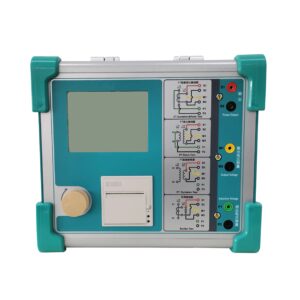
Click the image to know more about Wrindu CT and PT Analyzer.
What Is CT Commissioning Testing?
CT commissioning testing is a process that checks whether current transformers meet design and project requirements.
Engineers perform these tests after installation and before connecting the substation to the power system.
The main goals include:
- Confirming correct installation
- Checking electrical performance
- Verifying protection requirements
- Recording baseline test data
These results become an important reference for future maintenance.
What Should Engineers Check Before CT Testing?
Good preparation helps prevent incorrect test results.
Before testing, engineers should review:
- CT nameplate information
- Electrical drawings
- Protection diagrams
- Manufacturer specifications
- Test procedures
Important CT information includes:
- Primary current rating
- Secondary current rating
- Accuracy class
- Rated burden
- Protection class
What Safety Steps Should Engineers Follow?
CT testing requires careful preparation.
Before starting the test, engineers should:
- Disconnect the CT from the energized system
- Confirm isolation conditions
- Short the secondary terminals when required
- Check grounding connections
- Wear suitable protective equipment
Safety preparation helps protect both personnel and equipment.
What Are the Main Steps in CT Commissioning?
Step 1: Perform Visual Inspection
Engineers should inspect the CT before electrical testing.
The inspection includes:
- Physical damage
- Terminal condition
- Cable connection
- Grounding connection
- Nameplate information
A visual check can identify installation problems early.
Step 2: Verify CT Wiring Connections
Incorrect wiring can affect protection and measurement accuracy.
Engineers should confirm:
- Primary terminal connection
- Secondary terminal connection
- Polarity marking
- Cable identification
Correct wiring provides the foundation for accurate testing.
Step 3: Perform CT Ratio Testing
The ratio test confirms whether the CT transformation ratio matches the design value.
For example:
A 1000/5 A CT should provide a 200:1 ratio.
Engineers compare the measured value with the specified ratio.
A large difference may indicate:
- Incorrect wiring
- Wrong CT information
- Internal winding problems
Step 4: Perform CT Polarity Testing
Polarity testing confirms the current direction relationship between primary and secondary terminals.
Correct polarity is important for:
- Differential protection
- Directional protection
- Metering systems
A polarity error may cause incorrect relay operation.
Step 5: Perform Excitation and Knee Point Testing
Excitation testing checks how the CT core responds when voltage increases.
Knee point testing identifies the saturation point of the CT core.
These tests help engineers confirm whether protection CTs can provide reliable signals during fault conditions.
Step 6: Measure Secondary Resistance
Secondary resistance testing checks the condition of the CT secondary circuit.
Engineers use this test to identify:
- Loose connections
- Cable problems
- Winding abnormalities
A stable resistance value indicates a healthy secondary circuit.
Step 7: Check CT Burden
CT burden testing confirms whether the connected secondary load stays within the CT rating.
The burden includes:
- Protection relays
- Measuring devices
- Secondary cables
An excessive burden may reduce CT accuracy.
How Do Engineers Review CT Test Results?
After completing tests, engineers should compare results with:
- CT specifications
- Project requirements
- Protection settings
- Applicable standards
A complete review should check:
- Whether values meet requirements
- Whether different phases show similar results
- Whether abnormal conditions exist
Engineers should keep all test reports for future reference.
How Does a CT Analyzer Support Commissioning Work?
Traditional CT commissioning may require several separate instruments.
A modern CT analyzer combines multiple functions into one system.
It can help engineers complete:
- Ratio testing
- Polarity testing
- Excitation testing
- Knee point testing
- Resistance measurement
- Burden testing
Additional functions include:
- Automatic calculation
- Digital data storage
- Test report generation
This improves testing efficiency during substation commissioning.
What Documents Should Engineers Keep After CT Commissioning?
A complete commissioning record should include:
Equipment Information
- CT model
- Manufacturer
- Serial number
- Ratio
- Accuracy class
Test Information
- Testing date
- Test equipment
- Test method
- Environmental conditions
Test Results
- Measured values
- Test curves
- Final evaluation
These records help maintenance teams compare future CT performance.
CT Commissioning Testing FAQs
When should engineers test CTs?
Engineers should test CTs after installation, before energization, and after major maintenance work.
What tests are required before substation operation?
Common tests include ratio, polarity, excitation, knee point, resistance, and burden tests.
Why is CT polarity testing important?
Correct polarity ensures that protection relays and measurement devices receive the correct current direction.
Can CT commissioning reduce future maintenance problems?
Yes. Early testing helps engineers find installation and performance issues before operation.
What equipment can engineers use for CT commissioning?
Engineers can use multifunction CT analyzers to complete multiple CT tests with one instrument.
