

External Excitation vs Permanent Magnet Generator
Compare external excitation generators and permanent magnet generators. Learn working principles, advantages, limitations, and application differences in simple terms.
Generators can be classified based on how they create their magnetic field. Two common types are external excitation generators and permanent magnet generators (PMG). Each has different working principles, performance characteristics, and applications.
This article explains the differences in a simple and practical way to help you choose the right system.
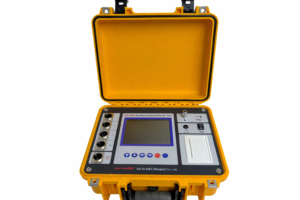
Click the image to know more about Three Phase Capacitance and Inductance Tester.
What Is an External Excitation Generator?
An external excitation generator uses an external DC power source to supply current to the field winding. This creates the magnetic field required for electricity generation.
E \propto \Phi N
Where:
- E = generated voltage
- Φ = magnetic flux (controlled externally)
- N = rotational speed
Because the field current is adjustable, the magnetic flux can be precisely controlled.
What Is a Permanent Magnet Generator (PMG)?
A permanent magnet generator uses permanent magnets instead of field windings to create a constant magnetic field.
- No external excitation is required
- Magnetic field is fixed
- Voltage depends mainly on speed
E \propto N
This makes PMGs simple and efficient in many applications.
How Do They Generate Magnetic Field?
External Excitation Generator:
- Uses field winding
- Requires external DC source or AVR
- Magnetic field is adjustable
Permanent Magnet Generator:
- Uses built-in permanent magnets
- No field current needed
- Magnetic field is fixed
Voltage Control Differences
External Excitation Generator:
- Voltage can be adjusted by changing field current
- High flexibility
- Suitable for precise control systems
Permanent Magnet Generator:
- Voltage depends mainly on speed
- Limited control capability
- Requires electronic regulation for adjustment
Which Has Better Voltage Stability?
External Excitation Generator:
- Stable under varying load
- Good regulation when properly controlled
- Suitable for industrial systems
Permanent Magnet Generator:
- Stable magnetic field
- Voltage may fluctuate with speed changes
- Requires additional regulation circuits in many cases
Efficiency Comparison
External Excitation Generator:
- Slight energy loss in field winding
- Requires excitation power
- Lower efficiency compared to PMG
Permanent Magnet Generator:
- No field excitation power needed
- Higher efficiency
- More compact design
Advantages of External Excitation Generators
- Adjustable voltage output
- Suitable for large industrial systems
- Good load control capability
- Easy integration with control systems
👉 Widely used in:
- Power plants
- Testing systems
- Industrial DC drives
Advantages of Permanent Magnet Generators
- High efficiency
- Simple structure
- No excitation system required
- Low maintenance
👉 Common in:
- Wind turbines
- Small generators
- Portable power systems
Limitations of External Excitation Generators
- Requires external power source
- More complex system design
- Higher maintenance requirements
Limitations of Permanent Magnet Generators
- Limited voltage control
- Magnetic field cannot be adjusted
- Performance depends on magnet strength and speed
Which One Should You Choose?
Choose External Excitation Generator if:
- You need precise voltage control
- Your system has variable load conditions
- You are working in industrial or laboratory environments
Choose Permanent Magnet Generator if:
- You need high efficiency
- You prefer simple and low-maintenance systems
- Your application is small or medium scale
Practical Applications
External Excitation Generators:
- DC motor drives
- Laboratory testing systems
- Industrial automation
- Power system research
Permanent Magnet Generators:
- Wind power systems
- Portable generators
- Small hydro systems
- EV auxiliary systems
Role of Testing in Both Systems
Both generator types require proper testing to ensure performance:
- Voltage regulation testing
- Load performance testing
- Insulation resistance testing
- Excitation system verification (for external excitation type)
Professional generator testing equipment helps ensure reliability and prevents unexpected failures.
Conclusion
External excitation generators offer flexibility and precise control, while permanent magnet generators provide simplicity and high efficiency. The best choice depends on your application needs, cost considerations, and performance requirements.
Understanding these differences helps engineers design more efficient and reliable power systems.
