

What Is a Cable Fault Locator and How Does It Work?
Learn what a cable fault locator is, how it works, key features, fault types, and testing methods to quickly locate underground and power cable faults.
A cable fault locator is a testing device used to find faults, disruptions, or damage in power and communication cables. It works by sending signals through the cable and analyzing the reflected or returned signals to identify problems such as breaks, short circuits, sheath damage, or insulation faults. Cable fault location usually follows four clear steps: fault analysis, pre-location, tracing and pin-pointing, and cable identification, helping engineers repair cables quickly and accurately.
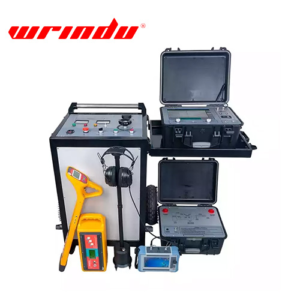
Click the image to know more about Cable Fault Testing System.
Why Is Cable Fault Location Important?
Cable faults often occur underground or inside insulation, making them hard to detect visually. Fast and accurate fault location reduces outage time, prevents unnecessary excavation, and lowers maintenance costs. Early fault detection also helps avoid secondary damage caused by moisture ingress, corrosion, or insulation aging.
What Are the Main Features of a Cable Fault Locator?
How Does It Improve User Experience?
Modern cable fault locators use large HD displays to show fault type, battery voltage, propagation speed, and charging status. Many models support PC connection for data analysis and reporting.
How Does It Simplify Operation?
Advanced systems use Automated Arc Reflection Technology (AART) and loop modes to automatically calculate fault distance. Headphone-based acoustic guidance helps users pinpoint faults faster.
How Does It Save Energy?
The device switches off the screen during long standby periods and provides clear low-battery warnings, extending operating time in the field.
How Does It Handle Harsh Environments?
Rugged housings with IP65 protection resist dust and water, allowing reliable operation in extreme weather and tough field conditions.
What Types of Cable Fault Locators Are Available?
What Is a Cable Route Tracer?
A cable route tracer locates and traces buried cables and measures their depth. It uses a transmitter and receiver to follow the cable path and can also help locate low-resistance faults.
What Is a Cable Fault Distance Locator?
This type calculates the exact distance to a fault from a reference point. It uses electrical principles such as Ohm’s law, TDR signals, or time differences between electromagnetic and acoustic impulses.
What Are the Common Causes of Cable Faults?
Cable faults usually result from:
-
Screening faults caused by conductor-to-screen contact
-
Phase faults caused by contact between conductors
-
Sheath faults that expose the cable to the environment
-
Moisture intrusion that increases impedance
-
Disruptions such as broken conductors or open circuits
Understanding fault causes helps select the right test method.
Which Methods Are Used to Locate Cable Faults?
How Does Pre-location Work?
Pre-location methods estimate fault distance before excavation.
-
Time Domain Reflectometry (TDR) finds low-resistance faults and cable interruptions
-
SIM/MIM (Surge Arc Reflection) converts high-resistance faults into detectable low-resistance faults
-
Impulse Current Method (ICM) works well for long cables with high-resistance faults
-
Decay and Differential Methods help locate difficult faults in long or branched networks
How Does Pin-Pointing Find the Exact Fault?
-
Acoustic pin-pointing listens for flashover sounds during cable thumping
-
Step voltage method measures voltage gradients for sheath or ground faults
-
Twist field method uses magnetic field changes to locate faults and joints
Why Is Cable Identification Necessary?
When multiple cables run together, correct identification prevents accidental cutting of healthy cables. A transmitter sends pulses into the target cable, and a Rogowski coil detects the current to confirm cable identity before repair.
How Do You Choose the Right Cable Fault Locator?
What Should You Consider First?
Define your application, cable type, fault frequency, and budget before selecting a device.
Why Do Brand and Performance Matter?
Well-known manufacturers offer better accuracy, stable performance, and reliable after-sales support.
Which Technical Parameters Are Important?
Focus on test signal type, accuracy, maximum test distance, and display method to match real-world needs.
Why Are Usability and Upgradability Important?
Simple operation, high reliability, and upgrade options ensure long-term value and adaptability as technology evolves.
