

How Do You Check the Calibration and Accuracy of a Transformer Oil BDV Tester?
Learn how to check transformer oil BDV tester calibration, voltage measurement accuracy, electrode condition, and calibration certificates.
A transformer oil breakdown voltage (BDV) tester measures the voltage at which an insulating oil sample breaks down under specified test conditions. Reliable measurements depend on the instrument’s voltage measurement system, test-cell condition, electrode configuration, and operating procedure.
Calibration helps establish the relationship between an instrument’s indicated values and reference measurements. It does not eliminate variation caused by sample contamination, moisture, air bubbles, or inconsistent test procedures.
This guide explains how to evaluate BDV tester calibration, measurement performance, and test reliability.
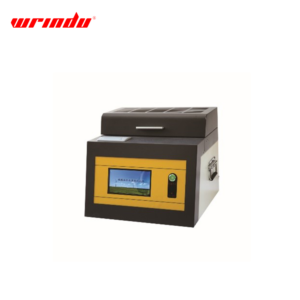
Click the image to know more about Wrindu Oil BDV Tester.
Why Does a Transformer Oil BDV Tester Need Calibration?
A BDV tester must apply and measure voltage within its specified performance limits. If its voltage measurement system drifts or develops a fault, the displayed breakdown voltage may not represent the applied voltage accurately.
Calibration provides documented evidence of measurement performance under defined conditions. It can also help identify deviations that require adjustment, repair, or further investigation.
The required calibration interval depends on the instrument manufacturer’s recommendations, usage, operating environment, quality system, and applicable laboratory requirements. There is no single interval that applies to every BDV tester.
What Is the Difference Between Calibration and Accuracy?
Calibration and accuracy describe different aspects of measurement performance.
Calibration compares an instrument’s indications with suitable reference values under defined conditions. Accuracy describes how close a measured value is to the relevant true or reference value.
| Term | Meaning | What to check |
|---|---|---|
| Calibration | Comparison with reference standards under defined conditions | Calibration certificate, method, date, and results |
| Measurement accuracy | Closeness of a measured value to the relevant reference value | Manufacturer’s specification and supporting evidence |
| Repeatability | Agreement between repeated measurements under specified conditions | Repeat-test data and test procedure |
| Resolution | Smallest displayed increment or distinguishable change | Display specification |
| Measurement uncertainty | Quantified doubt associated with a measurement result | Calibration documentation and uncertainty statement |
A display that shows voltage to two decimal places does not automatically provide accuracy to two decimal places. Resolution, accuracy, and uncertainty should not be treated as interchangeable specifications.
How Can You Check the Voltage Measurement Performance of a BDV Tester?
The voltage measurement system should be checked using an appropriate reference instrument and a procedure suitable for the tester’s design. The work should be performed by qualified personnel or an authorized calibration provider.
A typical assessment includes the following steps:
- Identify the tester model, serial number, rated voltage range, and measurement specification.
- Review the manufacturer’s calibration procedure and any applicable laboratory requirements.
- Inspect the instrument, test leads, electrical connections, and relevant safety features.
- Compare indicated voltage values with a suitable reference across the required measurement range.
- Record the reference values, instrument indications, deviations, and measurement uncertainty where applicable.
- Evaluate the results against the manufacturer’s specification or the required acceptance criteria.
The exact test points and acceptance limits depend on the instrument. Do not apply a universal percentage tolerance without checking the model’s documentation.
A voltage calibration check also does not prove that the complete oil BDV test method is being performed correctly. The electrode arrangement, test-cell condition, sample preparation, and voltage application sequence must be evaluated separately.
Can Electrode Condition Affect the Accuracy of BDV Test Results?
Yes. Electrode geometry and spacing affect the electric field in the test cell and can influence the breakdown result.
Electrodes that are dirty, damaged, incorrectly installed, or configured with the wrong spacing can introduce variation even when the voltage measurement system performs within specification.
Check the electrode type, spacing, surface condition, and assembly against the selected test method. Clean and replace components according to the instrument manufacturer’s instructions.
How Often Should a Transformer Oil BDV Tester Be Calibrated?
The calibration interval should follow the manufacturer’s recommendations and the requirements of the laboratory or organization using the instrument.
A laboratory may review the interval based on calibration history, instrument usage, environmental conditions, previous deviations, and the consequences of an unreliable measurement. Any change to an established interval should follow the organization’s documented quality procedure.
| Operating situation | Recommended action |
|---|---|
| New tester received | Review the supplied calibration documentation and acceptance requirements |
| Routine laboratory use | Follow the documented calibration schedule |
| Tester moved or transported frequently | Inspect the instrument and assess whether additional checks are needed |
| Abnormal readings or suspected damage | Stop relying on questionable results until the instrument is assessed |
| Repair or adjustment completed | Determine whether calibration or verification is required before returning the tester to service |
These are general decision points, not a universal calibration schedule. Follow the instrument manufacturer’s instructions and the applicable quality requirements.
What Should a BDV Tester Calibration Certificate Include?
A useful calibration certificate should identify the instrument and provide enough information to evaluate the measurement results.
Depending on the calibration service and applicable requirements, the document may include:
- Instrument manufacturer, model, and serial number.
- Calibration date and identification of the calibration provider.
- Reference standards and calibration method.
- Calibration points and recorded results.
- Measurement deviations and applicable acceptance limits, where specified.
- Measurement uncertainty, where applicable.
- Environmental conditions when relevant to the results.
- Any limitations or adjustments recorded during calibration.
Check the certificate against the requirements of your quality system or customer. A document marked “calibrated” does not necessarily establish compliance with every accuracy requirement.
What Should You Do If a BDV Tester Fails Calibration?
First, determine which measurement points or functions fall outside the applicable acceptance limits. Check the calibration records and confirm that the correct specification and method were used.
If the deviation is confirmed, remove the instrument from use when required by the applicable quality procedure. Arrange inspection, adjustment, or repair through qualified personnel.
Previous test results may also need review if the calibration failure could have affected reported measurements. The scope of that review should depend on the deviation, affected measurement range, and organization’s documented procedure.
After corrective work, perform the required verification or recalibration before returning the instrument to service.
How Can You Distinguish Instrument Errors From Oil Sample Problems?
A questionable BDV result can originate from the instrument, the test setup, or the oil sample. Checking only the voltage display may not identify the actual cause.
| Possible cause | What to investigate |
|---|---|
| Voltage measurement problem | Calibration status, voltage measurement system, and instrument faults |
| Electrode or test-cell issue | Electrode spacing, surface condition, cleanliness, and assembly |
| Sample contamination | Collection container, transfer equipment, dust, water, or fibers |
| Air bubbles | Sample transfer and test-cell filling procedure |
| Procedure inconsistency | Test settings, conditioning, and required measurement sequence |
| Unstable electrical connections | Connections, cables, and instrument condition |
Use a systematic investigation rather than assuming every unusual result indicates an instrument fault. Follow the applicable test method when deciding whether a measurement should be repeated.
How Can Wrindu Help You Verify BDV Tester Specifications?
When evaluating the Wrindu Oil Dielectric Strength Tester, request the technical datasheet and confirm the documented voltage range, measurement performance, calibration arrangements, and supported test methods.
Ask whether calibration documentation is supplied and what services are available after purchase. Confirm the details for the specific model and delivery configuration rather than assuming that every option is included.
What Are the Most Common Questions About BDV Tester Calibration?
Does calibration guarantee that every BDV result is correct?
No. Calibration evaluates measurement performance under defined conditions. Sample quality, test-cell condition, and procedural errors can still affect the result.
Is a calibrated tester always accurate?
Calibration provides evidence of performance at the time and under the conditions stated in the calibration documentation. The instrument must remain within its required performance limits during use.
Can I use a tester if its calibration has expired?
Follow your organization’s quality procedures and the manufacturer’s requirements. If current calibration is required for the application, do not assume the instrument remains acceptable merely because it powers on and produces readings.
Does calibration verify the complete IEC 60156 test procedure?
Not by itself. Calibration of the voltage measurement system is different from verifying that the entire test method, including the test cell and operating sequence, is followed correctly.
Where can I obtain calibration support for a Wrindu BDV tester?
Contact Wrindu with the exact model and serial number to confirm available calibration documentation, service options, and the applicable procedure.
