

How Does an Acoustic-Magnetic Cable Fault Locator Work?
Learn how an acoustic-magnetic cable fault locator detects discharge signals and helps technicians pinpoint underground cable faults.
An acoustic-magnetic cable fault locator helps technicians find the physical position of an underground cable fault. It detects the acoustic and electromagnetic signals produced by a discharge at a suitable fault point. By moving along the cable route and comparing these signals, technicians can narrow down the fault position. This method is commonly used after high-voltage testing has triggered a discharge at the damaged insulation. An acoustic-magnetic locator is mainly used for fault pinpointing. It does not replace a cable fault pre-locator.
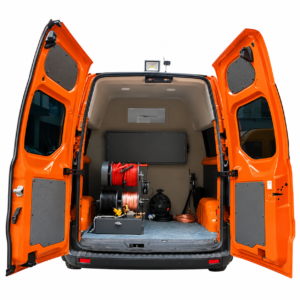
Click the image to know more about Wrindu RDCD-C Vehicle-Mounted Cable Fault Testing System.
What Is an Acoustic-Magnetic Cable Fault Locator?
An acoustic-magnetic cable fault locator is an instrument used to pinpoint underground cable faults from the ground surface.
When a high-voltage impulse causes a discharge at a suitable fault point, the discharge may produce two types of signals:
- Acoustic signal: The sound or vibration generated by the discharge.
- Electromagnetic signal: The electromagnetic response associated with the discharge.
The locator detects these signals through its sensors.
By analyzing their timing and strength, technicians can identify the area where the discharge occurs.
How Does Acoustic-Magnetic Fault Location Work?
Acoustic-magnetic fault location uses the difference between the propagation of electromagnetic and acoustic signals. The electromagnetic signal reaches the ground-level receiver much faster than the sound signal. The operator can use the relationship between the two signals to identify the discharge event.
The basic process includes:
- Use a suitable testing method to trigger a discharge at the cable fault.
- Identify the suspected fault area using pre-location results.
- Move the acoustic-magnetic locator along the cable route.
- Detect the electromagnetic and acoustic signals.
- Compare the signal response at different positions.
- Narrow down the position where the discharge signal is strongest and clearest.
The actual result depends on the fault condition, ground environment, and signal quality.
Why Does an Acoustic-Magnetic Locator Need a Discharge?
An acoustic-magnetic locator detects signals associated with a discharge at the fault point. If the cable fault does not produce a suitable discharge, the instrument may not receive a clear acoustic signal. For this reason, technicians often use a high-voltage surge generator to trigger a discharge during testing. This method is mainly suitable for faults that can produce detectable discharge signals. A simple open-circuit fault, for example, may not create the discharge required for acoustic pinpointing.
What Is the Difference Between Pre-Location and Fault Pinpointing?
Pre-location and pinpointing are two different stages of underground cable fault location.
| Comparison | Fault Pre-Location | Acoustic-Magnetic Pinpointing |
|---|---|---|
| Main Purpose | Estimates the distance to the fault | Finds the physical fault position |
| Typical Equipment | TDR cable fault tester | Acoustic-magnetic locator |
| Test Signal | Reflected electrical pulse | Acoustic and electromagnetic discharge signals |
| Result | Estimated distance from the test end | Narrower ground-level fault position |
| Main Application | Initial fault location | Final field pinpointing |
Pre-location helps technicians determine where to start searching. Pinpointing helps them narrow down the physical position before excavation or repair.
What Conditions Can Affect Acoustic-Magnetic Fault Location?
Several factors can affect the accuracy and clarity of acoustic-magnetic detection.
| Factor | Possible Effect |
|---|---|
| Discharge strength | A weak discharge may produce unclear signals |
| Ground conditions | Soil structure can affect sound transmission |
| Background noise | Traffic and nearby machinery may interfere with acoustic detection |
| Cable depth | Greater burial depth may make signal detection more difficult |
| Nearby cables | Multiple underground cables may complicate route identification |
| Fault condition | Not every fault produces a suitable discharge |
Technicians should consider these conditions when interpreting the signals.
A clear signal response and a correct cable route are important for reliable pinpointing.
Why Is Cable Route Detection Important Before Pinpointing?
Before using an acoustic-magnetic locator, technicians need to know where the target cable runs. A cable path detector helps identify the underground cable route. It can also support cable identification and depth measurement, depending on the instrument. This information helps technicians move along the correct route during fault pinpointing. If several cables are installed close together, route detection is especially important. It reduces the risk of searching along the wrong cable. A cable path detector and an acoustic-magnetic locator therefore perform different but related tasks.
What Should You Check When Selecting an Acoustic-Magnetic Locator?
The locator should match the field testing conditions and the required pinpointing method.
| Selection Factor | What to Check |
|---|---|
| Signal detection | Whether the instrument detects both acoustic and electromagnetic signals |
| Sensor design | Whether the sensors suit the intended field application |
| Signal display | Whether the instrument provides clear signal feedback |
| Operating environment | Whether it can be used under expected ground and noise conditions |
| Cable route information | Whether a separate cable path detector is required |
| Accessories | Whether the required sensors, probes, and connection cables are included |
| Portability | Whether the equipment is suitable for field operation |
Technicians should also check the instrument manual and supported testing methods before use.
Frequently Asked Questions About Acoustic-Magnetic Cable Fault Locators
Can an acoustic-magnetic locator find a cable fault without a surge generator?
It depends on the fault condition. The method needs a suitable discharge signal. A surge generator is often used to trigger discharge when required.
Does an acoustic-magnetic locator measure fault distance?
It is mainly used to pinpoint the physical fault position above ground. A TDR tester or another pre-location method is generally used to estimate the distance first.
Can it locate every underground cable fault?
No. It works best when the fault produces detectable acoustic and electromagnetic discharge signals. Some faults may require other testing methods.
Why are both acoustic and electromagnetic signals used?
The electromagnetic signal helps identify the discharge event, while the acoustic signal helps narrow down the physical position of the fault.
Is a cable path detector necessary?
It is useful when technicians need to identify and follow the correct underground cable route. It performs a different task from acoustic-magnetic pinpointing.
About Wrindu Cable Fault Testing Equipment
Wrindu provides cable testing equipment for underground cable fault location and field testing.
The RDCD-C Vehicle-Mounted Cable Fault Testing System includes an acoustic-magnetic locator for fault pinpointing, a cable path detector for route detection, and other equipment for cable measurement and high-voltage testing.
The system is installed inside a customer-provided vehicle. Contact Wrindu for product details and system configuration information.
