

How Is Primary Injection Testing Used for Switchgear?
Learn how primary injection testing checks switchgear busbars, circuit breakers, CTs, and main current paths during commissioning and maintenance.
Primary injection testing is used to check the main current path of electrical switchgear. It helps engineers verify current flow, electrical connections, current transformer (CT) response, and protection system operation under actual test conditions.
Unlike secondary injection testing, which sends simulated signals to protection relays, primary injection passes test current through the primary circuit. This makes it useful for checking several parts of a switchgear assembly.
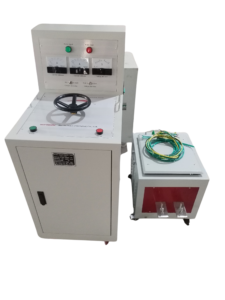
Click the image to know more about 6000A Primary Current Injection Tester.
What Is the Purpose of Primary Injection Testing for Switchgear?
Switchgear controls, protects, and isolates electrical circuits. Its main current path includes busbars, circuit breakers, current transformers, and electrical connections.
Primary injection testing checks whether the primary circuit carries the required test current. It can also help identify incorrect connections, poor electrical contact, and problems with associated protection circuits.
The main testing objectives include:
- Checking current flow through the main circuit.
- Verifying CT response under primary current.
- Checking current circuit connections.
- Confirming the operation of associated protection devices.
- Supporting commissioning and maintenance inspections.
Which Switchgear Components Can Be Checked by Primary Injection Testing?
Primary injection testing can cover different components depending on the test connection and equipment configuration.
| Switchgear component | Testing objective |
|---|---|
| Main busbars | Check current flow through the busbar circuit |
| Circuit breakers | Verify current path and associated protection response |
| Current transformers | Check CT response to primary current |
| Cable connections | Check the selected current path and connections |
| Electrical joints | Help identify abnormal contact conditions |
| Protection circuits | Verify associated operation when the complete test arrangement supports it |
The actual test coverage depends on the connection points and test procedure. A primary injection test does not automatically verify every function of a complete switchgear assembly.
How Does Primary Injection Testing Help During Switchgear Commissioning?
During commissioning, engineers need to verify that switchgear components are correctly installed and connected before the equipment enters service.
Primary injection testing provides a practical way to check the installed primary current path. It can also help confirm that CTs and associated protection devices respond to the applied current.
For example, engineers can use a suitable test current to check the current path through a selected switchgear feeder. They can then compare the measured current and protection response with the commissioning test requirements.
Primary injection testing should be combined with other required electrical tests. It does not replace insulation resistance testing, contact resistance measurement, or other commissioning inspections.
What Is the Difference Between Primary Injection and Secondary Injection for Switchgear?
Both methods support switchgear protection testing, but their test connections and coverage are different.
| Comparison | Primary injection | Secondary injection |
|---|---|---|
| Test connection | Main current circuit | Relay secondary inputs |
| Test signal | Current through the primary path | Simulated current or voltage signals |
| Main purpose | Check primary current path and associated response | Check relay settings and protection logic |
| CT verification | Can check CT response under primary current | Usually checks relay response using simulated CT signals |
| Main limitation | Requires suitable high-current test equipment | Does not independently verify the complete primary current path |
Engineers may use both methods during commissioning because they verify different parts of the protection system.
What Equipment Is Used for Switchgear Primary Injection Testing?
A primary current injection tester supplies controlled current to the selected primary circuit. The required output depends on the switchgear rating, test objective, and manufacturer requirements.
For large-current applications, the Wrindu RDSL-82-6000D Primary Current Injection Tester provides the following specifications:
| Parameter | Specification |
|---|---|
| Model | RDSL-82-6000D |
| Maximum output current | 6000 A |
| Rated capacity | 36 kVA |
| Structure | Split-type |
| Current monitoring | Two ammeters for large and small ranges |
| Operation | Short-time and intermittent operation |
| Power-on time | Less than 2.5 minutes |
| Working cycle | Longer than 10 minutes |
The tester is designed for applications that require large primary injection currents. Its split-type structure supports equipment positioning during field testing.
Wrindu RDSL-82-6000D Primary Current Injection Tester
What Should Engineers Check Before Switchgear Primary Injection Testing?
Engineers should confirm the test objective, equipment rating, connection points, and required test current before starting.
The following checks help prepare the test:
- Confirm the switchgear manufacturer’s testing requirements.
- Identify the primary current path to be tested.
- Check the isolation and grounding arrangements.
- Select suitable test cables and connections.
- Confirm the tester’s current output and working cycle.
- Define the required measurement and acceptance criteria.
Testing must follow the equipment manufacturer’s instructions and applicable electrical safety procedures.
How Can Wrindu Support Switchgear Primary Injection Testing?
Wrindu provides primary current injection testers for electrical equipment testing, commissioning, and maintenance applications.
The RDSL-82-6000D supports primary injection applications requiring up to 6000 A output current. Engineers can select the test configuration according to the switchgear type, rated current, and testing requirements.
For equipment selection and technical specifications, contact Wrindu for product information and technical support.
