

What Should a Primary Injection Test Report Include?
Learn what a primary injection test report should include, which current measurements to record, and how engineers evaluate test results.
A primary injection test report records the test conditions, applied current, measured results, and equipment information. It helps engineers evaluate test performance, compare results with acceptance criteria, and maintain records for electrical equipment commissioning and maintenance.
A complete report should identify the tested equipment and explain how the test was performed. It should also include enough information for another engineer to understand and review the results.
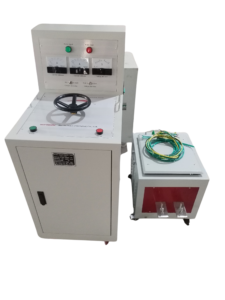
Click the image to know more about 6000A Primary Current Injection Tester.
Why Is a Primary Injection Test Report Important?
Primary injection testing involves applying current through the main electrical circuit. Recording the test results helps confirm what was tested and whether the measured values met the specified requirements.
A test report serves several purposes:
- Provides evidence of completed testing.
- Records the applied test current and measured response.
- Helps identify abnormal test results.
- Supports commissioning and maintenance records.
- Provides reference data for future inspections.
Without accurate records, engineers may find it difficult to compare test results over different maintenance periods.
What Information Should a Primary Injection Test Report Include?
A primary injection test report should contain basic equipment information, test conditions, measurements, and evaluation results.
The following table provides a practical reporting structure.
| Report section | Information to record |
|---|---|
| Project information | Project name, site, location, and test date |
| Equipment information | Equipment type, manufacturer, model, and serial number |
| Test equipment | Injection tester model and identification number |
| Test configuration | Connection points and current path |
| Test conditions | Test current, duration, and test configuration |
| Measurement results | Applied current and relevant measured values |
| Protection response | Relay or circuit breaker response, when included in the test |
| Acceptance criteria | Applicable manufacturer or project requirements |
| Test conclusion | Pass, fail, or further investigation required |
| Personnel | Test engineer and reviewer |
The report should distinguish measured values from calculated values and acceptance limits.
Which Test Parameters Should Engineers Record?
The recorded parameters depend on the equipment and test objective.
For a primary injection test, engineers should pay particular attention to the following information:
| Parameter | What should be recorded? |
|---|---|
| Injection current | Actual test current in amperes |
| Test duration | Time for which the test current was applied |
| Current measurement | Measured current and measurement point |
| CT response | Primary and secondary current readings, when applicable |
| Protection response | Operating time and trip response, when tested |
| Test configuration | Selected phases and connection arrangement |
| Test conditions | Equipment status and relevant environmental conditions |
For CT testing, the report may also include the primary-to-secondary current ratio and the calculated ratio error.
For circuit breaker protection tests, the report may include the actual operating time and the specified acceptance limit.
Not every parameter applies to every primary injection test. The report should match the actual test scope.
How Should Engineers Evaluate Primary Injection Test Results?
Engineers should compare measured values with the applicable acceptance criteria.
These criteria may come from equipment manufacturers, project specifications, maintenance procedures, or applicable standards.
For example, when checking CT response, engineers can compare the measured primary and secondary currents with the expected transformation ratio.
When checking circuit breaker protection, engineers can compare the measured operating time with the specified protection requirements.
A test result should not be marked as passed only because the injection tester reached the target current. The complete test objective must be evaluated.
What Is the Difference Between a Primary Injection Test Report and a Secondary Injection Test Report?
Both reports document protection system testing, but they focus on different test inputs and measurements.
| Comparison | Primary injection report | Secondary injection report |
|---|---|---|
| Test input | Current through the primary circuit | Simulated current or voltage signals |
| Main test focus | Primary current path and associated response | Protection relay functions |
| Current records | Applied primary current | Simulated secondary current |
| CT verification | Can include CT response under primary current | Usually verifies relay response to simulated inputs |
| Typical results | Current measurements and associated protection response | Relay settings, operating time, and logic response |
| Main purpose | Document primary circuit testing | Document secondary protection testing |
For complete protection system commissioning, engineers may need both reports.
How Can Engineers Improve the Accuracy of Test Reports?
Accurate reporting starts before the test begins. Engineers should prepare a standard report template and confirm which measurements are required.
The following practices help improve report quality:
1. Record actual measurements
Use measured values rather than estimated or manually assumed results.
2. Identify the test equipment
Include the tester model and identification information. Record calibration details when required by the project or quality management system.
3. Keep test conditions consistent
Record the test current, duration, connection points, and relevant equipment conditions.
4. Include acceptance criteria
Show the required limits beside the measured results. This makes technical review easier.
5. Keep supporting records
Attach relevant test sheets, instrument records, photographs, and other supporting documents when available.
What Test Equipment Can Be Used for High-Current Primary Injection Testing?
A primary current injection tester supplies the current required for testing the primary circuit.
The Wrindu RDSL-82-6000D Primary Current Injection Tester is designed for high-current applications in power plants, substations, laboratories, and electrical equipment manufacturers.
| Technical parameter | RDSL-82-6000D |
|---|---|
| Maximum output current | 6000 A |
| Rated capacity | 36 kVA |
| Equipment structure | Split-type |
| Current monitoring | Two ammeters |
| Power-on time | Less than 2.5 minutes |
| Working cycle | Longer than 10 minutes |
| Operation type | Short-time and intermittent |
Engineers should record the actual current applied during each test rather than use the tester’s maximum output rating as the test result.
Explore the Wrindu RDSL-82-6000D Primary Current Injection Tester.
How Does Wrindu Support Electrical Testing Projects?
Wrindu is a China OEM manufacturer of high-voltage testing equipment and electrical test solutions.
Wrindu provides primary current injection testers for electrical equipment manufacturers, power utilities, testing laboratories, and maintenance teams.
The technical team can provide product specifications and equipment selection support based on the required test current, rated capacity, and application.
For primary injection testing equipment information, contact Wrindu for technical support and product details.
