

How Open Circuit Voltage (OCV) and OCP Improve Circuit Breaker Testing and Protection Reliability
Learn how Open Circuit Voltage (OCV) and Open Circuit Potential (OCP) are used in circuit breaker testing to detect faults early and improve power system protection with Wrindu solutions.
Open Circuit Voltage (OCV) and Open Circuit Potential (OCP) are important diagnostic parameters used in evaluating the performance and condition of circuit breakers in high-voltage systems. They help engineers identify electrical instability, contact degradation, and early fault risks without damaging the equipment. Wrindu provides advanced testing solutions designed for accurate OCV and OCP analysis in power protection systems.
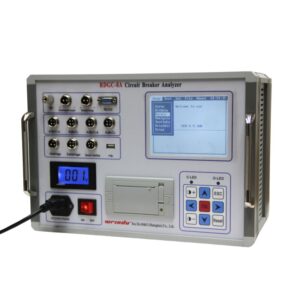
Click the image to know more about Circuit Breaker Comprehensive Tester.
Why Are OCV and OCP Important for Circuit Breakers?
Circuit breakers are essential safety devices in power systems. They protect equipment by interrupting fault currents, but their internal components can degrade over time.
OCV and OCP help by:
- Monitoring electrical stability of contacts
- Detecting early signs of wear or oxidation
- Identifying insulation or mechanical degradation
- Supporting preventive maintenance strategies
These measurements provide valuable insight into breaker health before failure occurs.
How Is OCV Used in Circuit Breaker Testing?
OCV is used to evaluate the electrical condition of a circuit breaker when it is not carrying load.
It helps engineers:
- Check contact voltage stability
- Verify electrical readiness before operation
- Identify abnormal voltage variations
- Support commissioning and maintenance tests
A stable OCV reading usually indicates that the breaker contacts are in good condition.
How Does OCP Help in Circuit Breaker Diagnostics?
OCP is used to analyze electrochemical and surface conditions of metallic components inside circuit breakers.
It helps detect:
- Contact surface oxidation
- Corrosion development
- Material degradation over time
- Chemical imbalance in contact interfaces
Even small OCP changes can indicate early deterioration of breaker contacts.
What Equipment Is Used for OCV and OCP Testing?
Accurate testing requires specialized instruments, such as:
- High-precision voltmeters
- Potentiostats for electrochemical analysis
- Contact resistance testers
- Multi-function high-voltage diagnostic systems
Wrindu provides OEM testing equipment designed for circuit breaker manufacturers, utilities, and maintenance teams, ensuring high accuracy and stable performance.
How Do OCV and OCP Improve Breaker Reliability?
Regular monitoring of OCV and OCP helps improve circuit breaker performance by:
- Detecting contact wear early
- Reducing unexpected breaker failure
- Improving switching reliability
- Extending equipment service life
This is especially important in substations and industrial power systems where reliability is critical.
Why Are These Measurements Important in Power Protection Systems?
Circuit breakers play a key role in protecting the entire grid. Any failure can lead to serious system outages.
OCV and OCP contribute by:
- Providing early fault indicators
- Supporting predictive maintenance programs
- Improving system safety and stability
- Reducing maintenance costs and downtime
Wrindu’s testing solutions are widely used in substations, industrial plants, and renewable energy systems.
How Do OCV and OCP Work Together in Analysis?
Using both measurements provides a more complete understanding of breaker condition:
- OCV reflects electrical performance and contact stability
- OCP reflects material condition and surface degradation
Together, they help engineers detect hidden issues that may not appear in standard tests.
What Are the Benefits of Wrindu Circuit Breaker Testing Solutions?
Wrindu develops advanced diagnostic equipment that integrates OCV and OCP measurement with high-voltage testing functions.
Key advantages include:
- High measurement accuracy
- Stable performance in field environments
- OEM customization for different breaker types
- Suitable for GIS, AIS, and vacuum circuit breakers
These solutions help improve reliability and safety in power protection systems.
Conclusion
OCV and OCP are valuable tools for evaluating circuit breaker condition and improving system protection reliability. They help detect early signs of wear, corrosion, and instability before failures occur. With Wrindu’s advanced testing equipment, engineers can ensure safer operation, better maintenance planning, and improved performance of high-voltage protection systems.
FAQs
Can OCV detect circuit breaker failure directly?
No, but it helps identify abnormal electrical behavior that may indicate issues.
What does OCP show in circuit breakers?
It indicates surface condition, corrosion, and material degradation.
Are OCV and OCP destructive tests?
No, both are non-invasive and safe for equipment.
Why use both OCV and OCP in breaker testing?
Because they provide complementary electrical and chemical information.
Why choose Wrindu testing equipment?
Wrindu offers precise, reliable, and customizable solutions for high-voltage circuit breaker diagnostics.
