

How Temperature Affects Open Circuit Voltage (OCV) and Open Circuit Potential (OCP)
Learn how temperature impacts Open Circuit Voltage (OCV) and Open Circuit Potential (OCP). Improve measurement accuracy with compensation methods and Wrindu testing solutions.
Temperature has a strong impact on both Open Circuit Voltage (OCV) and Open Circuit Potential (OCP). In high-voltage systems, batteries, and electrochemical devices, ignoring temperature effects can lead to inaccurate measurements and wrong conclusions. Understanding this relationship helps engineers improve testing accuracy and system reliability.
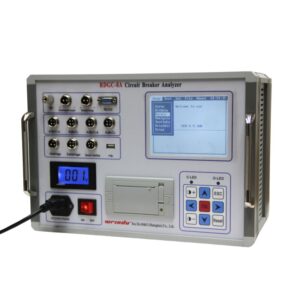
Click the image to know more about Circuit Breaker Comprehensive Tester.
Why Does Temperature Influence OCV and OCP?
Both OCV and OCP depend on internal physical or chemical processes. Temperature changes these processes in the following ways:
- It affects reaction rates inside batteries and electrochemical systems
- It changes internal resistance
- It influences ion movement and conductivity
As temperature increases, reactions become faster, which can shift voltage readings. At lower temperatures, slower reactions may reduce measured values.
How Does Temperature Affect Open Circuit Voltage (OCV)?
For batteries, OCV is closely related to temperature. In most cases:
- Higher temperature slightly increases OCV
- Lower temperature decreases OCV
- The effect is usually small but important for precision testing
For example, lithium batteries may change by about -2 to -4 mV per °C per cell. This means even small temperature differences can affect accuracy when measuring state of charge (SOC).
How Does Temperature Affect Open Circuit Potential (OCP)?
OCP is even more sensitive to temperature because it depends on chemical reactions at electrode surfaces.
Temperature can:
- Shift equilibrium conditions
- Change electrode potentials
- Affect corrosion rates
In some systems, a 10°C increase can change OCP by 20–50 mV. This is significant when analyzing corrosion or material stability in high-voltage equipment.
What Problems Can Temperature Cause in Measurements?
If temperature is not controlled, it can lead to:
- Incorrect SOC estimation in batteries
- Misinterpretation of corrosion risk
- Inconsistent test results
- Poor repeatability in laboratory testing
This is especially critical in high-voltage environments where precision is required.
How to Reduce Temperature Impact During Testing?
To improve accuracy, engineers should:
- Perform tests at a stable, controlled temperature
- Use temperature compensation features in equipment
- Allow the system to reach thermal equilibrium before measuring
- Record temperature along with voltage data
Wrindu’s advanced testing equipment includes automatic temperature compensation, ensuring reliable OCV and OCP measurements in different environments.
Why Is Temperature Compensation Important?
Temperature compensation adjusts measurement results based on environmental conditions. This ensures that readings reflect the true condition of the system rather than external influences.
In industrial applications, this is essential for:
- Battery testing and calibration
- Transformer diagnostics
- Cable and insulation analysis
With proper compensation, engineers can make more accurate decisions and avoid costly errors.
How Does Temperature Affect High-Voltage Equipment?
In high-voltage systems, temperature changes can impact both electrical and chemical behavior.
For example:
- Insulation materials may degrade faster at high temperatures
- Conductors may experience increased resistance
- Electrochemical reactions in components may accelerate
Monitoring OCV and OCP with temperature correction helps maintain system safety and extend equipment life.
Conclusion
Temperature plays a critical role in both OCV and OCP measurements. Even small changes can affect accuracy and lead to incorrect analysis. By controlling temperature and using advanced testing tools, engineers can ensure reliable results. Wrindu provides smart, temperature-compensated solutions that help industries maintain safe and efficient high-voltage systems.
FAQs
Does temperature always increase voltage?
Not always. It depends on the system, but many batteries show a slight voltage increase with higher temperature.
Why is OCP more sensitive to temperature than OCV?
Because OCP depends on chemical reactions, which are highly affected by temperature.
Can temperature errors be corrected?
Yes, using compensation algorithms and proper calibration.
What is the best temperature for testing?
Typically around 20–25°C for stable and consistent results.
Why choose Wrindu for testing equipment?
Wrindu offers high-precision tools with built-in temperature compensation for reliable measurements.
