

How to Automate High Voltage Electrical Testing and Record Test Data?
Learn how automated high voltage testing controls test sequences, records voltage and current data, reduces manual errors, and supports quality control.
Electrical manufacturers and testing laboratories may need to perform many tests under controlled conditions. When operators adjust every setting and record every result manually, the process can take longer and increase the risk of recording errors.
An automated high voltage testing system can control selected test steps, collect measurement data, and create test records.
Automation does not replace engineering judgment or safety procedures. Its purpose is to make routine testing more consistent and improve the traceability of test results.
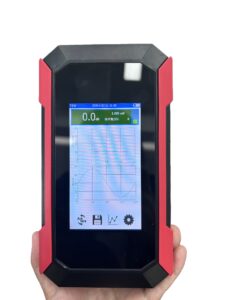
Click the image to know more about Wrindu Handheld PD Tester.
What Does Automation Mean in High Voltage Testing?
Automation uses a control system to carry out defined parts of a testing procedure.
Depending on the equipment, an automated system may:
- Apply a programmed voltage sequence
- Monitor voltage and current
- Maintain a specified test duration
- Stop the test when a configured condition occurs
- Save measurement data
- Generate a test report
Not every high voltage tester supports all these functions. The available features depend on the system design and software.
The test sequence must follow the approved procedure for the equipment under test.
Which Components Are Needed for an Automated Test System?
A typical automated testing setup may include several connected components.
| Component | Role in automation |
|---|---|
| High voltage source | Applies the required electrical stress |
| Control unit | Runs the programmed test sequence |
| Measurement devices | Collect voltage, current, or other relevant data |
| Safety interlocks | Prevent operation when specified safety conditions are not met |
| Computer or software | Displays, stores, or processes test data |
| Data storage system | Keeps test records for later review |
The exact configuration depends on the application.
A basic system may use an integrated controller and display, while a factory test station may connect to a computer or production management system.
How Does an Automated High Voltage Test Sequence Work?
A test sequence begins with defined settings and safety checks.
For example, a simplified withstand test may follow these steps:
- The operator identifies the test object.
- The operator selects the approved test procedure.
- The system checks required operating and safety conditions.
- The voltage rises according to the specified sequence.
- The system monitors relevant measurements.
- The test continues for the required duration unless a stop condition occurs.
- The system reduces the output and completes the required discharge procedure.
- The test result and associated data are saved.
The actual sequence must match the equipment design and applicable safety requirements.
Automation should not bypass interlocks, discharge requirements, or operator authorization.
What Test Data Should an Automated System Record?
A useful test record contains enough information to understand what happened during the test.
Depending on the procedure, the system may record:
- Test object identification
- Equipment model or serial number
- Test date and operator
- Target voltage and measured voltage
- Current readings
- Test duration
- Alarm or stop events
- Final result and acceptance criteria
- Relevant instrument settings
The required data depend on the test method. For example, a withstand test and a partial discharge measurement may need different records.
Engineers should define the required data fields before developing the automated sequence.
Why Is Time-Stamped Data Useful?
A single final value may not show how a test developed over time.
Time-stamped records allow engineers to review changes during voltage application and identify when an alarm or abnormal event occurred.
For example, if current rises during a test, a time-stamped record can help show whether the change happened gradually or near a particular voltage level.
This information supports investigation, but it does not identify the root cause automatically. Engineers must interpret the data using the test procedure and equipment characteristics.
How Can Automated Testing Reduce Recording Errors?
Manual recording can introduce mistakes when operators enter readings, copy serial numbers, or transfer results between systems.
Automated data collection can reduce some of these risks by linking instrument readings to the relevant test record.
However, automation can also produce incorrect records if the wrong test procedure, instrument settings, or equipment identity is selected.
Useful safeguards include:
- Confirming the test object before starting
- Restricting access to approved test procedures
- Checking instrument communication
- Recording units and measurement settings
- Reviewing abnormal values and incomplete tests
- Keeping a record of changes to test configurations
Automation works best when the process is clearly defined and regularly reviewed.
How Can Automated Test Results Support Quality Control?
In production, test records can help engineers compare results across products and manufacturing batches.
For example, engineers may review test duration, leakage current, or pass/fail results to identify unusual patterns.
If the same type of product begins showing a change in test behavior, the records can help the quality team decide whether further inspection is needed.
Comparisons are most useful when the test procedure, measurement method, and acceptance criteria remain consistent.
A trend in test data can indicate a problem worth investigating, but it should not be treated as proof of a specific manufacturing defect without further evidence.
What Should Engineers Consider When Integrating Test Software?
A testing system may need to exchange data with a computer, database, or factory information system.
Before integration, engineers should confirm:
Communication Compatibility
Check which communication interfaces and data formats are supported by the test equipment and the target software.
Do not assume that two devices can communicate simply because both have digital interfaces.
Data Format and Units
Voltage, current, time, and other measurements should use clear units and consistent formats.
The software should also distinguish between a measured value, a target setting, and a calculated result.
Error Handling
The system should identify missing measurements, communication failures, and interrupted tests.
Incomplete records should not be presented as successful tests.
Access and Record Integrity
Testing software should restrict unauthorized changes to test settings and completed records where required by the facility’s quality system.
Backup and retention procedures should match the importance of the test data.
Does Automation Make High Voltage Testing Fully Automatic?
Not necessarily.
Some systems automate voltage control and data collection, but still require an operator to prepare the test object, confirm connections, check the test area, and authorize the test.
Other systems provide more extensive integration, depending on the application and risk controls.
Even when a sequence runs automatically, operators must follow the safety requirements and respond to abnormal conditions.
Automation should make the approved process easier to perform and document, not remove necessary safety checks.
How Does Wrindu Support Electrical Testing Applications?
Wrindu provides high voltage testing equipment for power industry applications.
When evaluating a Wrindu testing system for automated operation, users should confirm the available control functions, measurement outputs, data storage features, and communication interfaces for the specific model.
The RDVLF-Z80Y 80 kV VLF AC Withstand Voltage Tester is designed for VLF cable testing. Its actual automation and data-handling capabilities should be checked against the official product documentation.
FAQs About Automated High Voltage Testing
What is automated high voltage testing?
It uses a control system to perform defined test steps, monitor measurements, and collect results according to a programmed procedure.
Can automated systems save test results automatically?
Some systems support automatic data storage and reporting. The available functions depend on the specific equipment and software.
Does automation remove the need for an operator?
No. Operators may still need to prepare the test, verify safety conditions, supervise the process, and review abnormal results.
What information should be included in a test report?
Depending on the test, records may include the test object ID, voltage, current, duration, settings, alarms, date, operator, and acceptance result.
Can a high voltage tester connect to factory software?
Some systems support external communication or software integration. Engineers should confirm compatible interfaces and data formats before planning an integration.
