

What Are PDIV and PDEV in Partial Discharge Testing?
Learn what PDIV and PDEV mean, why they differ, how voltage ramp rate affects measurements, and how engineers interpret the results.
Partial discharge inception voltage (PDIV) and partial discharge extinction voltage (PDEV) are useful parameters in insulation testing.
PDIV describes the voltage at which detectable partial discharge activity begins under specified test conditions. PDEV describes the voltage at which that activity stops as the voltage is reduced.
These values help engineers understand how insulation behaves as electrical stress changes.
However, PDIV and PDEV are not fixed values for every test setup. Results may depend on the test object, voltage waveform, voltage ramp, environmental conditions, and detection criteria.
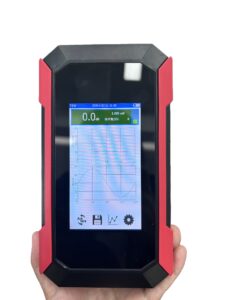
Click the image to know more about Wrindu Handheld PD Tester.
What Is Partial Discharge Inception Voltage?
PDIV is the voltage at which partial discharge activity first meets the specified detection criteria during a voltage increase.
At lower voltage levels, the electric field may not be strong enough to produce detectable discharge activity.
As the voltage rises, local electric stress may become sufficient for discharge to start in a void, an interface, or another region of insulation.
The measured PDIV depends on the test method and the threshold used to identify a discharge event.
Engineers should therefore record the test conditions when reporting this value.
What Is Partial Discharge Extinction Voltage?
PDEV is the voltage at which detectable partial discharge activity stops during a voltage decrease.
Once discharge activity begins, it may continue as the voltage falls below the measured inception voltage.
This means PDIV and PDEV are not necessarily equal.
The difference can provide information about the behavior of the discharge source. However, the difference alone does not identify a specific insulation defect.
Engineers must interpret the result with other measurement data and knowledge of the test object.
Why Can PDIV Be Higher Than PDEV?
The discharge process depends on more than the instantaneous voltage.
Once a discharge begins, local charge, surface conditions, and the electric field around the discharge site may affect whether further pulses occur.
As a result, detectable activity may continue during voltage reduction, even when the voltage is below the level at which the discharge first started.
This behavior can produce a difference between PDIV and PDEV.
The size of the difference varies with the insulation system and test conditions. It should not be treated as a universal pass-or-fail criterion.
How Does the Voltage Ramp Affect PDIV and PDEV Measurements?
The voltage ramp is the rate at which the test voltage increases or decreases.
If the voltage changes too quickly, engineers may have less time to observe the onset or disappearance of discharge activity.
A different ramp rate can also change the time spent at each voltage level. This may affect the observed result, depending on the insulation system and discharge behavior.
For meaningful comparisons, engineers should use the ramp rate and observation procedure specified by the applicable test standard.
Why Should Engineers Record the Voltage Ramp Rate?
Recording the ramp rate helps others understand how the measurement was performed.
For example, two tests may report different PDIV values because they used different voltage ramp rates or different criteria for identifying the first discharge event.
Without test-condition records, it may be difficult to determine whether the difference reflects a change in insulation behavior or a change in the measurement procedure.
How Can Engineers Measure PDIV and PDEV?
A typical measurement procedure involves increasing the test voltage, monitoring the PD signal, and recording the voltage at which the specified discharge criterion is met.
The voltage is then reduced according to the approved procedure, and the voltage at which the detectable activity stops is recorded.
The main steps are:
- Prepare the test circuit according to the test procedure.
- Verify the measuring system and required calibration.
- Apply voltage using the specified ramp rate.
- Record PD activity and the corresponding voltage.
- Reduce the voltage as required by the procedure.
- Record the extinction voltage and relevant test conditions.
The exact method depends on the test object and governing standard. Safety limits and prescribed voltage levels must always be followed.
What Factors Can Change the Measured PDIV and PDEV?
Several factors can affect the measured values.
Test Object Condition
Insulation defects, voids, interfaces, contamination, and aging may affect local electric fields and discharge behavior.
Two nominally identical components may therefore produce different results.
Voltage Waveform and Frequency
PD behavior depends partly on the applied electric field and its variation over time.
Measurements made with different waveforms or frequencies should not automatically be compared as though they used identical test conditions.
Temperature and Environmental Conditions
Temperature and other environmental factors may affect insulation properties and discharge behavior.
Engineers should record relevant conditions when the test procedure requires them, especially when comparing results from different dates or locations.
Measuring System Settings
The detection threshold and measuring system response influence when activity is first identified and when it is considered to have stopped.
For consistent comparisons, engineers should use the prescribed settings and document any changes.
How Should Engineers Interpret PDIV and PDEV Results?
PDIV and PDEV should be considered alongside other information rather than used as isolated indicators.
Engineers may compare the measured values with:
- Acceptance limits specified by the relevant standard
- Previous measurements from the same equipment
- Results from comparable units tested under the same conditions
- Other PD characteristics and insulation test results
A lower PDIV may justify further investigation in some applications, but it does not automatically prove that the equipment will fail.
Likewise, a higher PDIV does not guarantee that insulation is free from defects. Interpretation depends on the equipment design and the applicable acceptance criteria.
Why Are PDIV and PDEV Useful in Insulation Research?
These parameters help researchers study how discharge activity changes as electrical stress increases or decreases.
They may be useful when comparing insulation materials, investigating aging processes, or evaluating changes in discharge behavior.
For meaningful research, engineers should keep the voltage waveform, ramp rate, temperature, measuring system settings, and detection criteria consistent.
If test conditions change, the results should be interpreted with those differences in mind.
FAQs About PDIV and PDEV
What does PDIV stand for?
PDIV stands for partial discharge inception voltage. It is the voltage at which detectable partial discharge activity begins under specified test conditions.
What does PDEV stand for?
PDEV stands for partial discharge extinction voltage. It is the voltage at which detectable partial discharge activity stops as the voltage is reduced.
Is PDIV always higher than PDEV?
Not necessarily in every measurement. PDIV is generally expected to be at or above PDEV when discharge activity persists during voltage reduction, but the observed relationship depends on the test conditions and detection criteria.
Can PDIV alone determine insulation quality?
No. PDIV is one diagnostic parameter. Engineers should interpret it with other test results and the applicable acceptance requirements.
Why should the voltage ramp rate remain consistent?
A consistent ramp rate helps make results more comparable by reducing differences caused by the measurement procedure.
