

How to Monitor Battery Health Using Internal Impedance Trends
Learn how to monitor battery health using internal impedance trends. Understand how impedance changes reflect battery aging, performance decline, and failure risks. Explore Wrindu testing solutions for accurate battery diagnostics and predictive maintenance.
Battery performance is not only determined by voltage or capacity, but also by internal impedance. As batteries age, their internal impedance gradually increases, making it one of the most reliable indicators for evaluating battery health.
Instead of relying on a single measurement, engineers often track impedance trends over time to predict degradation and prevent unexpected failures.
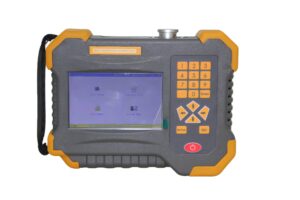
Click the image to know more about Battery Impedance Tester.
What Does Battery Health Mean in Practical Terms?
Battery health refers to how well a battery can store and deliver energy compared to its original condition.
Key indicators include:
- Available capacity
- Voltage stability under load
- Charging efficiency
- Internal impedance level
Among these, impedance is one of the most sensitive indicators of aging.
Why Is Internal Impedance a Good Health Indicator?
Internal impedance reflects internal chemical and physical changes inside the battery.
As batteries age:
- Electrochemical reactions slow down
- Internal resistance increases
- Energy loss becomes higher
- Heat generation increases
This makes impedance a direct reflection of battery condition.
How Does Impedance Change Over Battery Lifespan?
Battery impedance does not remain constant—it increases gradually over time.
Typical trend stages:
- Early stage: stable and low impedance
- Mid-life stage: slow increase begins
- Late stage: rapid increase due to degradation
- End of life: high impedance and unstable performance
Tracking this curve helps predict remaining battery life.
Why Is Trend Monitoring Better Than Single Testing?
A single measurement only shows the current condition, while trend monitoring reveals long-term behavior.
Advantages of trend analysis:
- Detects early degradation
- Identifies abnormal cells
- Predicts failure before it happens
- Supports maintenance planning
Trend data is more valuable for decision-making.
What Factors Can Affect Impedance Measurements?
To ensure accurate monitoring, testing conditions must be consistent.
Key factors include:
- State of charge (SoC)
- Temperature stability
- Load conditions
- Measurement method (DC or AC)
Inconsistent conditions may lead to misleading results.
How Often Should Battery Impedance Be Monitored?
Monitoring frequency depends on application type.
General recommendations:
- Electric vehicles: periodic or real-time monitoring
- Energy storage systems: scheduled maintenance intervals
- Industrial backup systems: regular inspection cycles
Critical systems require more frequent tracking.
Can Sudden Impedance Changes Indicate Battery Problems?
Yes. A sudden increase in internal impedance is often a warning sign.
Possible causes:
- Internal cell damage
- Thermal stress
- Manufacturing defects
- Aging acceleration
Such changes should be investigated immediately.
How Does Impedance Monitoring Improve System Reliability?
By tracking impedance, engineers can:
- Identify weak batteries early
- Prevent unexpected shutdowns
- Improve system uptime
- Optimize maintenance schedules
It is a key part of predictive maintenance strategies.
How Wrindu Testers Stand Out
Wrindu provides advanced electrical testing equipment designed for accurate battery impedance measurement and health analysis.
Key Advantages:
- High-precision impedance tracking
- Stable performance in field environments
- Fast and repeatable measurements
- Easy integration into maintenance workflows
- Suitable for industrial and energy storage systems
Wrindu solutions are widely used for:
- Battery health monitoring
- Internal resistance trend analysis
- Energy storage system diagnostics
- Preventive maintenance planning
- Electrical system reliability assessment
These tools help engineers detect battery aging early and extend system lifespan.
FAQs
Why is internal impedance important for battery health?
Because it directly reflects internal aging and performance degradation.
Can battery impedance predict failure?
Yes. A rapid increase often indicates approaching failure.
Is one impedance test enough?
No. Trend monitoring over time is much more accurate.
Does temperature affect impedance readings?
Yes. Temperature must be controlled for accurate results.
How often should impedance be checked?
It depends on application criticality, but regular monitoring is recommended.
Can all battery types use impedance monitoring?
Yes, including lithium-ion, lead-acid, and energy storage batteries.
What is the best method for health evaluation?
Combining impedance trends with voltage and capacity data is most effective.
Can testing improve battery management?
Yes. It supports predictive maintenance and improves system reliability.
