

How to Perform Frequency Domain Dielectric Response Testing on Power Transformers?
Learn how engineers perform Frequency Domain Dielectric Response testing on power transformers, including preparation, testing steps, data collection, and practical applications.
Introduction
Power transformers operate under continuous electrical, thermal, and mechanical stress. Over years of operation, insulation performance gradually decreases, increasing the possibility of unexpected failures.
However, transformer insulation problems are often difficult to identify because deterioration develops internally before visible symptoms appear.
Frequency Domain Dielectric Response (FDS) testing provides engineers with a practical method to evaluate transformer insulation condition through dielectric response measurement.
Unlike simple electrical measurements, FDS testing creates detailed insulation characteristics that support field diagnosis and maintenance planning.
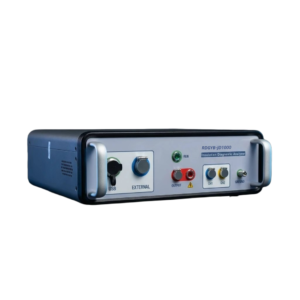
Click the image to know more about Wrindu Frequency Domain Dielectric Response Insulation Diagnostic Analyzer.
Why Is Proper FDS Field Testing Important?
A transformer insulation test result depends on several factors:
- Transformer temperature
- Moisture condition
- Test connection method
- Measurement frequency range
- Equipment accuracy
Incorrect testing procedures may lead to:
- Unreliable diagnosis
- Incorrect maintenance decisions
- Unnecessary transformer shutdown
Therefore, standardized field testing procedures are important.
What Should Be Prepared Before FDS Testing?
Before starting the test, engineers normally complete several preparation steps.
Confirm Transformer Information
Important information includes:
- Transformer voltage level
- Rated capacity
- Insulation structure
- Oil type
- Operating history
Historical information helps engineers compare test results.
Check Transformer Condition
Before measurement:
- Disconnect transformer from the power system
- Confirm safety grounding
- Check temperature condition
- Record environmental conditions
Temperature information is especially important because dielectric characteristics change with temperature.
How Is an FDS Test Performed Step by Step?
Step 1: Connect the FDS Analyzer to the Transformer
The testing system is connected according to the transformer insulation structure.
Typical test objects include:
- High voltage winding to ground
- Low voltage winding to ground
- High voltage winding to low voltage winding
Proper connection ensures accurate dielectric response measurement.
Step 2: Apply AC Test Voltage
The analyzer applies a controlled AC voltage signal.
The voltage creates polarization effects inside the insulation system.
Different insulation conditions generate different current responses.
Step 3: Measure Dielectric Response Data
During testing, the analyzer collects:
- Capacitance values
- Dielectric loss characteristics
- Frequency response curves
- Polarization information
The measurement is performed over multiple frequencies.
Step 4: Generate the Test Curve
After measurement, the system creates dielectric response curves.
Engineers analyze:
- Curve shape
- Frequency characteristics
- Abnormal changes
- Comparison with reference data
What Factors Affect FDS Test Accuracy?
Transformer Temperature
Temperature affects insulation conductivity.
Higher temperatures usually increase dielectric losses.
Moisture Distribution
Uneven moisture inside oil-paper insulation may influence measurement results.
Test Frequency Range
A wider frequency range provides more detailed insulation information.
The Wrindu RDGYB-JD1000 supports a frequency range from 0.1mHz to 10kHz for detailed analysis.
What Are the Common Applications of FDS Field Testing?
FDS testing is commonly used for:
Aging Transformer Evaluation
Used for transformers with long service periods.
Maintenance Decision Support
Helps determine whether equipment requires:
- Drying treatment
- Oil processing
- Further inspection
Transformer Acceptance Testing
Can be used during:
- Installation
- Commissioning
- Factory evaluation
How Does FDS Improve Preventive Maintenance?
Traditional maintenance often follows fixed schedules.
FDS testing supports condition-based maintenance by providing:
- Actual insulation condition
- Early deterioration information
- Long-term trend analysis
This helps utilities reduce unexpected transformer failures.
FAQs
Q1: How long does a transformer FDS test take?
The testing time depends on transformer size, test points, and selected frequency range.
Q2: Can FDS testing be performed on installed transformers?
Yes. FDS analyzers are designed for field diagnosis of power transformers.
Q3: What information is needed before performing an FDS test?
Engineers usually need transformer specifications, insulation type, temperature data, and previous test records.
Q4: Is FDS testing safe for transformers?
Yes. FDS testing uses controlled AC voltage levels designed for insulation diagnosis.
Q5: Which equipment is used for transformer FDS testing?
A Frequency Domain Dielectric Response Analyzer such as Wrindu RDGYB-JD1000 can perform transformer insulation response analysis.
