

Kelvin Testing in Electronics OEM Manufacturing
Learn 4-wire Kelvin testing for resistors, PCBs, and connectors in electronics OEM manufacturing. Improve precision and quality control with accurate low-resistance measurement.
What Is Kelvin Testing, and Why It Matters for Electronics OEM Production?
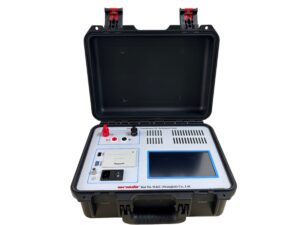
Core Applications of Kelvin Testing in Electronics OEM Manufacturing
1. Surface Mount Resistor (SMD Resistor) Quality Inspection
2. PCB Circuit & Via Integrity Testing
3. Connector & Contact Resistance Testing
Practical Kelvin Testing for Mass Production & Precision Control
-
Automated Test Integration: Integrate 4-wire Kelvin measurement into automated optical inspection (AOI) or in-circuit test (ICT) equipment for seamless batch testing. This reduces manual labor, minimizes human error, and keeps pace with fast OEM production lines.
-
Calibration & Probe Maintenance: Regularly calibrate Kelvin test equipment and replace worn probes to maintain measurement accuracy. Contaminated or damaged probes can reintroduce contact resistance, ruining test reliability.
-
Threshold Setting for Batch Screening: Set clear resistance tolerance thresholds based on OEM design specs. Test batches of components/PCBs, flag units with readings outside the acceptable range, and isolate defects for root-cause analysis.
-
Minimize Test Interference: Ensure stable probe contact, avoid excessive wire length in test setups, and test in controlled environments to prevent temperature-induced resistance shifts—all critical for consistent, precise results.
Key Takeaways for Electronics OEM Quality Control
FAQs
A: 2-wire testing includes lead and contact resistance in the reading, causing errors for low-resistance measurements. 4-wire Kelvin testing separates current and voltage probes to eliminate these errors, providing much higher accuracy.
A: Use Kelvin testing when measuring low resistance (usually below 1 ohm), such as PCB traces, connectors, solder joints, busbars, and SMD resistors. It is also required for high-precision quality control in electronics manufacturing.
A: Kelvin testing ensures accurate resistance measurement, helping detect hidden defects like poor soldering, weak connections, damaged vias, and out-of-tolerance components. This improves product reliability and reduces failure rates in mass production.
A: Common mistakes include poor probe contact, worn or dirty probes, long test leads, unstable test environment, incorrect calibration, and mixing up current and voltage connections.
A: Yes. Kelvin testing can be integrated into automated test equipment (ATE) and in-circuit test (ICT) systems for fast, stable, high-volume batch testing while maintaining precision.
A: Kelvin testing is most effective for low-resistance components and connections. It is widely used for resistors, PCBs, connectors, cables, and terminals. For high-resistance components, standard measurement methods are usually sufficient.
