

PCB Oil Sampling: How to Collect Transformer Oil Samples for Accurate PCB Testing
Learn how to collect transformer oil samples for PCB testing, select suitable containers, prevent sample contamination, and prepare samples for laboratory analysis.
Why Does PCB Testing Require Proper Oil Sampling?
PCB testing depends on the quality of the oil sample. An incorrect sampling procedure can cause contamination, sample loss, or unreliable laboratory results.
Unlike routine transformer oil tests, PCB analysis often supports environmental inspections, equipment classification, and waste management decisions. Therefore, the sample must represent the actual insulating liquid inside the transformer.
Wrindu engineers recommend preparing a sampling plan before collecting oil from equipment with an unknown PCB history.
Three factors affect sample reliability:
-
Sample representativeness: The sample should reflect the oil inside the equipment.
-
Container cleanliness: The container must not introduce external contamination.
-
Sample identification: Each sample needs a clear identification number and collection record.
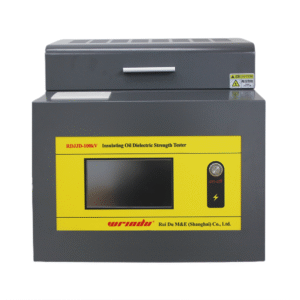
Click the image to know more about Wrindu Oil BDV Tester.
Which Transformers Should Be Selected for PCB Oil Sampling?
Not every transformer requires PCB testing. Equipment history and possible contamination sources should guide the sampling plan.
| Transformer condition | PCB sampling recommendation | Reason |
|---|---|---|
| Transformer manufactured before 1980 | Consider PCB testing | Older equipment may have used PCB-containing insulating liquids |
| Unknown manufacturing date | Consider PCB testing | Equipment history may be incomplete |
| Used transformer from an unknown source | Test before reuse | Previous oil and maintenance records may be unavailable |
| Transformer with suspected oil mixing | Test the insulating liquid | Different oils may have mixed during maintenance |
| Transformer using reclaimed oil | Check the oil source and test requirements | Recycled oil may have contacted contaminated equipment |
| Newly manufactured transformer with documented oil history | Follow applicable requirements | Existing records may establish its oil classification |
Manufacturing date alone does not establish the actual PCB concentration. Equipment owners should check the nameplate, original oil records, maintenance history, and applicable regulations.
For example, the US EPA applies specific assumptions to certain mineral-oil-filled electrical equipment manufactured before July 2, 1979, when PCB concentrations remain unknown. Other countries may use different classification rules.
LII / Legal Information Institute+1
What Containers Should Be Used for Transformer Oil Sampling?
The laboratory should confirm the container type, sample volume, and preservation requirements before collection.
A suitable container should meet the following requirements:
| Item | Sampling requirement | Purpose |
|---|---|---|
| Container material | Laboratory-approved glass container | Provides a suitable container for the oil sample |
| Bottle closure | Compatible, chemically resistant cap liner | Reduces leakage and contamination |
| Container condition | Clean and free from residues | Prevents external substances from affecting results |
| Sample label | Unique sample identification | Prevents sample mix-ups |
| Transport packaging | Secure, leak-resistant secondary packaging | Protects the sample during transportation |
Do not reuse a container that previously held unknown oil or chemical substances.
The laboratory should specify the required sample volume. Avoid selecting a fixed volume without confirming the analytical method and quality-control requirements.
How Should You Collect a Transformer Oil Sample for PCB Testing?
Qualified personnel should collect transformer oil samples. PCB sampling involves electrical, chemical, and environmental risks.
The following procedure provides a practical sampling framework.
Step 1: Review the transformer records
Check the transformer manufacturer, manufacturing date, insulating liquid type, and maintenance history.
Identify previous oil replacement, filtration, topping-up, and repair activities. These records help identify possible contamination sources.
Step 2: Prepare the sampling equipment
Prepare the laboratory-approved sample container, suitable sampling accessories, labels, and protective equipment.
Use clean sampling equipment for each sample source. Do not transfer oil between transformers using shared, uncleaned equipment.
Step 3: Identify the sampling point
Select an appropriate oil sampling valve or sampling connection.
The sampling point should provide access to representative insulating oil. Follow the transformer manufacturer’s instructions and the laboratory’s sampling procedure.
Step 4: Collect and seal the sample
Collect the required oil volume without introducing dirt, water, or oil from another source.
Close the container securely and check for leakage. Avoid unnecessary transfers between containers.
Step 5: Label and document the sample
Record the transformer identification, sampling location, collection date, and sample number.
Keep the sampling record with the laboratory submission documents.
What Information Should Be Included in a PCB Oil Sampling Record?
A complete sampling record helps laboratories identify samples and trace the source of unexpected results.
| Record item | Information to provide |
|---|---|
| Equipment ID | Transformer number or asset code |
| Manufacturer | Transformer manufacturer |
| Manufacturing year | Known year or unknown |
| Oil type | Mineral oil or other insulating liquid |
| Sampling location | Substation, plant, or equipment location |
| Sampling date | Date and time |
| Sample ID | Unique identification number |
| Sampling personnel | Name or identification |
| Maintenance history | Oil replacement, topping-up, or filtration |
| Testing purpose | Screening, classification, investigation, or disposal |
For projects involving multiple transformers, assign a separate sample ID to each unit.
The sampling record should also identify any unusual conditions, such as visible oil leakage or suspected oil mixing.
How Can You Prevent PCB Sample Cross-Contamination?
Cross-contamination can produce misleading laboratory results. Even a small amount of contaminated oil transferred from another source may affect a sample.
Wrindu engineers recommend these practices:
-
Use separate sampling accessories for different equipment where practical.
-
Never reuse an uncleaned sampling bottle.
-
Keep sample containers closed when not in use.
-
Avoid placing bottle caps or sampling accessories on dirty surfaces.
-
Separate collected samples from chemicals and waste materials.
-
Label each sample immediately after collection.
A sampling team should also keep contaminated equipment and clean sampling materials separate.
How Should Transformer Oil Samples Be Stored and Transported?
Follow the laboratory’s preservation and transportation instructions.
Use sealed containers and protective packaging to prevent leakage. Keep samples away from direct heat, sunlight, and potential contamination sources.
Do not assume that all PCB samples require the same storage temperature or holding time. These requirements depend on the validated analytical method and laboratory procedure.
Before shipment, confirm the following information with the laboratory:
-
Accepted container type.
-
Required sample volume.
-
Sample preservation conditions.
-
Maximum holding time.
-
Applicable shipping and hazardous-material requirements.
What Are the Most Common Mistakes in PCB Oil Sampling?
| Sampling mistake | Possible consequence | Recommended action |
|---|---|---|
| Using an unclean bottle | External contamination | Use a laboratory-approved container |
| Sharing sampling equipment | Cross-contamination | Use dedicated or properly decontaminated equipment |
| Incorrect sample identification | Incorrect equipment records | Assign a unique sample ID |
| Collecting an unrepresentative sample | Misleading concentration result | Follow an approved sampling plan |
| Ignoring oil replacement history | Incorrect contamination assessment | Review previous maintenance records |
| Using unsuitable storage conditions | Sample integrity problems | Follow laboratory instructions |
What Should You Do After Collecting a PCB Oil Sample?
Send the sample to a qualified laboratory that can perform PCB analysis using a validated method.
The laboratory should report the analytical method, PCB concentration, measurement units, reporting limit, and relevant quality-control information.
Do not use routine transformer oil test results as a substitute for PCB analysis.
For more information about PCB analytical techniques and applicable standards, read our main guide: PCB Testing in Transformer Oil: Methods, Standards, and Procedures.
Reference sources:
