

DC Generator Excitation Systems: Complete Guide to Self-Excited and Separately Excited Generators
Learn DC generator excitation systems, including self-excited and separately excited generators, working principles, voltage regulation, applications, and testing methods. A complete guide for engineers and power professionals.
Generator excitation is one of the most important concepts in DC power systems. Whether you work in power plants, industrial facilities, laboratories, or electrical equipment testing, understanding how excitation works helps you choose the right generator and maintain stable voltage output.
This guide explains DC generator excitation systems in simple terms, including the difference between self-excited and separately excited generators, voltage regulation, applications, testing methods, and future industry trends.
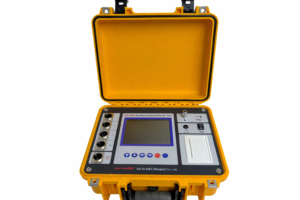
Click the image to know more about Three Phase Capacitance and Inductance Tester.
What Is Generator Excitation?
Generator excitation refers to the method used to supply current to the field winding of a generator in order to create a magnetic field.
This magnetic field is essential because electricity is produced when the armature rotates through magnetic flux.
Without excitation, a DC generator cannot generate voltage.
Simply put:
- Field winding = creates magnetic field
- Armature = generates electrical output
- Excitation = power source for the field winding
The strength of the magnetic field directly affects the output voltage.
The basic relationship can be shown as:
E \propto \Phi N
Where:
- E = generated voltage
- Φ = magnetic flux
- N = rotational speed
This means that as magnetic flux increases, output voltage also increases.
Types of DC Generator Excitation Systems
DC generators are mainly divided into two excitation types:
There is also a third common configuration:
- Compound generators
Let’s look at each one.
What Is a Self-Excited Generator?
A self-excited generator uses its own output voltage to supply current to the field winding.
It starts with a small amount of residual magnetism in the poles. Once the armature begins rotating, this residual magnetism produces a small voltage. That voltage then feeds the field winding and gradually increases the magnetic field strength.
This process continues until the generator reaches its rated voltage.
Main Types of Self-Excited Generators
1. Shunt Generator
The field winding is connected in parallel with the armature.
Best for:
- Constant voltage loads
- Lighting systems
- Battery charging
2. Series Generator
The field winding is connected in series with the load.
Best for:
- High starting current
- Special industrial uses
3. Compound Generator
Combines both series and shunt windings.
Best for:
- Better voltage regulation
- Variable industrial loads
What Is a Separately Excited Generator?
A separately excited generator uses an external DC power source to energize the field winding.
Unlike self-excited designs, the field current does not depend on the armature output.
This gives much better control over magnetic flux and voltage output.
Key Advantages
- Stable voltage output
- Better load response
- Easy voltage adjustment
- High precision control
These generators are widely used in:
- Laboratories
- Test benches
- Motor drives
- Precision industrial systems
Self-Excited vs Separately Excited Generator
Here is a simple comparison table:
| Feature | Self-Excited Generator | Separately Excited Generator |
|---|---|---|
| Field Power Source | Own armature output | External DC source |
| Startup | Needs residual magnetism | Instant excitation |
| Voltage Stability | Moderate | Excellent |
| Cost | Lower | Higher |
| Wiring | Simple | More complex |
| Control | Limited | Precise |
| Best Use | Portable / small systems | Labs / industrial control |
How Excitation Affects Voltage Regulation
Voltage regulation refers to how well a generator maintains its output voltage when load changes.
A self-excited generator often experiences voltage drop under heavy loads because the field current depends on its own output.
This creates a feedback effect.
A separately excited generator keeps field current stable, so voltage regulation is much better.
This is why it is preferred in applications where voltage accuracy is important.
DC Generator Working Principle
The working principle of a DC generator is based on Faraday’s Law of Electromagnetic Induction.
When conductors rotate in a magnetic field, voltage is induced.
E = \frac{P\Phi ZN}{60A}
Where:
- P = number of poles
- Φ = flux per pole
- Z = total conductors
- N = speed
- A = parallel paths
This formula shows that output voltage depends on both speed and magnetic flux.
Excitation directly controls the flux term.
Common Applications of DC Generator Excitation Systems
Industrial Applications
Used in:
- welding systems
- cranes
- rolling mills
- motor testing
Laboratory Applications
Separately excited generators are ideal for:
- voltage calibration
- insulation testing
- field current studies
Power Grid and Utilities
Used in:
- backup systems
- substation auxiliary power
- testing platforms
Renewable Energy
Self-excited generators are often used in:
- small hydro systems
- wind turbines
- off-grid power stations
Testing Methods for Generator Excitation Systems
Regular testing is essential for stable generator performance.
1. Field Winding Resistance Test
Checks winding continuity and detects open circuits.
2. Insulation Resistance Test
Measures insulation quality between windings and ground.
3. Load Test
Verifies voltage stability under real operating conditions.
4. Residual Magnetism Check
Important for self-excited generators.
5. Voltage Regulation Test
Compares no-load and full-load voltage performance.
This is where Wrindu testing equipment can provide accurate and reliable support for field diagnostics and maintenance.
How Wrindu Testers Stand Out
Wrindu specializes in electrical testing and diagnostic solutions for power systems.
Our equipment supports:
- generator winding testing
- insulation diagnostics
- voltage regulation analysis
- load simulation
- field excitation verification
These solutions help engineers reduce downtime and improve generator reliability.
Future Trends in Generator Excitation
Modern generator systems are moving toward smart excitation control.
Future trends include:
- digital AVR systems
- microcontroller-based excitation
- AI-based adaptive control
- brushless excitation systems
- renewable energy integration
Intelligent excitation systems help improve efficiency and reduce maintenance costs.
Frequently Asked Questions
What is the main difference between self-excited and separately excited generators?
The main difference is the field power source. One uses its own output, while the other uses an external DC source.
Which generator has better voltage regulation?
Separately excited generators provide better voltage regulation.
Why is residual magnetism important?
It helps self-excited generators build initial voltage.
Which one is better for testing laboratories?
Separately excited generators are better because they offer precise voltage control.
Conclusion
Understanding DC generator excitation systems is essential for selecting the right equipment and maintaining stable power output.
If your application requires simplicity and low cost, a self-excited generator may be suitable.
If you need precise voltage control and better stability, a separately excited generator is the better choice.
For professional testing and diagnostic solutions, Wrindu provides reliable equipment designed for modern power systems.
